工业软件

Search documents
北交所上市公司增至300家!“含金量”“含新量”不断提升
证券时报· 2026-03-20 03:26
Core Viewpoint - The Beijing Stock Exchange (BSE) has reached a significant milestone with 300 listed companies, marking a 3.7 times increase in company numbers since its inception in November 2021, and a total market capitalization of approximately 900 billion yuan [1][4]. Group 1: Market Growth and Performance - The BSE has shown remarkable growth over four years, with the number of listed companies increasing from 81 to 300 and total market capitalization rising from under 300 billion yuan to around 900 billion yuan [4]. - In 2025, 63% of the 293 companies that reported earnings achieved revenue growth, with three companies experiencing revenue increases exceeding 100% [5]. - The average research and development intensity among the 300 listed companies exceeds 5%, with total fundraising surpassing 60 billion yuan, primarily directed towards R&D and capacity expansion [5]. Group 2: New Listings and Industry Focus - In 2026, 12 new companies were listed on the BSE, with a strong emphasis on high-end equipment, artificial intelligence, new materials, biomedicine, and industrial software [7]. - Over 70% of the new listings are classified as national-level specialized and innovative "little giants," showcasing a focus on cutting-edge technology and niche market leadership [7]. - The first-day stock price increases for new listings predominantly fell within the 100% to 200% range, indicating a robust market response and improved investor confidence [7]. Group 3: Future Outlook and Strategic Recommendations - The increase to 300 listed companies represents not only growth but also a new starting point for the BSE, emphasizing the need for continued reform and optimization of the market ecosystem [9][11]. - Experts suggest that the BSE should enhance its appeal to quality companies and improve market liquidity by potentially introducing an ETF and accelerating the implementation of reform measures [10]. - The BSE aims to differentiate itself by focusing on serving innovative small and medium-sized enterprises, ensuring a sustainable growth trajectory and a supportive market environment [10][11].


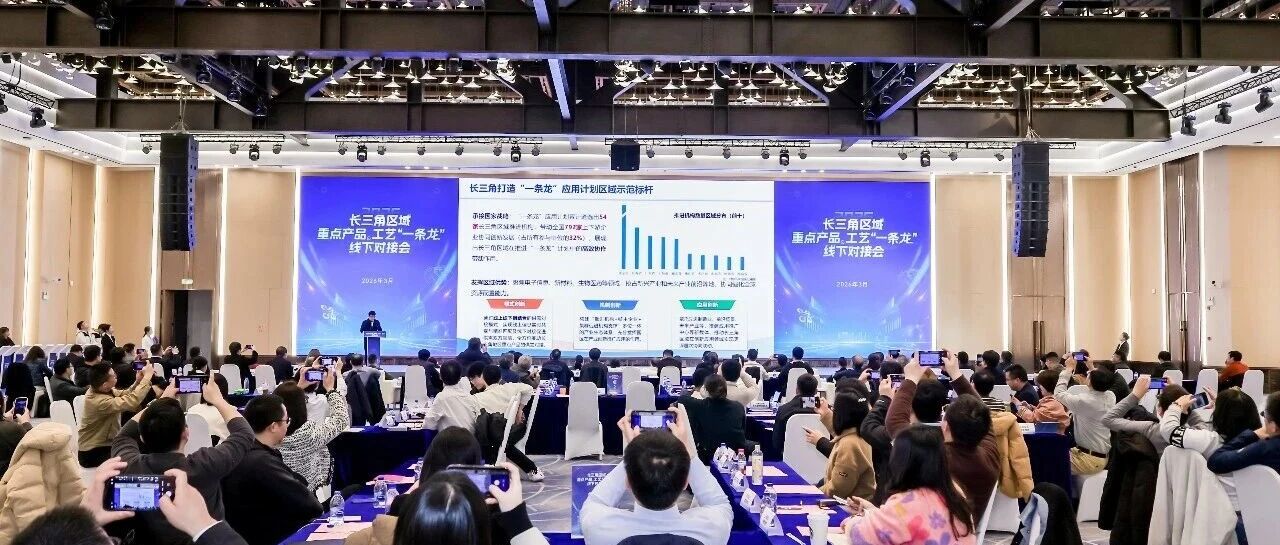
2026年长三角区域重点产品、工艺“一条龙”线下对接活动:攻坚核心装备,引领产业突破
远川研究所· 2026-03-16 12:28
Core Viewpoint - The article discusses the "one-stop" offline docking event for key products and processes in the Yangtze River Delta region, aimed at promoting collaborative innovation and accelerating the localization of core products and processes by integrating various industries and regions [1][3]. Group 1: Event Overview - The event took place on March 15, 2026, in Shanghai, gathering representatives from the industrial and information departments of Shanghai, Jiangsu, Zhejiang, and Anhui, as well as national think tanks and leading enterprises from the industry chain [1][3]. - Key officials, including the Deputy Director of the Planning Department of the Ministry of Industry and Information Technology, delivered speeches, emphasizing the importance of collaborative development in the Yangtze River Delta [3]. Group 2: Strategic Partnerships - A significant cooperation signing ceremony occurred, where representatives from various enterprises in the Yangtze River Delta signed multiple strategic cooperation agreements covering areas such as AI-integrated cloud-native CAD, hydrogen compression technology, and CT detector development [5]. - The signing marked a transition from top-level design to practical implementation of the "one-stop" model, indicating a solid step towards collaborative cooperation across the industry chain [5]. Group 3: Key Projects - The "AI-integrated cloud-native 3D CAD project" aims to overcome challenges in traditional industrial software by utilizing AI to understand proprietary knowledge and physical continuity requirements, enhancing the manufacturing process in sectors like precision instruments and aerospace [6][7]. - The "high-pressure large-displacement membrane hydrogen compressor" project has achieved a significant upgrade, increasing hydrogen transport capacity by over 60% and reducing operational costs by 20%, addressing short-distance transport bottlenecks [8]. - The "photon counting CT detector" project aims to break the monopoly of foreign companies by developing a domestic detector that improves image clarity by three times while reducing radiation dosage to one-third, with a target to launch commercially viable products within two years [9]. Group 4: Future Implications - The successful hosting of the "one-stop" docking event has established an efficient communication bridge for the industry chain, injecting confidence into tackling core technologies and enhancing resilience in key industries across the Yangtze River Delta and nationwide [12]. - The ongoing development of this collaborative model is expected to support the advancement of Chinese manufacturing towards higher value chains [12].
工业AI深度研究:跨越幻觉鸿沟,掘金万亿蓝海
Changjiang Securities· 2026-03-09 08:18
Investment Rating - The report maintains a "Positive" investment rating for the industrial AI sector [2]. Core Insights - The report emphasizes that 2026 is expected to be a pivotal year for the application of AI in industrial settings, driven by advancements in large language models (LLMs) and their integration into various industrial scenarios [8][34]. - The industrial AI landscape is characterized by significant growth potential due to the vast size of the industrial sector, low current penetration rates of AI technologies, and the increasing complexity of industrial tasks that AI can address [12][15][28]. Summary by Sections 1. Why is Industrial AI Promising? - The industrial sector in China is projected to reach an added value of 40.5 trillion yuan in 2024, accounting for approximately 30% of GDP, indicating that even small increases in AI penetration can yield substantial value [12]. - The current penetration rate of industrial software in China is low compared to the size of its manufacturing sector, suggesting a significant growth opportunity as the software adoption continues to rise [12]. - The aging workforce and labor shortages in major manufacturing countries create a pressing need for automation and AI solutions, with clear ROI metrics such as improved yield rates and reduced downtime [15][18]. 2. Key Industrial AI Scenarios to Watch - The report identifies three key areas for industrial AI applications: enhanced reasoning capabilities through time-series data mining, improved multi-modal understanding in simulation design, and advanced agent capabilities for end-to-end operations [38][57][99]. - The TPT (Time-series Pre-trained Transformer) model is highlighted as a significant advancement in the industrial AI space, particularly for continuous process industries, demonstrating strong capabilities in predictive maintenance and operational optimization [57][85]. 3. Investment Outlook - The global industrial AI market is expected to grow rapidly, with projections indicating a market size of approximately $89.53 billion by 2032, reflecting a compound annual growth rate (CAGR) of 46% [35]. - The report outlines a favorable policy environment supporting the integration of AI in manufacturing, with multiple initiatives aimed at enhancing AI capabilities and adoption in industrial settings [34][36]. - The report anticipates that as AI technologies mature and become more reliable, the adoption rate in various industrial applications will accelerate, leading to broader market penetration and increased investment opportunities [34][36].


2026年3月三十大标的投资组合报告:两会时间窗口与地缘阴霾交织
Yin He Zheng Quan· 2026-03-09 01:03
Market Overview - In February, A-shares and Hong Kong stocks showed a divergence, with small-cap stocks outperforming large-cap growth and Hong Kong tech stocks experiencing significant adjustments[4] - The geopolitical risks, particularly in the Middle East, have led to a rise in international gold and oil prices, impacting the cyclical sectors in A-shares and Hong Kong stocks[4] Investment Strategy - The report suggests focusing on strategic resources and cyclical recovery sectors, particularly industrial metals like copper, precious metals, and energy metals due to supply constraints and geopolitical tensions[4] - Emphasis on technology self-reliance and new productivity sectors, particularly AI computing and military industries, is recommended as the market anticipates policy support[4] Key Stock Recommendations - Zijin Mining (601899.SH) is projected to have an EPS of 3.37 yuan in 2026, with a PE ratio decreasing from 32.66 in 2024 to 11.70 in 2026, indicating strong growth potential[6] - New Fengming (603225.SH) is expected to benefit from seasonal demand, with an EPS forecast of 0.99 yuan in 2026 and a PE ratio of 21.44[21] - Baosteel (600019.SH) is highlighted for its significant market share in high-end products, with an EPS of 0.55 yuan in 2026 and a PE ratio of 13.29[30] Financial Projections - The projected revenue for Zijin Mining is expected to grow from 303.64 billion yuan in 2024 to 423.24 billion yuan in 2026, with a net profit increase from 32.05 billion yuan to 89.51 billion yuan during the same period[19] - New Fengming's revenue is projected to increase from 67.09 billion yuan in 2024 to 73.29 billion yuan in 2026, with a net profit growth from 11 billion yuan to 15.16 billion yuan[28] Risk Factors - Potential risks include unexpected policy changes, underperformance in commercialization, and geopolitical uncertainties affecting market stability[4]



能科科技20260304
2026-03-04 14:17
Summary of Nengke Technology Conference Call Company Overview - **Company**: Nengke Technology - **Focus**: Accelerating AI transformation with a target to develop 45 industrial agents by 2027, having completed 25 by the end of 2025. Each agent has a unit price of approximately 6 million, with a single agent valued at around 3 million [2][3]. Key Points AI Business Development - **Revenue Contribution**: AI business revenue share has rapidly increased, reaching 30% by Q3 2025, with a target of 40% in 2026, expected to become the company's largest business segment [2][12]. - **Specialized Industries**: Approximately 60% of AI business will be implemented in specialized industries by 2025, leveraging the company's data foundation and agent processing capabilities [2][17]. - **Business Model Shift**: Transitioning from a self-owned team to an agency system, with 6 partners established by 2025 to enhance operational efficiency and coverage [2][10]. Technological Advancements - **Embodied Intelligence**: Achieved a breakthrough from "training and pushing" to "overall delivery" in embodied intelligence, focusing on "physical AI" in 2026 [2][5]. - **Agent Development**: By the end of 2025, 25 agents have been developed, with plans to reach 30-35 by 2026 and 45 by 2027 [3][4]. Market Positioning and Strategy - **AI Industry Layering**: The company categorizes the AI industry into three layers: IT infrastructure, application software, and industrial data applications, positioning itself as an "industrial data application expert" [7]. - **Client Base**: The company has approximately 3,000 manufacturing clients, with an active client base of about 2,000. The AI business currently covers only about 2% of existing clients, with a goal to increase this to 5% in 2026 [13][14]. Collaboration and Ecosystem - **Partnerships**: Strengthening collaborations with major players like Huawei, AWS, and Nvidia, focusing on enhancing computational power and algorithm partnerships [9][15]. - **Software Ecosystem**: The company aims to expand its software capabilities while collaborating with mainstream software vendors like Siemens and Dassault [9]. Risk Management - **Model vs. Software**: The company acknowledges the risk of "model eating software" but views it as a structural opportunity, actively reducing low-margin software implementation services while enhancing AI capabilities [2][21]. Future Outlook - **2026 Focus**: The company plans to enhance its AI business, with a clear focus on key areas and customer coverage strategies, aiming for a robust operational structure by mid-2026 [11][12][22]. - **Specialized Industry Growth**: The company anticipates maintaining a 40% share in specialized industries, with AI applications expected to deepen in these sectors [16][18]. Financial Projections - **Market Size Estimation**: The estimated annual AI capital expenditure in the covered industries is approximately 200 billion to 300 billion, with the company targeting a reachable market size of about 40 billion [14]. This summary encapsulates the key insights and strategic directions discussed during the conference call, highlighting Nengke Technology's commitment to AI transformation and its proactive approach to market challenges and opportunities.
再投百亿,海淀科创的雄心藏不住了
投中网· 2026-03-02 04:30
Core Viewpoint - The article discusses the strategic initiatives taken by Haidian District to establish itself as a global AI industry hub, emphasizing a comprehensive approach that includes policy support, funding, and international collaboration [2][3][12]. Group 1: Key Initiatives and Policies - The "2026 Implementation Plan for Building the Most Investment-Value City" was released, outlining 36 support policies across four areas: capital vitality, enterprise potential, talent attraction, and asset carrying capacity [6][5]. - The plan includes an 8 billion yuan fund for the Zhongguancun Science City Technology Growth Phase IV and a 2 billion yuan fund for technology transformation, focusing on early-stage and disruptive technology projects [7][6]. - Haidian plans to allocate no less than 9 billion yuan for industrial innovation in 2026 to support enterprise growth [7]. Group 2: Modern Industrial System - The "1+X+1" modern industrial system was introduced, with AI as the core engine, supported by five strategic emerging industries and three future industries [8][9]. - The system is designed to remain flexible and adaptive to global technological innovations, ensuring continuous alignment with industry changes [9][10]. Group 3: Global Collaboration and Development - Haidian aims to build a world-leading technology park, emphasizing open collaboration and signing agreements with various partners to enhance regional cooperation [10][11]. - The district's focus has shifted from internal resource integration to external connections, indicating a broader vision for collaborative development [10]. Group 4: Innovation and Talent - Haidian is committed to becoming a source of independent innovation, with significant research resources, including national laboratories and a high concentration of talent [12][14]. - The district boasts over 200,000 talent resources and has a high innovation development index, leading in national technology awards [14][15]. Group 5: Competitive Landscape - The article highlights the competitive landscape for AI development, noting that other cities are also making significant investments in AI, which could impact Haidian's position [16]. - The ongoing competition for AI talent and projects is intensifying, with Haidian needing to convert capital density into innovation and policy benefits into talent advantages [16].
连续盈利,持续造血:赛美特赴港IPO,李钢江登上福布斯榜单
Sou Hu Cai Jing· 2026-02-27 09:38
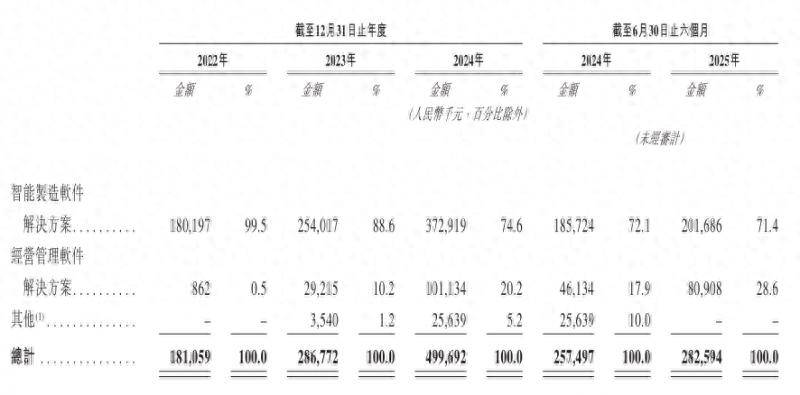
Core Insights - The recognition of Li Gangjiang, Chairman and CEO of Saimate Group, in the Forbes China New Era Disruptor Founder selection highlights the company's innovative practices in the industrial software sector and its capabilities in building platform-based enterprises [1] - Saimate is currently advancing its IPO process in Hong Kong, marking a significant phase in its development as a representative of domestic industrial software platform enterprises [1][9] - The recognition and the company's growth trajectory reflect the transition of domestic industrial software firms from "technology validation" to "scale development" [1] Business Fundamentals - Saimate has established a relatively mature and stable business model as a B2B industrial software company, with revenue projected to grow from RMB 180 million in 2022 to RMB 500 million in 2024, representing a compound annual growth rate of approximately 66% [3] - For the first half of 2025, Saimate reported revenue of RMB 280 million, a 10% year-on-year increase, maintaining a steady expansion pace despite intensified competition in the industrial software industry [3] - The company has achieved continuous profitability, with adjusted net profits of RMB 10.77 million, RMB 26.02 million, and RMB 78.73 million for 2022, 2023, and 2024 respectively, indicating a growing profit scale [4][5] Revenue Structure - The majority of Saimate's revenue comes from enterprise-level software services, with intelligent manufacturing software solutions contributing over 70% of total revenue [5] - This business model is supported by high technical barriers, strong customer loyalty, and long delivery cycles, establishing a stable and sustainable revenue source for the company [5] Technical Pathway - Saimate adopts a "platform-based industrial software" strategy rather than a single-point tool product approach, covering multiple business domains such as smart manufacturing, management, and R&D through a unified technical foundation [8] - The company focuses on serving industries with complex processes and high stability requirements, differentiating itself from typical industrial software vendors [8] Capitalization Window - As Saimate progresses with its Hong Kong IPO, it is increasing R&D investments in integrating AI technology with manufacturing scenarios, aiming to evolve smart manufacturing from "visualization and automation" to "decision-making and optimization" [10] - The domestic industrial software industry is entering a phase where engineering capabilities, delivery stability, and scalable replication are critical, with high-barrier segments like semiconductor CIM becoming key entry points for breakthroughs [10]
中望软件:公司多年来始终在引进新兴技术方面坚持进行投入
Zheng Quan Ri Bao Wang· 2026-02-27 09:09
Core Viewpoint - The development of emerging technologies is expected to positively impact the growth of industrial software companies, with a focus on AI integration in product upgrades and internal efficiency improvements [1] Group 1: Company Insights - The company is recognized as a leading domestic industrial software enterprise specializing in research and design [1] - The company has consistently invested in the introduction of emerging technologies over the years [1] - The company has made significant progress in AI integration, enhancing both product functionality and the efficiency of its internal R&D teams [1] Group 2: Industry Context - The integration of emerging technologies, such as AI, requires a considerable amount of time to adapt and stabilize within industrial design processes [1] - The potential for AI to disrupt existing industry conditions remains uncertain and will require time to evaluate its true impact [1]

全球产业格局变在哪里?
Sou Hu Cai Jing· 2026-02-26 10:48
Core Viewpoint - The global economic landscape is undergoing a systematic restructuring, driven by unilateralism and protectionism, particularly in emerging industries like semiconductors and artificial intelligence, necessitating a reevaluation of industrial layouts by many countries [1] Group 1: Changes in Spatial Layout - The shift from global integration to regionalization and "1+N" multi-point layout reflects the vulnerabilities of traditional global production networks amid geopolitical conflicts and supply chain disruptions [4] - The share of China in U.S. imports decreased from 21.6% in 2017 to 13.4% in 2024, while Mexico's share increased from 12.3% to 14.4%, and Vietnam's from 2.1% to 4.3%, indicating a clear trend towards regionalization and nearshoring [4] Group 2: Structural Changes - The global industrial value creation is transitioning from traditional manufacturing to service-oriented and green industries, with high-value services becoming integral to the entire industrial value chain [5] - Exports of China's "new three items" (new energy vehicles, lithium batteries, and photovoltaic products) surged from 284.4 billion yuan in 2020 to 1.28 trillion yuan in 2025, marking a 3.5-fold increase over five years [5] Group 3: Technological Changes - The geographical pattern of technological innovation is shifting from a concentrated model to a decentralized one, resulting in a multi-polar innovation landscape [6] - The U.S. leads in AI infrastructure and high-end semiconductor manufacturing, while the EU excels in green technology and industrial software, and China has developed advantages in 5G communication and new energy batteries [6] Group 4: Organizational Changes - The role of state intervention in global industrial organization is intensifying, with national policies increasingly influencing multinational corporations' strategies [7] - The number of global regional trade agreements reached 378 by the end of 2024, up by 102 since 2010, with many focusing on key sectors like semiconductors and new energy, embedding values and standards into trade rules [7]
广州天河:今年举办超50场演唱会、超40场赛事
Nan Fang Du Shi Bao· 2026-02-25 16:33
Group 1 - The Tianhe District aims to achieve a GDP growth target of over 5% by 2026, with fixed asset investment exceeding 93 billion yuan and a growth rate of over 10% [1] - The district plans to enhance modern service industries, targeting an added value of 530 billion yuan with a growth rate of 5.5%, and aims for artificial intelligence industry revenue to exceed 62 billion yuan with a growth rate of 12% [1] - Tianhe District will focus on attracting 300 new industrial projects and nurturing 1,600 "Four Up" enterprises [1] Group 2 - Key development areas include the Guangzhou International Financial City, Guangtang Science and Technology Innovation City, and the Guangdong Olympic Cultural and Sports Event Demonstration Zone [2] - The district plans to accelerate the construction of 1 million square meters of science and technology innovation space and open 15 application scenarios [2] - The district aims to enhance the Guangdong Olympic Cultural and Sports Event Demonstration Zone by hosting over 50 concerts and 40 sports events this year [2] Group 3 - The district will strengthen the modern service industry by increasing licensed financial institutions to over 310 and leveraging significant funds for the real economy [3] - There will be a focus on developing industrial internet, industrial software, and digital creativity to better integrate production services into the manufacturing sector [3] - The Tianhe Road-Zhujiang New Town area will see over 300 special consumption activities and the construction of advanced manufacturing projects [3]