
水运振兴

Search documents
四川,砸210亿振兴航运
第一财经· 2025-11-24 10:18
Core Viewpoint - The article discusses Sichuan's strategic plan to enhance its water transport system by investing 21 billion yuan over three years, aiming to connect major rivers and improve the overall efficiency of water transport in the province [3][7]. Investment and Development Plans - Sichuan will invest 210 billion yuan from 2025 to 2027 to improve its water transport infrastructure, focusing on key areas such as channel construction, port development, and transportation connections [7]. - The investment allocation includes 148 billion yuan for channel construction, 55 billion yuan for port development, and 7 billion yuan for transportation connections [7]. Current State of Water Transport - Sichuan has 176 navigable rivers and 147 navigable lakes, with a total navigable distance of 10,500 kilometers, ranking fourth nationally and first in the western region [3]. - The province's water freight volume accounts for only 2.95% of the total freight volume, which is significantly lower than other provinces like Hubei and Jiangxi [4]. Challenges and Bottlenecks - The province faces challenges such as low-grade channels, with only 8.1% of the total navigable distance being high-grade, and significant bottlenecks in key areas like the Jialing River and the Three Gorges [4][5]. - High-grade channels are hindered by a 31% blockage rate due to locks and dams, which limits the efficiency of water transport [4]. Future Goals and Projections - By 2035, Sichuan aims to establish five outbound channels and increase the length of high-grade channels to 2,160 kilometers, with a coverage rate of 57% for city-level administrative regions [5]. - The province's water transport development plan includes ambitious targets for 2028, such as achieving a water freight volume of over 100 million tons and a cargo turnover of 60 billion ton-kilometers [6]. Recent Achievements - In the first three quarters of the current year, Sichuan's water transport achieved a freight volume of 46.07 million tons, a year-on-year increase of 21.65%, indicating positive growth trends in the sector [6].

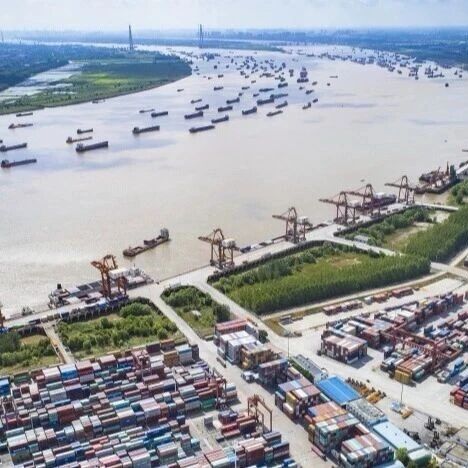
别的省份大挖运河,“千河之省”四川也要砸210亿振兴航运
Di Yi Cai Jing· 2025-11-24 09:28
Core Viewpoint - Sichuan province is set to invest 21 billion yuan over three years to enhance its water transport system, aiming to connect major rivers and improve overall logistics efficiency by 2027 [1][4]. Investment and Development Plans - The "Action Plan" outlines an investment of 21 billion yuan from 2025 to 2027, with allocations of 14.8 billion yuan for waterway construction, 5.5 billion yuan for port development, and 700 million yuan for transport infrastructure [4]. - The funding sources include 6 billion yuan from central government funds, 1.8 billion yuan from provincial finances, 1.6 billion yuan from municipal governments, and 11.6 billion yuan from project owners [4]. Current Water Transport Status - Sichuan has 176 navigable rivers and 147 navigable lakes, totaling 10,500 kilometers of navigable routes, ranking fourth nationally and first in the western region [1]. - The province has 18 ports with a cargo throughput capacity of 103.91 million tons and a container throughput capacity of 2.5 million TEUs [1]. Challenges in Water Transport - Water transport accounts for only 2.95% of the total freight volume in Sichuan, significantly lower than other provinces like Hubei and Jiangxi [1]. - The province faces bottlenecks in high-grade waterways, with only 8.1% of the total navigable mileage classified as high-grade, and 31% of high-grade waterways obstructed by locks and dams [2]. Future Goals and Projections - By 2035, Sichuan aims to establish five outbound channels and increase high-grade waterway mileage to 2,160 kilometers, with a coverage rate of 57% for city-level administrative regions [2]. - The province's water transport volume is projected to exceed 100 million tons by 2028, with significant increases in cargo turnover and container throughput [3]. Expected Outcomes - The "Action Plan" aims to achieve "double improvement, triple growth, and one reduction" by 2027, enhancing waterway standards, increasing shipping capacity, and reducing logistics costs [5].