
汇率风险防范

Search documents
每周股票复盘:一拖股份(601038)控股子公司拟开展远期结售汇业务
Sou Hu Cai Jing· 2026-03-07 19:08
Core Viewpoint - YTO Group Corporation (601038) has experienced a slight decline in stock price, closing at 14.7 yuan, down 1.14% from the previous week, with a current market capitalization of 16.518 billion yuan [1] Company Announcements - YTO Group's subsidiary plans to engage in forward foreign exchange settlement and sales with a total limit not exceeding 539.6 million yuan to mitigate exchange rate fluctuation risks and ensure profitability in export operations [1] - The maximum holding size for YTO International Economic and Trade Co., Ltd. is set at 497 million yuan, while China-Africa Heavy Industry Investment Co., Ltd. is capped at 42.6 million yuan, with the validity period of the limit being 12 months from the board's approval [1] - The funding for these activities will come from the company's own funds, without involving raised funds or bank credit [1] - The board's audit committee and the second meeting of the tenth board have approved this matter, and it does not require submission for shareholder approval [1] - The company has established risk control measures to mitigate market, credit, operational, liquidity, and performance risks [1]

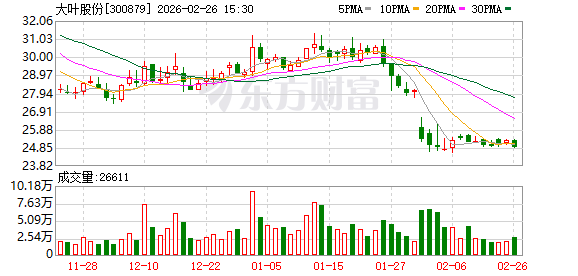
大叶股份:高度重视汇率风险的防范与管控工作
Zheng Quan Ri Bao· 2026-02-26 09:38
Core Viewpoint - The company emphasizes the importance of managing and mitigating exchange rate risks to ensure stable development [2] Group 1: Risk Management - The company is actively addressing exchange rate risks through various measures [2] - It plans to utilize foreign exchange hedging and other financial tools based on actual operational needs [2] - The goal is to effectively reduce the adverse impacts of exchange rate fluctuations on production and operations [2]


“财汇宝”助小微外贸企业轻装避险
Jin Rong Shi Bao· 2025-10-28 03:22
Core Insights - The introduction of the "Caihui Bao" program has significantly alleviated the financial burden on small and micro enterprises in the fireworks export sector, allowing them to hedge against exchange rate risks without the need for upfront collateral [1][2][4] - The program is designed to support the local economy by enhancing the resilience of small foreign trade enterprises against external risks, thereby promoting high-quality development in the region [4] Summary by Sections Introduction of "Caihui Bao" - The "Caihui Bao" program was launched in March this year, providing timely support to small and micro business owners in the fireworks export industry [2] - The program allows eligible enterprises to lock in exchange rates without needing to provide a cash deposit, which was a significant barrier previously [2] Financial Mechanism - The program is backed by a special fund established by the local government, which covers the required margin for foreign exchange hedging, thus freeing up cash flow for businesses [2][3] - The initial fund size is set at 3 million RMB, which is expected to efficiently meet the needs of local enterprises while allowing for a revolving mechanism to maximize fund utilization [3] Impact on Business Operations - The implementation of "Caihui Bao" has led to a notable increase in business confidence, with enterprises now more willing to accept larger orders due to reduced financial constraints [2][4] - The program has transformed the perception of hedging tools among small businesses, encouraging them to actively engage in risk management strategies [4] Future Outlook - The local government plans to continue optimizing the "Caihui Bao" program and expand its reach to further support the development of the fireworks export industry [4] - The initiative aims to create a more robust financial environment for small enterprises, enabling them to focus on production and innovation without the burden of financial constraints [4]
禾盛新材: 远期结售汇业务管理制度(2025年5月)
Zheng Quan Zhi Xing· 2025-05-20 09:17
Core Viewpoint - The article outlines the management system for forward foreign exchange settlement and sales by Suzhou Hesheng New Materials Co., Ltd, aiming to standardize operations, mitigate foreign exchange risks, and comply with relevant laws and regulations [1][2]. Summary by Sections General Principles - The forward foreign exchange settlement and sales business is defined as agreements with banks to settle or sell foreign currencies at a future date, specifying the currency, amount, exchange rate, and deadline [1]. - The system applies to the company and its subsidiaries, requiring approval for subsidiaries to engage in such transactions [1][2]. - All operations must comply with national laws and the company's internal regulations [1]. Operational Principles - The company will not engage in foreign exchange trading solely for profit; all transactions must be based on normal business operations to hedge against exchange rate risks [2]. - Transactions are only permitted with qualified financial institutions approved by the State Administration of Foreign Exchange and the People's Bank of China [2]. - The foreign currency amount in forward contracts must not exceed 90% of the annual foreign currency payment plan [2]. Approval Authority - The board of directors and shareholders' meeting are the decision-making bodies for forward foreign exchange transactions [3]. - Specific approval thresholds are set, such as requiring board approval for transactions exceeding 10% of the latest audited net assets or 10 million RMB [3][4]. - The board's audit committee is responsible for reviewing the necessity and feasibility of transactions [4]. Management and Internal Processes - The finance department manages daily operations related to forward foreign exchange transactions [5]. - A dedicated team is established to oversee these transactions, including key executives and finance personnel [5]. - The finance department is responsible for transaction execution, risk assessment, and reporting [6]. Risk Management - A strict risk management mechanism is established to prevent and mitigate various risks associated with foreign exchange transactions [7]. - The finance department must monitor and report on the use of funds and transaction outcomes regularly [8]. Information Disclosure - The company must disclose information regarding forward foreign exchange transactions as per regulatory requirements [9]. - Losses exceeding 10% of the latest audited net profit must be disclosed promptly [9]. Miscellaneous - The system will be revised in accordance with future laws and regulations [9].
