
江豚野化放归

Search documents
推进长江生态保护工作 留住江豚的“微笑”
Yang Shi Wang· 2025-11-19 06:41
Core Viewpoint - The release of two Yangtze River dolphins, known as the "smiling angel," back into their natural habitat reflects the ongoing efforts to protect and restore the species, which is crucial for the health of the Yangtze River ecosystem [1][20]. Group 1: Wild Release Actions - The second wild release of Yangtze River dolphins took place on November 14, with two dolphins returning to the Yangtze River after over two years of training [1][5]. - The first wild release occurred on April 25, 2023, and the current release builds on the initial success, incorporating improved training methods [5][7]. - The training involved adapting the dolphins to the natural environment, including noise and water flow, to enhance their survival skills [3][11]. Group 2: Monitoring and Technology - A wearable tracking system was developed to monitor the dolphins post-release, allowing for precise tracking of their movements [3][13]. - The monitoring process has improved significantly, with a tracking accuracy of 10 meters compared to the previous 5 kilometers [13][20]. - The use of drones and AI technology has been integrated into the monitoring efforts to enhance observation capabilities [18][20]. Group 3: Conservation Efforts - The Yangtze River dolphin is a key species for ecological health, and its protection is vital to prevent a repeat of the functional extinction of the baiji dolphin [15][25]. - China has established five migration protection bases for the dolphins, housing over 150 individuals, with more than 10 births annually [17][20]. - The ongoing efforts include strict enforcement of fishing bans and ecological protection measures, which have led to improved environmental conditions in the Yangtze River [20][22]. Group 4: Future Plans - The long-term plan includes developing a stable wild release technology system by 2030 and expanding the migration protection population by 2035 [11][24]. - Research is ongoing to explore faster and non-invasive methods for assessing the dolphins' adaptation to the wild [7][24]. - The establishment of a sperm bank for the dolphins marks a significant advancement in artificial breeding techniques, aiming for further breakthroughs in species protection [24][25].

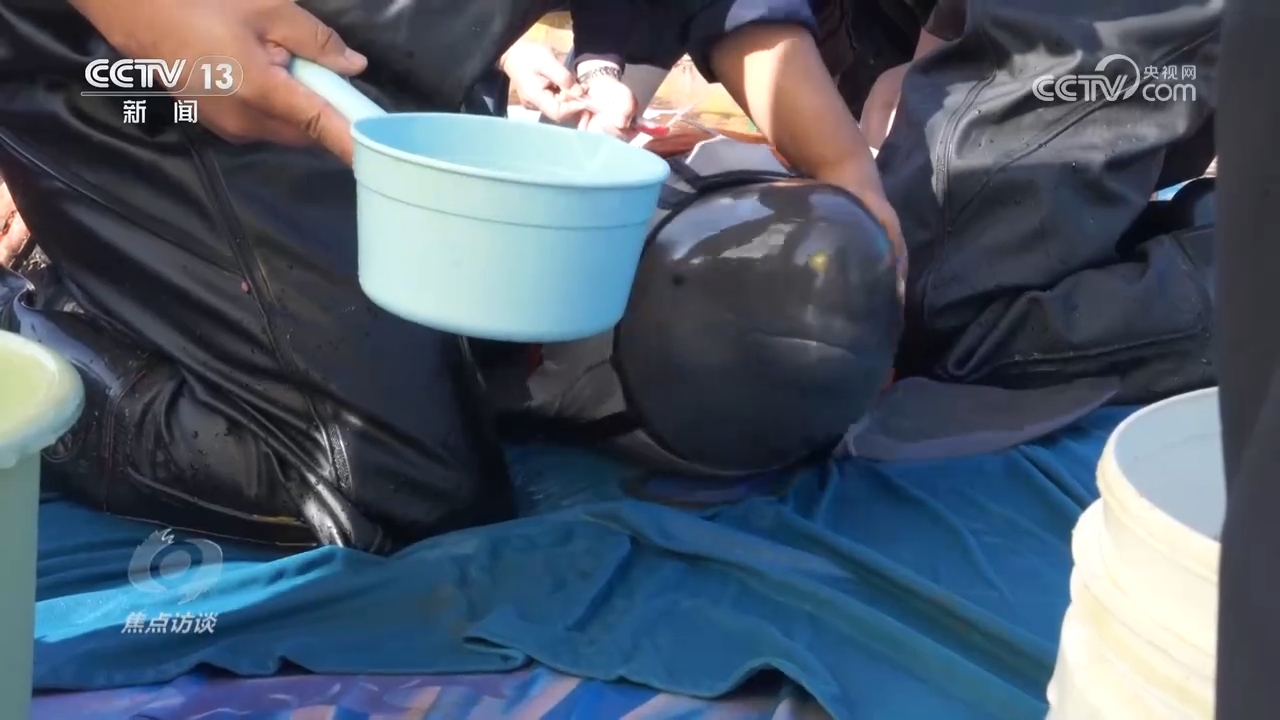
焦点访谈 | 推进长江生态保护工作 留住江豚的“微笑”
Yang Shi Wang· 2025-11-18 14:01
Core Viewpoint - The article discusses the successful second wild release of Yangtze River dolphins, highlighting the efforts made to enhance their survival skills and the importance of these actions for the ecosystem's health [1][5][7]. Group 1: Wild Release Actions - The second wild release of two Yangtze River dolphins took place on November 14, marking a significant step in conservation efforts [1]. - Prior to the release, extensive health checks and training were conducted, including identity scanning and physical examinations [3]. - The dolphins underwent over two years of training to adapt to the natural environment, focusing on survival skills such as adapting to water flow and noise [3][5]. Group 2: Training and Monitoring - The training for the dolphins included exposure to realistic environmental sounds to better prepare them for the challenges they would face in the wild [5]. - A wearable tracking system was developed to monitor the dolphins post-release, allowing for precise location tracking [13]. - The first group of released dolphins has successfully adapted to their environment, forming groups and finding food [13]. Group 3: Conservation Strategy - The wild release program is experimental, with no prior global examples to follow, necessitating a careful and gradual approach [7]. - A long-term plan has been established to develop a stable and sustainable population of Yangtze River dolphins by 2035 [11]. - The selection of dolphins for release is based on rigorous analysis, ensuring minimal impact on genetic diversity [11]. Group 4: Ecological Impact - The Yangtze River dolphin's survival is closely tied to the health of the river's ecosystem, which has improved due to ongoing conservation efforts and fishing bans [19][21]. - Continuous monitoring and enforcement against illegal fishing practices have contributed to the recovery of fish populations, which are vital for the dolphins' survival [19][21]. Group 5: Breeding and Research Advances - The Yangtze River dolphin breeding center has achieved significant milestones, including the establishment of a sperm bank and successful artificial breeding techniques [24][25]. - The research center aims to further enhance breeding technologies to ensure the long-term survival of the species [25]. - The overall conservation efforts reflect a collaborative approach among various stakeholders, showcasing the positive outcomes of sustained ecological protection initiatives [25].