汽车与大健康融合

Search documents
【回望2025】提升健康标准,守护方寸空间:C-AHI中国汽车健康指数的创新行动
Zhong Guo Qi Che Bao Wang· 2026-01-30 01:21
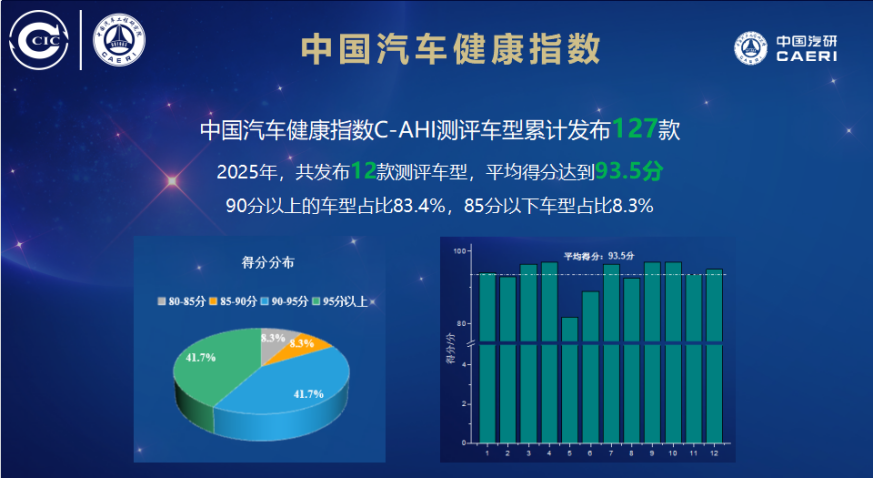
Core Insights - The 2026 New Year message from the President emphasizes the importance of innovation for high-quality development, the significance of public welfare, and the need for global engagement. The C-AHI health index aligns with national strategies and industry development by focusing on innovation, responsibility, and a global perspective [1]. Group 1: Health Index Overview - In 2025, the C-AHI health index published evaluations for 12 vehicle models, achieving an average score of 93.5, with 83.4% of models scoring above 90, indicating significant progress in overall industry health [2]. - The assessment is based on three main areas: fresh air, health protection, and green travel, which document positive industry advancements and provide guidance for future technical optimizations [2]. Group 2: Fresh Air Quality - Vehicle air quality has shown improvement, with approximately 67% of models achieving good levels in volatile organic compound (TVOC) control, indicating reduced chemical odors [4]. - The "new car smell" issue has significantly improved, with average odor levels nearing the acceptable range, although challenges remain with formaldehyde and acetaldehyde release after exposure to sunlight [4]. Group 3: Health Protection - Vehicles demonstrate balanced performance in health protection, effectively blocking most particulate matter, with an average purification time of 2.71 minutes for air quality maintenance [6]. - The risk of skin and respiratory allergens has been significantly reduced, with a 100% five-star rating for allergen control in evaluated models, reflecting successful investments in material safety [7]. - Antibacterial and anti-mold capabilities have improved, with average scores rising by 4.5 points compared to 2024 [8]. Group 4: Green Travel - The green travel segment focuses on vehicle energy consumption and reliable range across various scenarios, showing a steady improvement in average range retention under WLTC conditions [12]. - Average energy consumption has decreased, lowering user costs, although electric vehicles still face range reduction issues in cold weather and high-speed scenarios [12]. - The rise in ultra-fast charging technology has reduced charging times, alleviating user anxiety regarding charging [12]. Group 5: Standards and Innovations - The C-AHI health index has established the first comprehensive assessment standard for in-vehicle environmental pollution in China, laying the foundation for vehicle interior quality development [14]. - It has created assessment methods tailored to local user needs, leading innovations in low-carbon and range evaluation technologies [14]. - The index collaborates with research teams to publish a five-star health evaluation standard, promoting overall industry health improvements [14]. Group 6: Future Outlook - The C-AHI health index aims to continue driving innovation and refining assessment protocols, integrating health with intelligence and low-carbon initiatives, and advancing from "meeting standards" to "enjoying excellence" in automotive health [16]. - The index is committed to supporting the "Healthy China" initiative in the automotive sector, establishing benchmarks for the global health travel market [16].