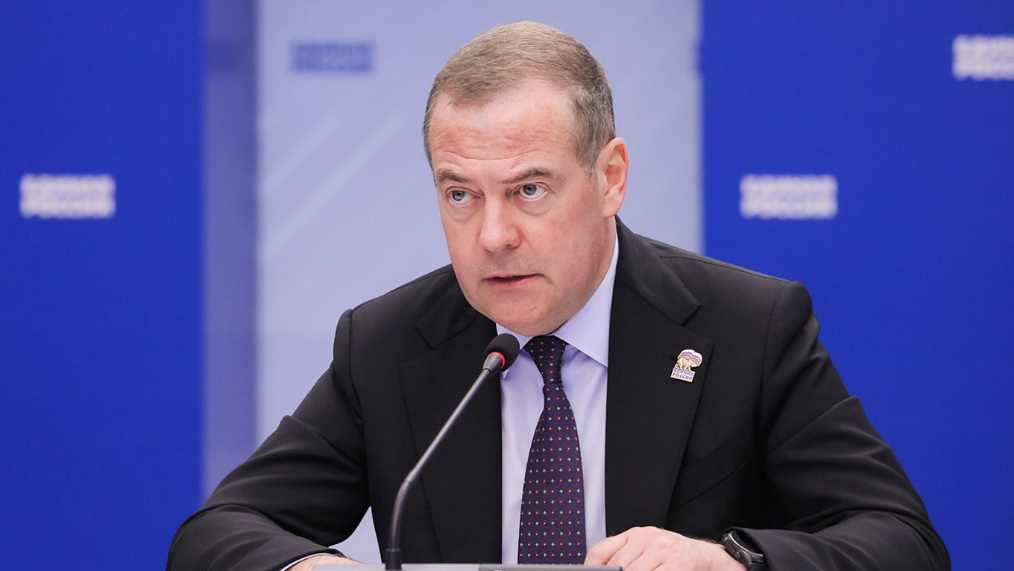
没收俄罗斯资产

Search documents
普京称没收俄资产将破坏欧元区信任
Xin Lang Cai Jing· 2025-12-20 22:07
Group 1 - The core viewpoint expressed by President Putin is that the confiscation of Russian assets in Europe would undermine trust in the Eurozone [1] - Putin characterizes the attempt to seize Russian assets as "robbery" rather than "theft," indicating that it is a public act rather than a secretive one [1] - He emphasizes that if Russian assets are confiscated, Russia will seek legal recourse in jurisdictions free from political influence [2] Group 2 - Putin notes that the international reserves of the Russian Central Bank are increasing, with a total amount of $741.5 billion as of a few days ago [3] - He asserts that the Russian economy and financial system are fully under the oversight of the government and the central bank [3]
匈牙利总理:须竭力避免没收俄罗斯资产
Xin Hua She· 2025-12-16 06:57
Core Viewpoint - Hungary's Prime Minister Orban emphasizes the need to avoid the confiscation of Russian assets and threatens to sue the EU if Hungary's stance is not considered [1][2]. Group 1: EU's Actions and Hungary's Position - The EU has announced an "indefinite freeze" on Russian assets within its territory and plans to finalize a scheme to use these frozen assets to support Ukraine during the upcoming EU summit [1][2]. - Hungary and Slovakia oppose the use of frozen Russian assets to support Ukraine, but recent EU decisions mean these countries can no longer veto related measures [2]. - Orban suggests that the EU may modify voting rules to bypass unanimous consent, which would limit Hungary's ability to block decisions regarding Russian asset confiscation [2]. Group 2: Financial Implications and Legal Actions - Since the escalation of the Ukraine crisis in February 2022, Western countries have frozen approximately $300 billion of Russian overseas assets, with the EU freezing around €210 billion of Russian central bank assets [3]. - The EU is discussing various options for financing aid to Ukraine, with the most credible option being a "compensation loan" scheme that uses frozen Russian assets as collateral [3]. - The Russian Central Bank has filed a lawsuit in Moscow seeking compensation exceeding 1.8 billion rubles (approximately $22.66 million) from the European Clearing Bank [3].
欧尔班:这就是宣战
中国能源报· 2025-12-14 07:07
Core Viewpoint - The Hungarian Prime Minister Viktor Orbán warns that the EU's attempt to confiscate Russian assets would have severe consequences and equate to a declaration of war [1]. Group 1: Statements from Hungarian Prime Minister - Orbán stated that he went to Brussels to protest against the EU's efforts to confiscate Russian assets, highlighting that such actions are unprecedented and could lead to significant losses of assets ranging from €200 billion to €300 billion [1]. - He emphasized that the situation is deteriorating at a "mad speed" [1]. - Orbán mentioned that Hungary, like Russia, has its own national reserves stored in Belgium, raising concerns about the safety of these assets if Belgium were to act against Russian assets [1]. Group 2: EU's Actions and Russian Response - The European Commission is striving to gain consensus among member states to utilize Russian sovereign assets to aid Ukraine, with discussions on the amount ranging from €185 billion to €210 billion [1]. - The Russian Foreign Ministry has declared that the EU's demand for Russia to pay war reparations to Ukraine is unrealistic, accusing Brussels of long-term theft of Russian assets [1].

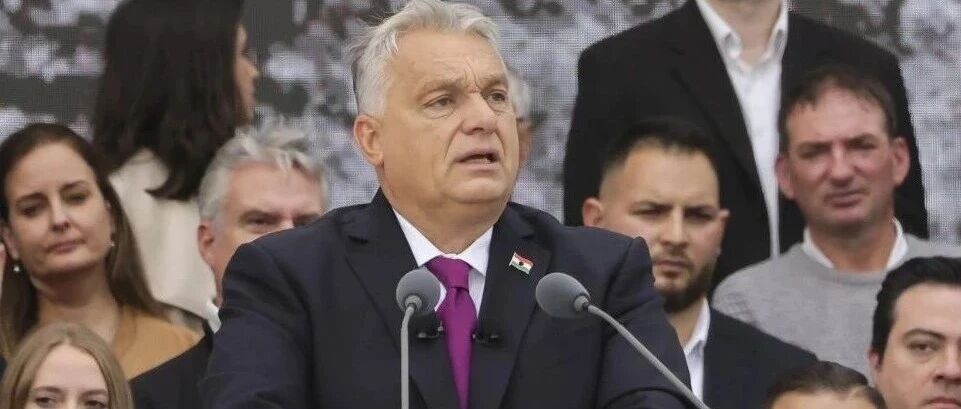
突发,坚决主张没收欧洲俄罗斯资产的默茨在国内挨了当头一棒。
Sou Hu Cai Jing· 2025-12-07 06:25
Group 1 - The core viewpoint is that the push for confiscating Russian assets in Europe to aid affected regions has faced significant setbacks, particularly for the German politician Merz, who has been advocating for this measure [1][3]. - The German parliament rejected the proposal to confiscate frozen Russian assets, with only 77 out of 630 members supporting it, indicating a strong opposition primarily due to fears of retaliation from Russia [3]. - Concerns among German lawmakers stem from the potential impact on businesses that still operate in Russia, which could face confiscation of assets as a form of retaliation, a sentiment echoed by other countries like Belgium, France, and Italy [3]. Group 2 - The confiscation of Russian assets would effectively mean using European assets for aid, as Russia would likely retaliate by seizing EU assets in Russia, raising legal and ethical concerns [4]. - Merz, known for his strong anti-Russian stance, has faced embarrassment with his failed attempts to rally support both domestically and internationally [4]. - In the long term, post-war, capital is expected to flow into regions with development potential, and the Russian market is seen as a vacuum that Western capital may seek to enter, suggesting that antagonizing Russia may not serve the long-term interests of European businesses [4].
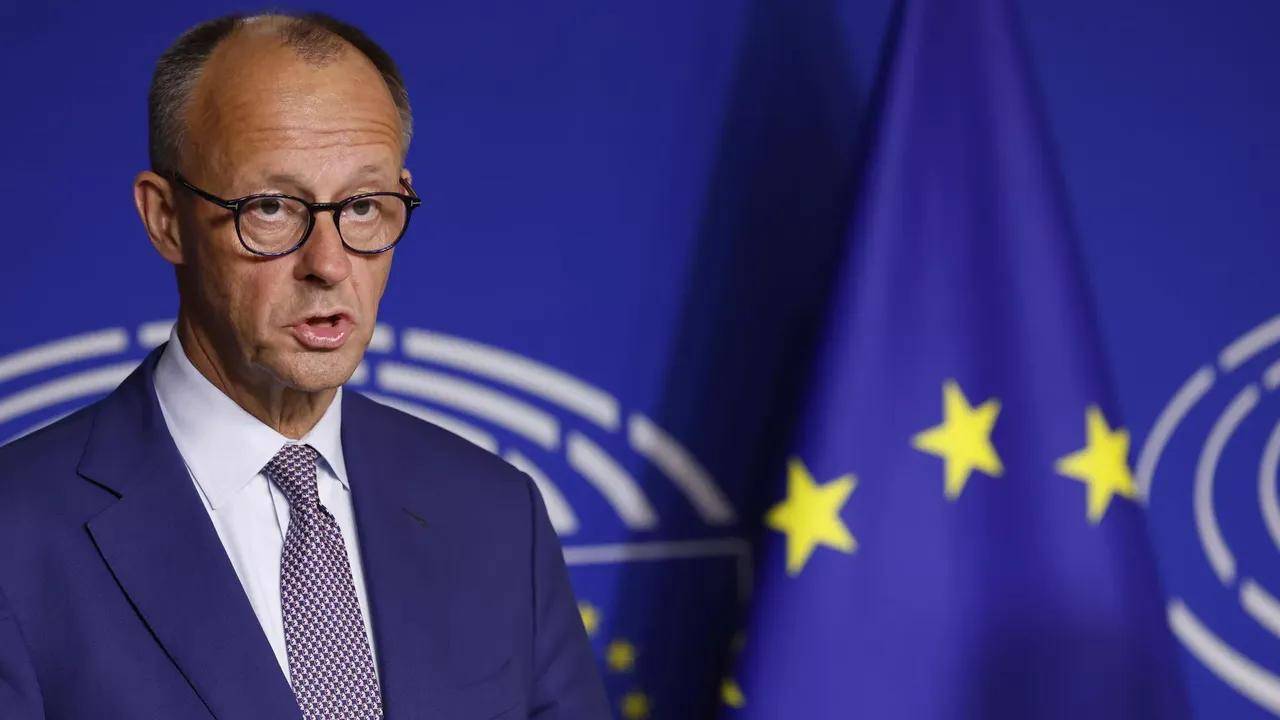
梅德韦杰夫警告欧洲:将追究任何试图没收俄资产的国家,“直至本世纪末”
Huan Qiu Wang· 2025-09-15 11:40
Core Viewpoint - Russia warns European countries against attempts to seize Russian assets, stating that such actions will lead to accountability and legal repercussions [1][3]. Group 1: Russian Response - Dmitry Medvedev, Deputy Chairman of the Russian Security Council, stated that any European country attempting to confiscate Russian assets will face consequences until the end of the century [1][3]. - Medvedev emphasized that Russia will pursue accountability through all possible means, including international and domestic courts, as well as outside of court [3]. Group 2: EU's Financial Mechanism - The European Commission President Ursula von der Leyen announced plans to explore financing mechanisms based on frozen Russian assets to provide "compensation loans" to Ukraine for security and long-term reconstruction [3]. - The Russian Foreign Ministry has noted that the EU's use of frozen Russian Central Bank assets to provide financial aid to Ukraine is seen as an escalation of economic aggression against Russia [3].