
河湖生态复苏

Search documents
北京再添100公里滨水步道,北护城河-坝河-北运河将全线通航
Xin Jing Bao· 2026-02-05 10:01
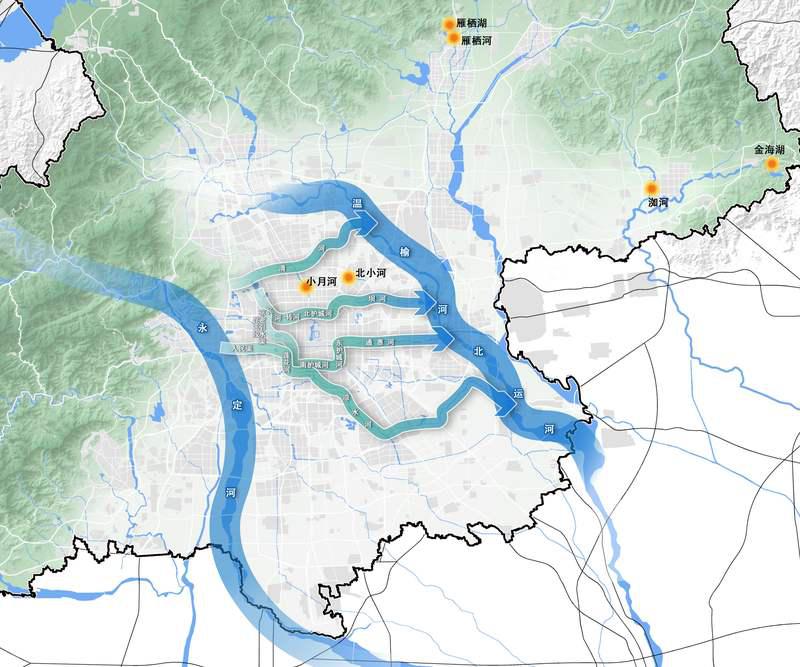
Core Viewpoint - Beijing is set to enhance its waterfront spaces by constructing approximately 100 kilometers of waterfront trails by 2026, connecting various rivers and canals in the city [1][3]. Group 1: Waterfront Trail Development - The plan includes the completion of a 10-kilometer waterfront trail along the Yongding River, addressing three existing gaps and integrating it with the river's comprehensive improvement projects [3]. - A 25-kilometer waterfront trail will be established along the right bank of the Wenyu River, connecting five gaps and improving accessibility through engineering measures and signage [3]. - The project aims to connect 46 kilometers of waterfront trails on both sides of the Qinghe River, facilitating conditions for hosting waterfront marathons [3]. Group 2: Additional Infrastructure and Upgrades - The construction of a 3.5-kilometer waterfront trail along the Yongding River Diversion Canal is planned, with enhancements to the public space along the canal [3]. - The water authority will promote navigation along the Beihucheng River, Baha River, and Beiyun River, totaling 42 kilometers, including a new 15-kilometer navigation route [3]. Group 3: Ecological and Environmental Initiatives - The water authority will upgrade and renovate several lakes and rivers, including Jin Hai Lake and Yanqi Lake, while enhancing supporting facilities [4]. - Efforts will be made to improve the ecological environment of rivers and lakes, focusing on water system connectivity in districts like Tongzhou and Daxing [5]. - The authority will implement comprehensive management of groundwater over-extraction areas and promote water source protection regulations [6]. Group 4: Flood Management and Resilience - The water authority will enhance flood prevention and disaster relief capabilities, including monitoring rainwater conditions across 36 cross-border rivers and 11 channels [7]. - A comprehensive plan for flood control and disaster recovery will be executed, with a focus on restoring water-damaged infrastructure and improving drainage systems in flood-prone areas [7]. - The authority aims to expedite the construction of key water management projects, including the Yongding River flood control works and the South-to-North Water Diversion project [8].

宁夏创新河湖生态复苏模式
Zhong Guo Xin Wen Wang· 2025-12-20 01:14
Core Insights - Ningxia has successfully achieved the "14th Five-Year" recovery goals for the Qing Shui River and Sha Lake, demonstrating a positive ecological cycle in these water systems since the Ministry of Water Resources initiated recovery actions across 88 major rivers and lakes in 2022 [1][2]. Group 1: Qing Shui River Recovery - The Qing Shui River, as the largest tributary of the Yellow River in Ningxia, faced long-term water resource shortages and risks of drying up. In 2023, Ningxia implemented 14 projects focused on river channel management and water source conservation, with a total investment exceeding 290 million yuan, managing 36.6 kilometers of river channel [1]. - The implementation of the "Qing Shui River Basin Water Allocation Plan" has ensured that the main river's 320.6 kilometers are fully connected and flowing, achieving a 100% compliance rate for ecological flow at five major control sections, with water quality meeting national assessment targets [1]. Group 2: Sha Lake Recovery - The ecological recovery of Sha Lake has shown significant results, maintaining a minimum water level of 1098.80 meters, which is 0.16 meters above the target. A total of 310,000 cubic meters of sediment has been removed, and over 4,800 acres of aquatic plants, such as reeds, have been planted [2]. - Water quality has improved from Class IV in 2022 to Class III, with some months reaching Class II. Biodiversity has also increased, with bird species in the lake area rising from 178 to over 210 [2]. Group 3: Management and Community Involvement - Ningxia's Water Resources Department has established a "one river (lake) one policy" closed-loop management mechanism, integrating recovery tasks into key work under the river and lake chief system and the strictest water resource management assessment [2]. - The region is fostering a new paradigm of community involvement in river and lake protection through initiatives like the "Yellow River Guardians" volunteer service and the establishment of ecological research bases [2][3].