水利管理业

Search documents
去年辽宁万元地区生产总值用水量40.11立方米
Ren Min Ri Bao· 2026-02-24 02:14
Core Insights - Liaoning Province has achieved a significant reduction in water consumption per unit of GDP, with a decrease of 22.44% from 2020 to 2021, amounting to 40.11 cubic meters per ten thousand yuan of GDP [1] Water Management Strategies - The province has established a comprehensive water management system at the provincial, municipal, and county levels, focusing on total water consumption and intensity control targets [1] - In industrial water conservation, Liaoning is promoting the construction of water-saving enterprises in high water-consuming industries such as thermal power, steel, and petrochemicals, alongside implementing water management and upgrades [1] - The province is also enhancing the treatment and recycling of industrial wastewater, including deep processing of oil refining wastewater and saline wastewater from coal chemical processes [1] Agricultural Water Efficiency - In agriculture, Liaoning has implemented metering management for large and medium-sized irrigation areas, achieving full coverage of measurement at the main and branch canal entrances, with online monitoring for irrigation areas over 50,000 acres [1] - During the "14th Five-Year Plan" period, agricultural water consumption is projected to continue declining from 7.717 billion cubic meters in 2021 to 7.285 billion cubic meters by 2025 [1]
宁蒗南片区水库开发建设有限责任公司成立,注册资本7085.32万人民币
Sou Hu Cai Jing· 2026-02-13 17:28
Core Viewpoint - A new company named Ninglang South Area Reservoir Development and Construction Co., Ltd. has been established with a registered capital of 70.8532 million RMB, focusing on water resource management and related services [1] Group 1: Company Overview - The legal representative of the company is Yin Haimin [1] - The registered capital is 70.8532 million RMB [1] - The company is located in Yunnan Province, Lijiang City, Ninglang Yi Autonomous County [1] Group 2: Shareholding Structure - Jiangsu Ruiwo Construction Group Co., Ltd. holds 48.9978% of the shares [1] - Ninglang Yi Autonomous County Water Resources Development Co., Ltd. holds 29.7138% of the shares [1] - Lijiang Water Resources Development Co., Ltd. holds 21.2884% of the shares [1] Group 3: Business Scope - The company's business scope includes hydropower generation, construction engineering, and natural water collection and distribution [1] - Additional services include water resource management, water pollution control, ecological resource monitoring, irrigation services, and flood control facility management [1] - The company is also involved in investment activities, asset management services, and government-commissioned water rights transfer management [1]
为民间投资创造更多发展机遇
Sou Hu Cai Jing· 2026-02-12 23:27
Core Insights - Private capital is focusing on profit and efficiency, actively responding to market supply and demand, competition, and trends to drive economic development and stabilize overall investment [1] - Despite a slowdown in private investment due to domestic and international changes, the structure of private investment in China is continuously optimizing with improved policy frameworks [2] Group 1: Trends in Private Investment - During the "14th Five-Year Plan" period, private investment in manufacturing is projected to grow at an average annual rate of 10.1%, significantly higher than the average growth rate of private investment [2] - High-tech manufacturing sectors are experiencing rapid growth, with private fixed asset investment in electrical machinery and equipment manufacturing increasing by 16.9% annually, and other sectors like aerospace and automotive manufacturing also showing strong growth rates [2] Group 2: Policy Support and Opportunities - The "15th Five-Year Plan" outlines strategic tasks that will significantly support private investment, including the development of advanced manufacturing clusters and strategic emerging industries [3] - In November 2025, the State Council issued measures to further promote private investment, addressing market access difficulties and providing targeted policy initiatives to enhance investment vitality [3] Group 3: Enhancing Investment Environment - To create more opportunities for private investment, it is essential to eliminate systemic barriers and ensure equal treatment of all types of enterprises [4] - Policies should be transparent and accessible, transforming supportive measures into practical guidelines for enterprises [4] Group 4: Investment in Key Areas - Establishing guiding funds for key sectors and critical links can attract more social capital for early and long-term investments in startups and emerging industries [5]
水质更优 河湖更美 用水更严
Xin Lang Cai Jing· 2026-02-10 21:07
Core Viewpoint - The news highlights the significant advancements in water resource management and ecological restoration in Shaanxi Province, particularly through the implementation of the "Yin Han Ji Wei" project, which aims to alleviate water shortages and improve water quality for millions of residents [1][2]. Group 1: Water Resource Management - The "Yin Han Ji Wei" project is the largest water conservancy project in Shaanxi's history, expected to benefit over 14 million people by alleviating water shortages in the Guanzhong region [2]. - The project involves transporting water from the Han River through a 90-kilometer tunnel across the Qinling Mountains to the Wei River basin, addressing the uneven distribution of water resources in the province [2]. - Shaanxi's water resources are characterized by a total of 117 billion cubic meters in the Yellow River basin and 303 billion cubic meters in the Yangtze River basin, with significant population and economic activity concentrated in water-scarce areas [2]. Group 2: Ecological Restoration - The restoration of the Zao River in Xi'an transformed it from a polluted waterway into a clean river, enhancing the quality of life for local residents [6]. - The implementation of the river and lake chief system has led to improved water quality across various rivers in Shaanxi, with a projected 96.4% of water quality sections reaching Class I-III standards by 2024 [6]. - The province has seen a significant reduction in soil erosion, with a cumulative treatment area of 21,400 square kilometers, and the water environment quality in the Yellow River basin reaching its best level in nearly 20 years [6]. Group 3: Agricultural Water Efficiency - The province is transitioning from traditional flood irrigation to more efficient methods, such as precision irrigation, to reduce water costs and improve agricultural productivity [7]. - The effective utilization coefficient of irrigation water in Shaanxi has increased from 0.565 in 2017 to 0.589 by 2025, surpassing the national average [8]. - The introduction of advanced water treatment technologies in coal mining operations has improved water recycling and reduced overall water consumption in the industry [8].
锐财经|促进有效投资,更多举措落地
Ren Min Ri Bao Hai Wai Ban· 2026-02-10 06:31
Group 1 - The State Council's recent meeting emphasized the need to innovate and improve policies to promote effective investment, utilizing various financial tools such as central budget investments, ultra-long-term special bonds, and local government special bonds [1] - A series of policy measures aimed at promoting effective investment have been implemented, which are expected to stabilize investment and enhance its role in expanding domestic demand, optimizing supply, and benefiting people's livelihoods [1] Group 2 - In 2025, national fixed asset investment (excluding rural households) reached 48,518.6 billion yuan, a decrease of 3.8% from the previous year, indicating downward pressure on fixed asset investment due to local government debt and economic transition factors [2] - Investment in key sectors showed faster growth, with industrial investment increasing by 2.6%, contributing 0.9 percentage points to overall investment growth [2] Group 3 - In infrastructure investment, pipeline transportation investment grew by 36.0%, internet and related services investment increased by 23.8%, and multimodal transport and agency services investment rose by 22.9% in 2025 [3] - Private investment in infrastructure grew by 1.7%, accounting for 21.0% of total infrastructure investment, with significant growth in water management and road transport sectors [3] Group 4 - Equipment and tool purchase investment increased by 11.8% in 2025, contributing 1.8 percentage points to overall investment growth, with a focus on supporting over 8,400 equipment renewal projects through ultra-long-term special bonds [4] - The first batch of 936 billion yuan in ultra-long-term special bonds for 2026 has been allocated to support approximately 4,500 projects across various sectors, driving total investment exceeding 460 billion yuan [4] Group 5 - The National Development and Reform Commission (NDRC) is optimizing the implementation of "two new" policies to support equipment renewal by lowering investment thresholds and enhancing project review standards [5] - The NDRC aims to strengthen the management of equipment renewal projects and improve the efficiency of fund utilization through better coordination and monitoring [5] Group 6 - The NDRC highlighted the importance of effective government investment to avoid inefficient and redundant construction, focusing on improving project quality and maturity for central budget investments and special bonds [7] - The recent fiscal and financial policies aim to stimulate private investment, with measures including credit support, interest subsidies, and guarantees to lower financing costs and barriers for private enterprises [8]
加力提效用好相关资金和新型政策性金融工具——促进有效投资,更多举措落地
Sou Hu Cai Jing· 2026-02-10 01:20
Core Viewpoint - The recent State Council meeting emphasized the need to innovate and improve policy measures to promote effective investment, aiming to stabilize investment and enhance its role in expanding domestic demand, optimizing supply, and benefiting people's livelihoods [3]. Investment Trends - In 2025, China's fixed asset investment (excluding rural households) reached 48,518.6 billion yuan, a decrease of 3.8% from the previous year, indicating downward pressure on investment due to local government debt and economic transition factors [4]. - Key sectors showed rapid investment growth, with industrial investment increasing by 2.6%, contributing 0.9 percentage points to overall investment growth [4]. - Infrastructure investment in key areas saw significant increases, such as pipeline transportation investment growing by 36.0% and internet-related services investment increasing by 23.8% [5]. Equipment Investment - Equipment and tool purchase investment rose by 11.8% in 2025, contributing 1.8 percentage points to total investment growth, with a focus on supporting over 8,400 equipment renewal projects through special bonds [6]. - The government plans to continue large-scale equipment renewal policies into 2026, with an initial allocation of 93.6 billion yuan in special bonds for various sectors [7]. Government Investment Strategy - The State Council meeting highlighted the importance of precise government investment to avoid inefficient and redundant construction, emphasizing the need for high-quality project planning and collaboration between investment, fiscal, and financial policies [8]. - The government aims to enhance support for private investment through a comprehensive policy package, addressing financing costs and barriers for private enterprises [9]. - The focus will be on increasing government investment in livelihood projects and utilizing new policy financial tools to attract more private and social capital [9].

“中华水塔”五年年均出境水量堪比5700个西湖
Xin Lang Cai Jing· 2026-02-05 13:06
Core Viewpoint - Qinghai Province has made significant progress in water resource management and ecological protection over the past five years, enhancing its water conservation capacity and improving water quality [1] Group 1: Water Resource Management - The average annual outbound water volume from Qinghai is approximately 80 billion cubic meters, equivalent to the capacity of about 5,700 Hangzhou West Lakes, which hold nearly 14 million cubic meters [1] - In 2024, the total water resources in Qinghai are projected to be around 96 billion cubic meters, with outbound water volume expected to reach about 78 billion cubic meters, representing increases of 49.0% and 29.8% respectively compared to the long-term average [1] Group 2: Ecological Restoration - Over the past five years, Qinghai has legally dismantled illegal constructions and restored over 115 kilometers of natural shorelines, resulting in the reshaping of water bodies with complete spatial and functional integrity [1] - The area of soil erosion management has increased by 2,161.18 square kilometers, with the soil conservation rate improving from 76.8% to 77.6%, indicating a dual decrease in both the area and intensity of soil erosion [1] - All 35 national monitoring sections for surface water quality in Qinghai have achieved a 100% rate of good water quality [1]
北京再添100公里滨水步道,北护城河-坝河-北运河将全线通航
Xin Jing Bao· 2026-02-05 10:01
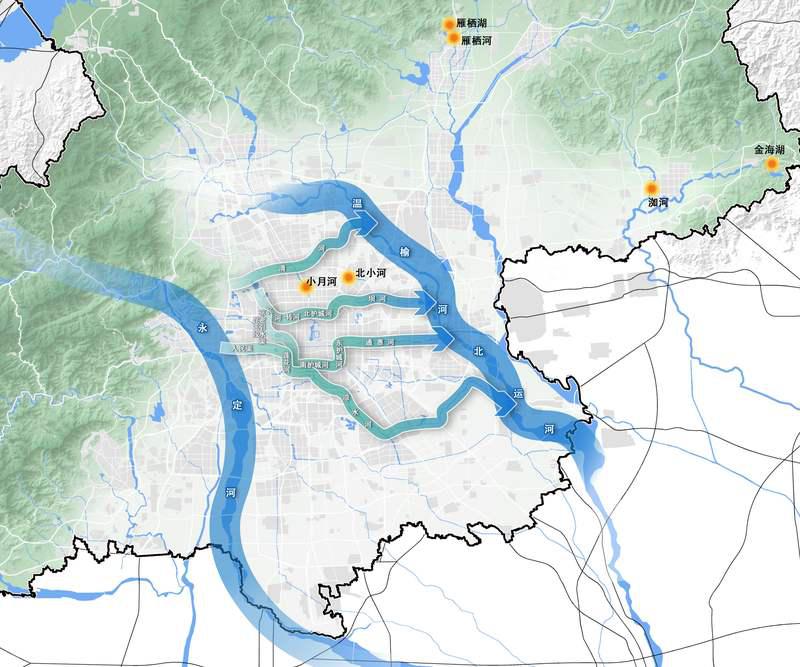
Core Viewpoint - Beijing is set to enhance its waterfront spaces by constructing approximately 100 kilometers of waterfront trails by 2026, connecting various rivers and canals in the city [1][3]. Group 1: Waterfront Trail Development - The plan includes the completion of a 10-kilometer waterfront trail along the Yongding River, addressing three existing gaps and integrating it with the river's comprehensive improvement projects [3]. - A 25-kilometer waterfront trail will be established along the right bank of the Wenyu River, connecting five gaps and improving accessibility through engineering measures and signage [3]. - The project aims to connect 46 kilometers of waterfront trails on both sides of the Qinghe River, facilitating conditions for hosting waterfront marathons [3]. Group 2: Additional Infrastructure and Upgrades - The construction of a 3.5-kilometer waterfront trail along the Yongding River Diversion Canal is planned, with enhancements to the public space along the canal [3]. - The water authority will promote navigation along the Beihucheng River, Baha River, and Beiyun River, totaling 42 kilometers, including a new 15-kilometer navigation route [3]. Group 3: Ecological and Environmental Initiatives - The water authority will upgrade and renovate several lakes and rivers, including Jin Hai Lake and Yanqi Lake, while enhancing supporting facilities [4]. - Efforts will be made to improve the ecological environment of rivers and lakes, focusing on water system connectivity in districts like Tongzhou and Daxing [5]. - The authority will implement comprehensive management of groundwater over-extraction areas and promote water source protection regulations [6]. Group 4: Flood Management and Resilience - The water authority will enhance flood prevention and disaster relief capabilities, including monitoring rainwater conditions across 36 cross-border rivers and 11 channels [7]. - A comprehensive plan for flood control and disaster recovery will be executed, with a focus on restoring water-damaged infrastructure and improving drainage systems in flood-prone areas [7]. - The authority aims to expedite the construction of key water management projects, including the Yongding River flood control works and the South-to-North Water Diversion project [8].
民间投资向新向优势不可挡
Jing Ji Ri Bao· 2026-01-31 02:36
Group 1 - The structural leap in private investment is a result of precise macro policy guidance and market opportunities resonating together, with policies aimed at reducing barriers, expanding avenues, and improving the environment effectively stabilizing market expectations and boosting investment confidence [1][3] - A comprehensive package of policies to stimulate domestic demand was implemented on January 20, focusing on private investment, including loan interest subsidies for small and micro enterprises, special guarantee plans for private investment, and risk-sharing mechanisms for private enterprise bonds [1] - Despite a decline in overall private investment growth since 2025 due to macro factors like the deep adjustment of the real estate market, there has been a significant optimization in the structure of private investment, shifting from traditional sectors like real estate and general manufacturing to new technologies, new infrastructure, new services, and new livelihoods [1][2] Group 2 - The transition towards "new" and "better" is unstoppable, with private investment embracing new productive forces and modern industrial systems, as evidenced by a 0.6% growth in private investment in the manufacturing sector despite a 3.8% decline in overall fixed asset investment in 2025 [2] - Investment in high-tech services and consumer sectors has become new hotspots for private investment, with significant growth in information transmission and water management sectors, as well as in accommodation, catering, and cultural entertainment industries [3] - To sustain and enhance private investment confidence and vitality, deep structural reforms are necessary, focusing on promoting "fair rules" rather than just "equal identity," ensuring that private capital can not only enter the market but also compete fairly [3][4]
【每周经济观察】民间投资向新向优势不可挡
Sou Hu Cai Jing· 2026-01-30 23:06
Group 1 - The core focus of the recent policy package is to stimulate private investment, particularly through measures such as loan interest subsidies for small and micro enterprises, special guarantee plans for private investment, and risk-sharing mechanisms for private enterprise bonds [2] - The overall trend of private investment in China has shown a decline in growth and low performance since 2025, largely influenced by macroeconomic factors like the deep adjustment of the real estate market [2] - Despite the pressure on total private investment, there is a significant structural optimization, with a shift from traditional investment in real estate and general manufacturing to new technologies, new infrastructure, new services, and new livelihoods [2] Group 2 - Private investment is increasingly embracing new productive forces and modern industrial systems, with a 0.6% growth in manufacturing investment despite a 3.8% decline in overall fixed asset investment in 2025 [3] - Key sectors such as railway, shipbuilding, aerospace, and other transportation equipment manufacturing saw substantial investment growth, with increases of 17.5%, 12.3%, 11.7%, and 9.1% respectively [3] - The participation of private capital in infrastructure projects has deepened, with significant projects in transportation and energy being promoted to private investors, indicating that private capital is becoming a crucial force in construction [3] Group 3 - High-tech services and consumer sectors are emerging as new hotspots for private investment, with notable growth in information transmission and water management sectors, achieving increases of 28.4% and 16.9% respectively [4] - The structural transition in private investment is a result of precise macro policies and market opportunities, with various measures aimed at reducing barriers and enhancing the investment environment [4] - Recent policies, including the implementation of the Private Economy Promotion Law and measures to further promote private investment, have provided unprecedented support for private investment [4] Group 4 - To achieve high-quality development of private investment, deeper structural reforms are necessary, focusing on ensuring fair competition and innovative financial supply models [5] - The current market has seen a reduction in explicit barriers to entry, but hidden requirements and regulatory challenges still exist, necessitating a shift in policy focus to guarantee fair competition [5] - Innovations in financial supply and the establishment of profitable models are essential for overcoming obstacles faced by private capital, particularly in long-term investment projects [5]