活态文化遗产

Search documents
新春走基层|目瑙纵歌:穿在身上的景颇史诗
Zhong Guo Jing Ji Wang· 2026-02-25 03:13
Core Viewpoint - The article highlights the significance of the Muna Zongge festival in Yunnan's Mangshi, showcasing it as a vibrant cultural heritage event that transcends mere celebration to embody the history and identity of the Jingpo ethnic group [1] Group 1: Cultural Significance - The Muna Zongge festival is described as the most grand traditional festival of the Jingpo ethnic group, referred to as the "dance of ten thousand people," emphasizing its scale and cultural importance [1] - The dancers wear traditional costumes that are only displayed during major festivals, with intricate patterns narrating the history and lifestyle of the Jingpo people, symbolizing their cultural identity [1] Group 2: Historical Representation - The costumes and dance steps serve as a living history book, with the spiral fern leaf pattern in the dance reflecting the wisdom of the Jingpo ancestors [1] - The lead dancer, known as "Naoshuang," wears a hornbill feather crown, guiding participants through the dance for three continuous days without confusion, showcasing the festival's organized nature [1] Group 3: Community and Emotion - The festival fosters a strong emotional community, where cultural identity transcends blood relations, uniting participants through shared rhythms and smiles [1] - The Muna Zongge festival is portrayed as a dynamic cultural heritage that is expressed through clothing, dance, and collective joy, offering a unique experience during the Spring Festival holiday [1]
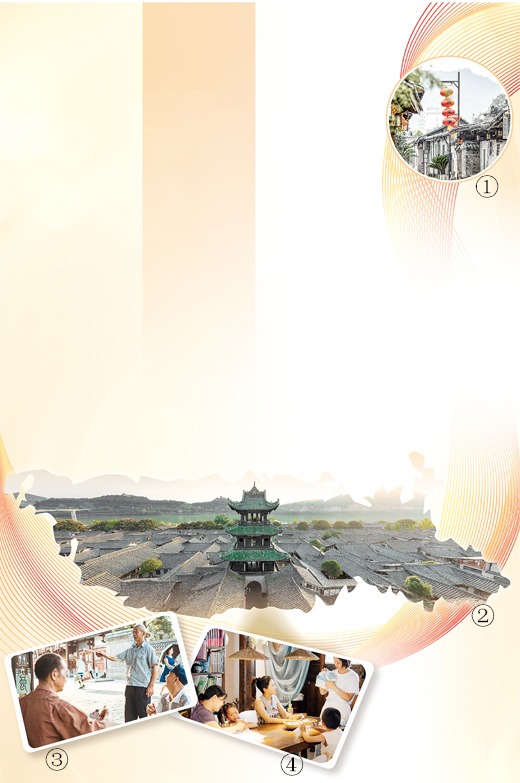
在这里,人与城相契相守(文化中国行·人文观察)
Ren Min Ri Bao· 2025-06-28 21:49
Core Insights - The article emphasizes the dynamic preservation of the ancient city of Langzhong, highlighting its historical significance and the efforts made to maintain its cultural heritage while allowing for modern living [4][6][12]. Group 1: Historical Significance - Langzhong has been a historical cultural city since 1986, with over 40,000 residents contributing to its vibrant culture [3]. - The city has a rich history, having served as the capital of the Ba Kingdom during the Warring States period and later as a significant administrative center throughout various dynasties [4]. Group 2: Cultural Preservation Efforts - The establishment of the "Langzhong Ancient City Protection Regulations" in 2004 marked a significant step in legally protecting the city's cultural heritage, expanding the protected area from 1.78 square kilometers to 23.17 square kilometers in 2019 [4][5]. - Specific guidelines have been implemented to maintain the city's historical layout, including prohibitions on altering street patterns and building heights [5]. Group 3: Community Involvement - The shift from "I must protect" to "I want to protect" reflects a growing community commitment to preserving the ancient city, with residents actively participating in its protection [6][9]. - Local markets, schools, and small workshops are encouraged to remain within the city to maintain its livability and cultural vibrancy [9]. Group 4: Modern Adaptations - The city has initiated "micro-renovations" to improve living conditions while preserving historical aesthetics, such as upgrading infrastructure and introducing modern amenities [8][10]. - The integration of cultural experiences, such as traditional dyeing workshops and themed guesthouses, enhances the city's appeal to tourists while promoting local heritage [10][11]. Group 5: Cultural Events and Activities - Various cultural activities, including traditional performances and workshops, are organized to engage both residents and visitors, fostering a sense of community and cultural continuity [14][15]. - The city is also home to unique cultural experiences, such as the "Book Exchange for Accommodation" initiative, which attracts younger generations and promotes literary culture [11].