流形

Search documents
TEDxNCCU 2025 年會【 流形 】講者 宇宙 | 思宇 林 | TEDxNCCU
TEDx Talks· 2025-11-05 16:59
Self-Perception and Identity - The speaker emphasizes the importance of self-acceptance and authenticity in a rapidly changing world [1] - The speaker encourages individuals to find their own rhythm and integrate trends into their lives in a unique way, rather than blindly following them [1] - The speaker advocates for embracing experimentation and personal interpretation to create one's own "flow-shape" [1] Personal Growth and Experience - The speaker reflects on their journey as an actress and the tendency to seek external validation [1] - The speaker highlights the realization that genuine expression comes from being natural and not performing for others' approval [1] - The speaker shares their experience as a versatile entertainer in singing, acting, and hosting, aiming to inspire others to discover their true selves through self-reflection and exploration [1] Values and Attitude - The speaker suggests that in pursuing passions, individuals naturally embody their desired selves [1] - The speaker believes that trends should not be restrictive, and there is no standard answer to trends [1] - The speaker values persistence and attitude, suggesting they are important in pursuing one's passions [1]


三位北大校友突破65年数学难题!证明126维空间“末日假说”,为母校126周年献贺
量子位· 2025-05-06 04:24
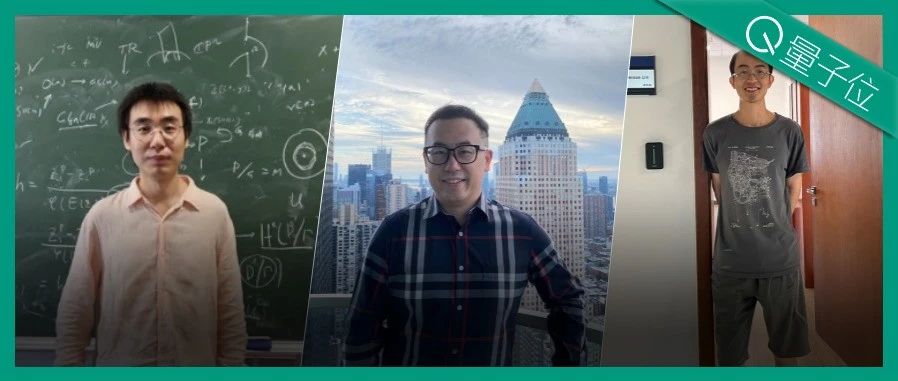
Core Viewpoint - A significant breakthrough in mathematics has been achieved by researchers from Fudan University and UCLA, solving the Kervaire invariant problem in 126-dimensional space, which has implications for high-dimensional topology and related conjectures [1][2][8]. Group 1: Background and Importance - The Kervaire invariant is a crucial concept in topology, determining whether a manifold can be transformed into a sphere. An invariant value of zero indicates it can be transformed, while a value of one indicates it cannot [3][29]. - The problem has historical significance, with previous proofs confirming the existence of Kervaire invariants in dimensions 2, 6, 14, and 30, leading to the conjecture that such invariants might also exist in dimensions 62, 126, and 254 [4][6][34]. Group 2: Research Methodology - The researchers utilized a combination of computational methods and theoretical insights to address the Kervaire invariant in 126 dimensions, which had remained unresolved for decades [8][46]. - They systematically eliminated 105 potential hypotheses regarding the existence of Kervaire invariants in 126 dimensions, ultimately confirming that the invariant is indeed one [44][46]. Group 3: Historical Context and Previous Research - The study of Kervaire invariants dates back to the 1960s, with mathematicians like John Milnor introducing the surgery method to explore manifold transformations [16][28]. - The research trajectory included significant milestones, such as the proof of the non-existence of Kervaire invariants in dimensions 254 and above, leaving 126 as the final unknown [7][36][38]. Group 4: Contributions of the Researchers - The team consists of Lin Weinan, Wang Guozhen, and Xu Zhouli, who have collaborated extensively, with their work culminating in a paper dedicated to their late mentor, Mark Mahowald, who initially discouraged the pursuit of the 126-dimensional problem [47][59].