流感疫苗脱靶

Search documents
全国流感阳性率接近45% 12月迎来高峰!中疾控紧急提醒
Zhong Guo Ji Jin Bao· 2025-12-01 05:18
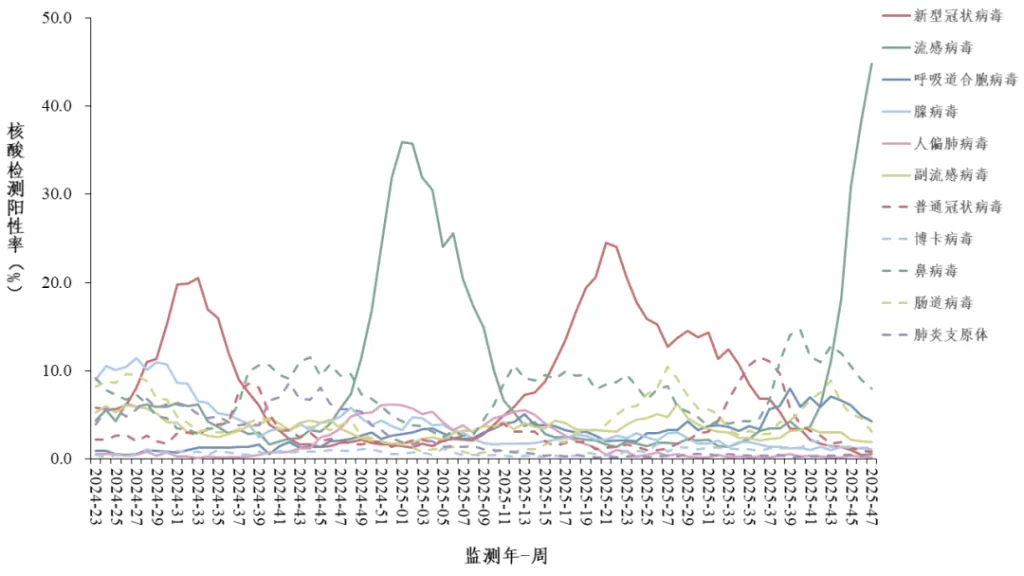
Core Insights - The flu positivity rate in emergency departments across China has reached nearly 45%, indicating a significant rise in flu cases and entering a moderate epidemic level, with some provinces experiencing high epidemic levels [1][2] Group 1: Flu Trends and Predictions - The flu activity is rapidly increasing in both northern and southern regions of China, with some provinces expected to reach peak flu levels by mid-December, while most provinces will see peaks in late December [2] - The flu activity is anticipated to decline by early January 2026 [2] Group 2: Virus Characteristics and Vaccine Efficacy - Current flu viruses detected are common known pathogens, with no evidence of new or more virulent strains; the main circulating strain for the 2025-2026 season is H3N2, alongside H1N1 and B strains [3] - The emergence of a new "K sub-branch" of the H3N2 virus does not indicate a significant increase in virulence or transmissibility, and current vaccines still show good antigenic match with circulating strains [4] Group 3: Treatment and Prevention - Flu is distinct from the common cold, requiring antiviral medications for treatment, while colds are usually self-limiting [5] - High-risk groups, including children, pregnant women, and the elderly, should seek medical attention promptly if flu-like symptoms occur [6][10] - Preventive measures include regular handwashing, wearing masks in crowded places, and annual vaccination against flu and pneumonia, especially for high-risk populations [11][12]

全国流感阳性率接近45%,12月迎来高峰!中疾控紧急提醒
中国基金报· 2025-12-01 04:46
Core Viewpoint - The article highlights the current flu situation in China, indicating a significant rise in flu cases, with a positivity rate nearing 45%, and anticipates a peak in flu activity in December [2][4][5]. Group 1: Flu Activity and Trends - The flu activity is rapidly increasing across both northern and southern regions of China, with some provinces expected to reach peak levels by mid-December [4]. - The overall flu activity is projected to decline by early January 2026 [5]. Group 2: Virus Characteristics - Current flu viruses detected are common known pathogens, and the notion that the flu virus has become significantly stronger is misleading; the changes observed are typical seasonal variations [6][8]. - The predominant strain for the 2025-2026 flu season is the H3N2 subtype, with co-circulation of H1N1 and B type viruses [8]. Group 3: Vaccine Efficacy - Despite the emergence of a new "K sub-branch" of the H3N2 virus, current monitoring data suggests that the flu vaccine remains effective against circulating strains [10]. - The vaccine's antigenic match with the circulating H3N2 strains is still considered good, alleviating concerns about vaccine efficacy [10]. Group 4: Treatment and Prevention - Treatment for flu differs from that of a common cold, with antiviral medications being necessary for flu, while colds are usually self-limiting [11]. - Common antiviral medications for children include Oseltamivir and Baloxavir, both deemed safe for use in young patients [12]. - Preventive measures include regular handwashing, wearing masks in crowded places, and annual vaccination against flu and pneumonia, especially for high-risk groups [14].