
玛巴洛沙韦

Search documents
征祥医药港股IPO:唯一商业化产品面临医保、仿制药、先行者三重压力 上市前夕董事会“大换血”
Xin Lang Cai Jing· 2026-02-06 08:23
Core Viewpoint - Zhengxiang Pharmaceutical has submitted its listing application to the Hong Kong Stock Exchange, focusing on innovative therapies for viral infections, tumors, and inflammatory diseases. However, the company faces significant challenges, including substantial losses and intense competition in the market for its core product, which may hinder its path to a successful IPO [1][11]. Financial Performance - The company has reported cumulative losses exceeding 400 million RMB over the past three years, with a net loss of 145 million RMB in the first three quarters of 2025, indicating no signs of improvement [2][12]. - Revenue for 2024 is projected to be zero, with only 3.55 million RMB generated in the first nine months of 2025, all from providing drug registration assistance to an overseas partner [2][12]. - As of September 30, 2025, the company had cash and cash equivalents of 118 million RMB, with total available funds around 270 million RMB, which could sustain operations for approximately 30 months at the current cash burn rate [2][12]. Asset and Liability Situation - As of September 30, 2025, the company reported total current assets of 292 million RMB and total current liabilities of 1.195 billion RMB, resulting in a net current liability of 903 million RMB, an increase of 18.7% from the end of 2024 [3][13]. - The overall debt-to-asset ratio has risen to 415.84%, with redemption liabilities amounting to 1.092 billion RMB, primarily from previous financing commitments [3][13]. Market Competition - Zhengxiang Pharmaceutical's core product, Marcilosavir, faces fierce competition from established players, including Roche's Mabalaosavir, which has seen a 180% increase in sales in 2025, surpassing 2 billion RMB [6][16]. - The pricing of Marcilosavir at 222 RMB per box is higher than domestic competitors, which may limit its market penetration, especially since it was not included in the 2025 national medical insurance directory [6][16]. Governance and Management Issues - The company exhibits a highly centralized governance structure, with the founder serving as both chairman and CEO, which may weaken the board's independent oversight [9][19]. - A significant turnover in the board and senior management, with 13 directors leaving around the time of the listing application, raises concerns about stability and strategic alignment [9][19]. - The ownership structure is fragmented, with the founding team holding only 22.76% of voting rights, potentially complicating decision-making processes in future financing or mergers [10][20].

征祥医药冲击IPO,剑指流感市场,竞争格局正在变差
Ge Long Hui A P P· 2026-02-05 09:20
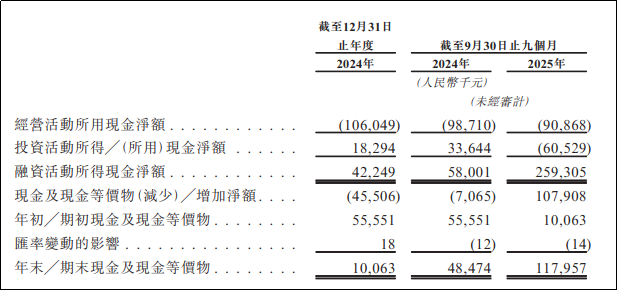
Group 1 - Seasonal influenza impacts approximately 1 billion people globally each year, with 3 to 5 million cases developing into severe illness and 290,000 to 650,000 deaths due to influenza-related respiratory diseases [1] - The domestic influenza treatment drug market is currently dominated by Dongyangguang Pharmaceutical with Oseltamivir, but new players are rapidly emerging since 2025 [1] - Zhengxiang Pharmaceutical is seeking to list on the Hong Kong Stock Exchange, having submitted its application on January 30, with CICC as its sole sponsor [2][4] Group 2 - Zhengxiang Pharmaceutical's antiviral drug, Marcilosavir, has already been approved for market release, distinguishing it from most other 18A companies [3] - The company was founded in 2018 and has undergone multiple rounds of financing, raising a total of 872 million RMB, with a post-investment valuation of 2.48 billion RMB as of January 2026 [4][5] - The company has a drug portfolio that includes six assets, with Marcilosavir being the core product, which is a new generation antiviral targeting influenza [10][12] Group 3 - The global market for influenza treatment and prevention drugs is projected to reach $4.8 billion by 2024, with China contributing $1.7 billion [16] - The Chinese market for antiviral drugs is expected to grow to 13.6 billion RMB by 2035, with PA inhibitors and other antiviral drugs accounting for 13 billion RMB [17] - Marcilosavir faces competition from several established products, including Roche's Baloxavir and others, with pricing set at 222 RMB per box, which is higher than some competitors [20] Group 4 - Zhengxiang Pharmaceutical reported zero revenue for 2024 and 400,000 RMB for the first nine months of 2025, primarily from regulatory support services for Marcilosavir [23] - The company incurred losses of approximately 145 million RMB for both 2024 and the first nine months of 2025, totaling around 290 million RMB in cumulative losses [23] - The company collaborates with a national CSO, Jichuan Pharmaceutical, to enhance market share through its established distribution network [24] Group 5 - The company has a total of 52 R&D personnel, with significant expenditures on drug development, amounting to 100 million RMB and 81.6 million RMB in R&D costs for the respective reporting periods [23] - As of November 2025, the company had cash and cash equivalents of 523 million RMB and term deposits of 141 million RMB [27] - The overall cash flow from operating activities showed a net outflow of 1.06 billion RMB for 2024, indicating financial challenges [28]
负债率近416% 征祥医药递表港交所
Bei Jing Shang Bao· 2026-02-03 15:49
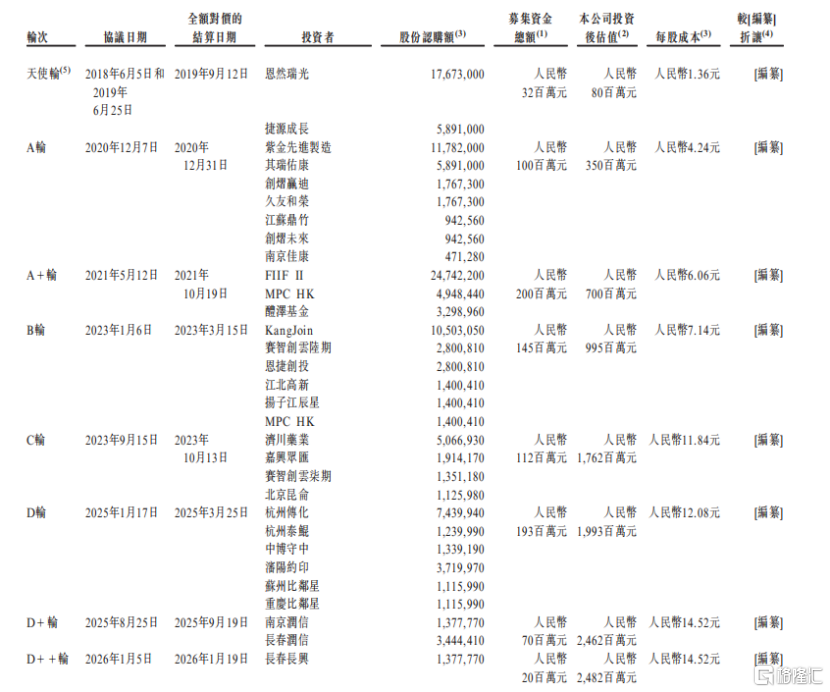
Core Viewpoint - Zhengxiang Pharmaceutical is heavily indebted and is betting its future on a new flu drug while initiating its Hong Kong IPO process to alleviate financial pressure and seek funding for development [1][3]. Financial Performance - For the full year of 2024 and the first three quarters of 2025, Zhengxiang Pharmaceutical's revenue is projected to be 0 and 355,000 yuan respectively, primarily from drug registration assistance services rather than product sales [2]. - The company has incurred cumulative losses of nearly 300 million yuan during the same period, with R&D costs of 100 million yuan and 81.61 million yuan for 2024 and the first three quarters of 2025 respectively, leading to losses of 145 million yuan for both periods [2]. - Operating cash flow has been negative, with net cash used in operating activities amounting to 106 million yuan and 90.87 million yuan during the reporting periods [3]. Debt Situation - As of the end of September 2025, Zhengxiang Pharmaceutical's total liabilities are approximately 1.26 billion yuan, with a net debt of about 956 million yuan and a debt-to-asset ratio of 415.84% [3]. - The net current liabilities increased from 761 million yuan at the end of 2024 to 903 million yuan by September 2025, attributed to an increase in redemption liabilities and other payables [3]. Market Competition - The flu antiviral drug market in China is projected to reach 5.7 billion yuan in 2024, with expectations to grow to 13.6 billion yuan by 2035, indicating a highly competitive environment [4]. - Zhengxiang Pharmaceutical's core product, Marcilosavir, faces significant competition from established products, with pricing strategies not favoring its market entry [4][6]. - Competitors like Qingfeng Pharmaceutical and Zhongsheng Pharmaceutical have already launched their flu drugs and gained market access, while Zhengxiang's product is lagging in commercialization [5][6]. Strategic Initiatives - Zhengxiang Pharmaceutical is seeking to differentiate itself by expanding the indications for Marcilosavir and submitting a New Drug Application (NDA) for treating flu in adolescents [6]. - The company aims to find new growth points through differentiated formulations and indications, although the challenge remains significant due to established competitors [6].
“流感神药”玛巴洛沙韦耐药了吗
Xin Lang Cai Jing· 2026-01-24 07:16
Core Viewpoint - The study conducted by Professor Zhang Wenhong's team from Fudan University shows that the resistance mutation rate of the antiviral drug Marbofloxacin is extremely low in the Chinese population, addressing public concerns about its effectiveness against influenza due to potential viral mutations [2][3]. Group 1: Study Findings - The research analyzed nearly 4,000 samples from the Chinese population, including 44.6% children, confirming that the resistance mutation rate for Marbofloxacin is less than 0.05% [2]. - No significant resistance mutations, such as the international marker I38X, were detected in mainland China, aligning with the China CDC's report of a resistance rate of "0" [2]. - The study represents the largest scale investigation of drug resistance in China, providing a real-world baseline for Marbofloxacin's effectiveness [2]. Group 2: Monitoring Systems - The China CDC's monitoring focuses on large-scale resistance that could impact clinical efficacy, while the research team's study captures early, low-frequency molecular signals of resistance [3]. - The two monitoring systems are complementary; the CDC's data indicates current safety, while the research aims to ensure long-term effectiveness of antiviral drugs [3]. Group 3: Implications for Children - The study indicates that the use of Marbofloxacin in children does not increase the risk of resistance, as viral mutations are a random biological process not directly linked to patient age [4]. - Current monitoring data shows that Marbofloxacin does not induce viral mutations, and the identified mutations are part of natural variation without evidence of impacting treatment efficacy [4]. - The findings suggest that Marbofloxacin remains safe and effective for both current and future patients, regardless of previous use [4].
抗流感药物“玛巴洛沙韦”耐药性如何?张文宏团队发布研究
Xin Lang Cai Jing· 2026-01-23 10:41
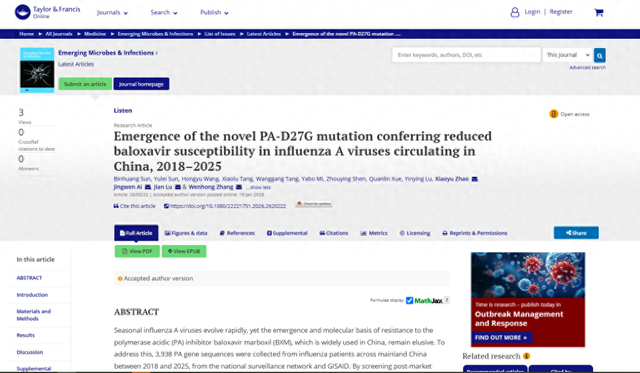
Core Viewpoint - A recent study conducted by a team from Fudan University’s Huashan Hospital assessed the sensitivity of the antiviral drug "Marbofloxacin" against influenza viruses in nearly 4,000 Chinese patients, revealing a very low mutation rate associated with drug resistance, thus confirming the drug's effectiveness and safety in clinical applications in China [1][2]. Group 1: Study Findings - The overall detection rate of known mutations related to reduced sensitivity to Marbofloxacin in mainland China is only 0.05% [1]. - The hallmark resistance mutation I38T, previously reported globally, was not detected in this study, indicating that it does not have a competitive advantage in natural transmission due to its significantly reduced viral adaptability [1][2]. - The study identified only one new mutation, PA-D27G, in the H1N1pdm09 virus, with a very low prevalence of 0.32%, which decreases sensitivity to Marbofloxacin by approximately 12.4 times, significantly lower than the typical I38T mutation [2][4]. Group 2: Implications and Future Research - The low prevalence of the D27G mutation, both in China (0.32%) and globally (below 0.1%), suggests that such mutations face adaptive constraints in natural transmission and are unlikely to become mainstream strains [4]. - The study's findings support the notion that flu virus mutations occur randomly and are not directly influenced by the age of patients, with no evidence suggesting that children using Marbofloxacin are at a higher risk of inducing viral mutations [4][5]. - The research team plans to continue monitoring known resistance points and utilize advanced research methods and big data to predict unknown mutations, emphasizing the importance of early detection and treatment in managing viral changes [5].
一字之差!副流感病毒和流感病毒,区别竟这么大
Xin Lang Cai Jing· 2026-01-16 06:42
Group 1: Core Differences Between Viruses - The two viruses, parainfluenza virus and influenza virus, belong to different virus families, with parainfluenza classified under the Paramyxoviridae family and influenza under the Orthomyxoviridae family [2][3] - Parainfluenza virus has four serotypes and exhibits less mutation capability compared to influenza virus, which has four types (A, B, C, D) and is known for its ability to mutate and create new strains [3] Group 2: Susceptible Populations and Symptoms - Parainfluenza virus primarily affects infants and children, causing acute respiratory infections, particularly lower respiratory tract infections, with symptoms like "barking" cough, hoarseness, stridor, and difficulty breathing [4] - Influenza virus can affect individuals of all ages, presenting with sudden high fever (39-40°C), chills, headaches, muscle aches, and fatigue, while respiratory symptoms are less pronounced [4] Group 3: Prevention and Treatment - There is no vaccine or specific antiviral treatment for parainfluenza virus; management relies on symptomatic support such as fever reduction and cough relief [5] - Influenza virus has an effective vaccine and antiviral medications like oseltamivir and baloxavir marboxil, which can shorten the duration of illness and alleviate symptoms when administered early [5] Group 4: Daily Protective Measures - Basic protective measures against both viruses include frequent handwashing, avoiding touching the face with unclean hands, wearing masks in crowded or poorly ventilated areas, ensuring good indoor ventilation, and maintaining a healthy lifestyle to boost immunity [6][7][8][9][10]
“流感神药”说明书为啥这么长长长长长长
经济观察报· 2026-01-02 06:09
Core Viewpoint - The article discusses the extensive length and complexity of drug instruction leaflets, highlighting the challenges faced by patients in understanding them and the implications for pharmaceutical companies and healthcare professionals [2][5][12]. Group 1: Length and Complexity of Instruction Leaflets - Roche's Marbofloxacin has an instruction leaflet that is 60 centimeters long, with the longest in China reaching 1 meter [2][12]. - The instruction leaflets for some drugs, like Merck's Pembrolizumab, can cover an area of approximately 2 square meters, containing extensive information due to multiple indications and clinical trial data [6][12]. - The complexity of these leaflets often leads to confusion among patients, with some expressing that the adverse effects listed seem more daunting than the illness itself [5][16]. Group 2: Regulatory and Legal Framework - The content and format of drug instruction leaflets are governed by the 2006 National Drug Instruction and Label Management Regulations, which require comprehensive safety and efficacy data [8][12]. - The National Medical Products Administration (NMPA) has established guidelines that dictate the inclusion of 26 essential items in drug leaflets, such as indications, dosage, adverse reactions, and contraindications [8][12]. Group 3: Professional Perspective - Healthcare professionals emphasize that detailed instruction leaflets are beneficial for ensuring patient safety and informed prescribing practices [11][12]. - The length of a leaflet often correlates with the thoroughness of the drug's research, which can help healthcare providers make informed decisions [11][12]. Group 4: Patient Accessibility and Adaptation - There is a growing concern regarding the readability of instruction leaflets, particularly for elderly patients, prompting initiatives for larger print and simplified versions [17][18]. - Some pharmaceutical companies are exploring the use of QR codes to provide electronic versions of leaflets that can be easily accessed and read [18][19].


“流感神药”说明书为啥这么长长长长长长
Jing Ji Guan Cha Wang· 2026-01-02 05:41
Core Viewpoint - The article discusses the issue of excessively long medication instruction leaflets, highlighting the confusion and frustration experienced by patients due to the complexity and size of these documents [2][5]. Group 1: Medication Instruction Leaflets - The instruction leaflet for Roche's Marbofloxacin is noted to be 60 centimeters long, with the longest instruction leaflet for any Roche drug in China reaching 1 meter [2]. - A patient expressed that the instruction leaflets are often overwhelming, with one stating that the information on adverse reactions is more daunting than the illness itself [5]. - The instruction leaflets are primarily designed for healthcare professionals, and a higher volume of information typically indicates more thorough scientific research behind the medication [5]. Group 2: Specific Examples of Instruction Leaflets - The longest instruction leaflet encountered by a pharmacy professional is for Merck's Pembrolizumab (commonly known as "K drug"), which totals approximately 2 square meters when unfolded [5][6]. - The instruction leaflet for "K drug" includes 12 cancer types and 19 indications, necessitating the presentation of over 70 charts due to the complexity of treatment protocols and patient-specific factors [6].

注意!流感用药3大误区请绕行
Xin Lang Cai Jing· 2025-12-27 04:16
Core Viewpoint - The article highlights three major misconceptions regarding flu medication, emphasizing the importance of proper usage of antiviral drugs and the risks associated with incorrect medication practices [1]. Group 1: Misconceptions about Flu Medication - The first misconception is the use of antibiotics for fever, as flu is caused by a virus and antibiotics are ineffective against viruses [1]. - The second misconception is stopping antiviral medication once symptoms improve; completing the full course is necessary to effectively suppress the virus [1]. - The third misconception involves combining multiple medications, which can lead to overdose, particularly with acetaminophen-containing cold medications [1]. Group 2: Antiviral Medication Insights - Antiviral drugs like Oseltamivir and Baloxavir Marboxil work by inhibiting viral replication rather than directly killing the virus [1]. - The article stresses that the first 48 hours after symptom onset is the critical window for antiviral treatment, where early administration is more beneficial than higher doses later on [1].
流感用药要避开这些误区(名医讲堂)
Ren Min Ri Bao· 2025-12-26 03:13
Core Viewpoint - The article emphasizes the importance of distinguishing between influenza and the common cold, highlighting the differences in symptoms, causative viruses, and appropriate treatments to avoid mismanagement of the illnesses [2][3]. Group 1: Differences Between Influenza and Common Cold - Influenza is caused by influenza viruses (type A and B) and is highly contagious, while the common cold is primarily caused by rhinoviruses and coronaviruses, which are less contagious [3]. - Symptoms of influenza typically include high fever (39-40 degrees Celsius), muscle aches, and severe fatigue, whereas common cold symptoms are milder, often involving nasal congestion, runny nose, and low-grade fever [3]. - Treatment approaches differ: antiviral medications are effective for influenza and can prevent severe illness, while common cold treatment focuses on symptom relief, with antiviral drugs being ineffective [3]. Group 2: Common Medication Misconceptions - Misuse of antibiotics for fever is a common mistake; antibiotics target bacteria, not viruses, and their misuse can lead to antibiotic resistance, posing future health risks [4]. - Stopping antiviral medication prematurely can allow the virus to persist, increasing the risk of recurrence and potential resistance; for instance, oseltamivir should be taken for a full five-day course [4]. - Combining multiple medications can be dangerous; for example, taking both combination cold medications and additional fever reducers can lead to overdose, stressing the liver and kidneys [4].