海上风电技术攻关

Search documents
海上风电共链启航
Jing Ji Ri Bao· 2025-11-19 03:42
Core Insights - The article highlights significant advancements in China's offshore wind power technology, marking a transition from nearshore to deep-sea leadership, driven by the "14th Five-Year Plan" and the establishment of a modern industrial chain alliance for offshore wind power [1][2][4]. Industry Development - The offshore wind power industry is crucial for energy security and optimizing energy structure, serving as a key driver for marine productivity and enhancing international competitiveness [2][3]. - China has the largest installed capacity of offshore wind power globally, with a cumulative capacity of 44.61 million kilowatts by September 2023, accounting for over half of the world's total [4][5]. Technological Advancements - The development of large-capacity offshore wind turbines has progressed from 3 MW to 20 MW, with expectations to reach nearly 50 million kilowatts of cumulative installed capacity by the end of 2025 [5]. - The levelized cost of electricity (LCOE) for offshore wind power in China is projected to decrease to $0.056 per kilowatt-hour by the end of 2024, reflecting a 22% reduction from 2023 and a 72% decrease since 2010 [5]. Collaborative Innovation - The establishment of the offshore wind power modern industrial chain alliance aims to address common challenges such as technological bottlenecks and supply chain risks through collaborative research and standardization [1][7]. - The industry is shifting towards multi-energy integration and collaborative development, with new business models emerging, such as "wind and fish" and "offshore energy islands" [6][7]. Future Projections - By 2030, the total installed capacity of offshore wind power in China is expected to reach 200 million kilowatts, with an estimated total investment of approximately 2.6 trillion yuan, driving a total industrial output value exceeding 15 trillion yuan [6][7]. Challenges and Solutions - The offshore wind power sector faces challenges related to market fluctuations and the need for breakthroughs in key technologies, including large turbine reliability and flexible direct current transmission systems [7][8]. - The "2025 Offshore Wind Power Modern Industrial Chain Collaborative Action Conference" has released a technology breakthrough list focusing on critical areas to enhance the industry's capabilities [7][8].

筑牢新型能源体系根基 海上风电技术全行业协同攻关“路线图”已划定
Yang Shi Wang· 2025-11-11 02:35
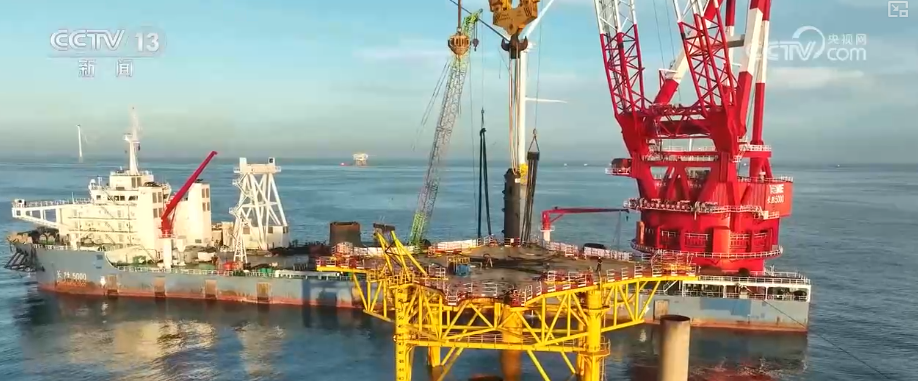
Core Insights - Offshore wind power is a crucial component of clean energy, with China's cumulative installed capacity reaching 44.61 million kilowatts by the end of the third quarter of 2025, maintaining the world's leading position for four consecutive years [1][3]. Industry Developments - The first 20-megawatt offshore wind turbine in China has completed the foundation pile construction in the Fujian Zhangpu sea area, laying a solid foundation for subsequent turbine installation [3]. - The main unit of the wind turbine in the Fuzhou Three Gorges Offshore Wind Power Industrial Park has completed final testing and is ready for shipment to the construction site [3]. Technological Advancements - Since 2025, China has continuously set global records in offshore wind power technology, including the successful grid connection of the world's largest 26-megawatt offshore wind turbine in Dongying, Shandong [9]. - The world's first 16-megawatt floating offshore wind power system has been assembled in Beihai, Guangxi, marking the largest installed capacity for floating offshore wind systems [9]. Industry Collaboration - The establishment of the Offshore Wind Power Modern Industrial Chain Alliance and the release of the first "Offshore Wind Power Technology Attack List" aim to define a roadmap for collaborative efforts across the industry [9][10]. - The attack list includes 16 cutting-edge technologies and addresses core issues faced by the offshore wind power industry, promoting innovation and development within the industrial chain [10]. Project Efficiency and Safety - The new collaboration model shifts from "post-design adaptation" to "multi-party co-creation during the development phase," significantly enhancing project efficiency and safety [12]. - The industry is adapting to more severe marine conditions, necessitating comprehensive pre-coordination across all stages, including development, design, construction, and operation [13]. Industry Growth - The offshore wind power sector has nurtured 30 national-level specialized "little giant" enterprises, focusing on niche areas such as turbine bearings, submarine cables, and monitoring sensors, which are essential for addressing technical challenges outlined in the attack list [15]. - The State-owned Assets Supervision and Administration Commission emphasizes the need to accelerate technological breakthroughs and enhance the offshore wind power industry's supply chain and value chain [17].

视频丨今年前三季度我国海上风电累计并网容量4461万千瓦
Yang Shi Xin Wen Ke Hu Duan· 2025-11-10 23:43
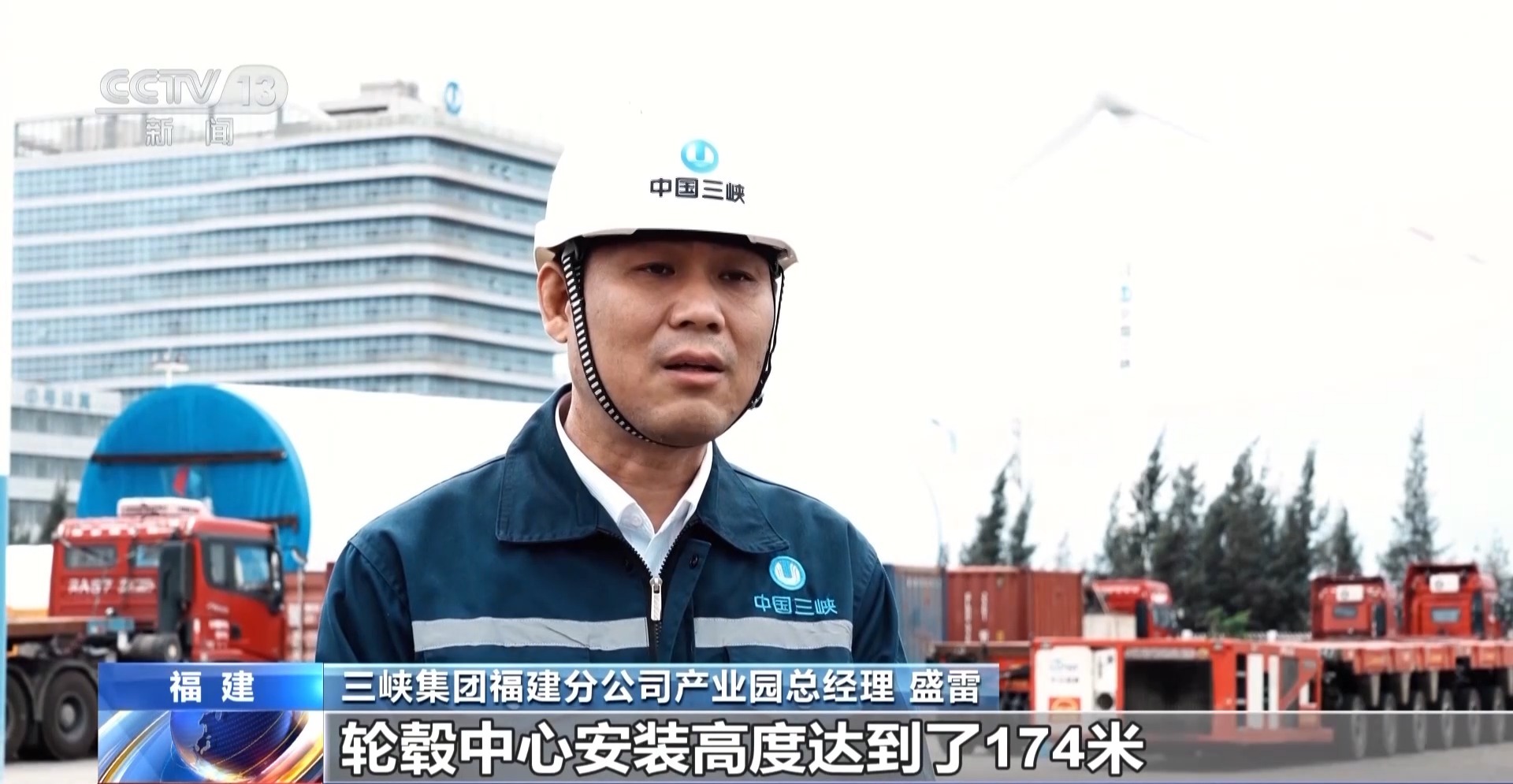
Core Viewpoint - Offshore wind power is a crucial component of clean energy, with China maintaining the world's largest cumulative grid-connected capacity of 44.61 million kilowatts for four consecutive years as of the first three quarters of this year [1] Group 1: Industry Developments - The first 20-megawatt offshore wind turbine's foundation construction has been completed in Fujian Zhangpu, laying a solid foundation for subsequent turbine installation [3] - The wind turbine's hub center will be installed at a height of 174 meters, capable of generating 80 million kilowatt-hours of clean electricity annually, meeting the annual electricity needs of 44,000 households [4] - Key technologies in China's offshore wind power sector have continuously set global records, including the world's largest 26-megawatt offshore wind turbine successfully connected to the grid in Dongying, Shandong [6] Group 2: Technological Advancements - The "Offshore Wind Power Technology Tackling List" was released, marking a roadmap for collaborative breakthroughs in the wind power industry [7] - The tackling list includes 16 cutting-edge technologies and aims to enhance project efficiency and safety by shifting from post-design adjustments to pre-development collaboration [11] - The industry has cultivated 30 national-level specialized "little giant" enterprises that focus on niche areas such as turbine bearings and underwater cables, providing essential support for addressing technical challenges [15] Group 3: Strategic Goals - The State-owned Assets Supervision and Administration Commission emphasizes the need to accelerate technological breakthroughs, improve supply chain efficiency, and enhance the value chain to achieve large-scale and intensive development of the offshore wind power industry [17]