消费结构均衡化

Search documents
冰火两重天,日本游客破4000万,消费破9万亿,均创新高,部分行业却因中日关系承压
3 6 Ke· 2026-01-20 12:11
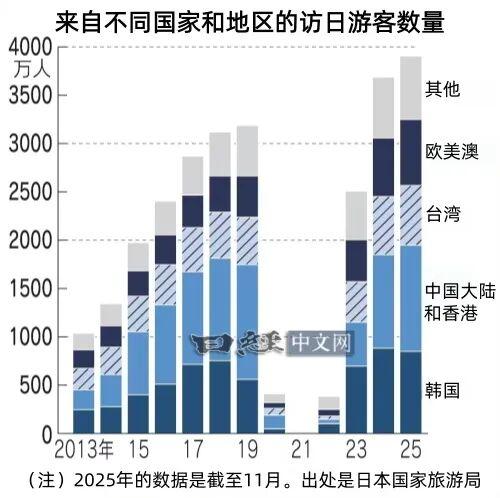
Group 1 - The core viewpoint of the article highlights that Japan's inbound tourism is set to reach a record high of 42.7 million visitors in 2025, surpassing the previous record of 36.87 million in 2024, continuing a long-term growth trend since 2003 [1][2] - The growth in visitor numbers is attributed to several factors, including the Osaka Kansai Expo, favorable yen exchange rates, visa facilitation policies, and the enhancement of tourism products related to anime culture and high-end accommodation [2][5] - Despite the overall increase in visitor numbers, there has been a significant decline in Chinese tourists due to political tensions, with a 45% drop in December 2025 compared to the previous year, indicating structural challenges in the tourism sector [1][7][23] Group 2 - The diverse source market has effectively mitigated the impact of the decline in Chinese tourists, with steady growth from European and Oceanian markets, particularly the United States [3][5] - In terms of consumption, inbound tourist spending reached approximately 6.923 trillion yen in the first nine months of 2025, with projections suggesting total spending could exceed 9 trillion yen for the year, marking a historical high [5][6] - The spending structure shows that accommodation costs account for the largest share at 33.4%, followed by shopping at 29.3% and dining at 22.5%, indicating a shift towards experience-based consumption [5][6] Group 3 - The tourism sector is experiencing a stark contrast, with some regions and industries heavily reliant on Chinese tourists facing severe downturns, while others benefit from a more diversified visitor base [7][10] - The cancellation of travel bookings from China has led to significant financial losses, with estimates suggesting a potential loss of up to 1.2 billion USD in tourist spending by the end of the year [8][23] - The impact of the decline in Chinese tourists is particularly pronounced in areas like Hokkaido and Osaka, where cancellations have reached alarming levels, while cities with a more diverse tourist base, such as Tokyo and Kyoto, are less affected [9][20] Group 4 - The luxury retail sector is facing challenges due to the drop in Chinese tourist spending, which has historically been a major contributor to sales in high-end goods [12][13] - Major department stores have reported significant declines in sales, with some experiencing drops of 6% to 20% in December 2025, reflecting the broader impact of reduced Chinese tourist numbers [13][14] - The stock prices of retail companies have also been negatively affected, with notable declines following the escalation of political tensions [14][16] Group 5 - The overall economic implications of the decline in Chinese tourists are significant, with forecasts suggesting a reduction in tourism revenue by approximately 1.79 trillion yen (about 11.4 billion USD) and a potential 0.29% decrease in actual GDP [23] - The Japanese government faces challenges in achieving its tourism targets for 2030, which include 60 million inbound visitors and 15 trillion yen in spending, due to the current geopolitical climate [23][24] - The tourism sector's increasing importance as a source of foreign exchange and its role in local economies highlight the need for a balanced recovery strategy that addresses both domestic consumption and inbound tourism [23][24]