液体口罩虚假宣传

Search documents
“液体口罩”突然火了!医生提醒
财联社· 2025-12-21 11:49
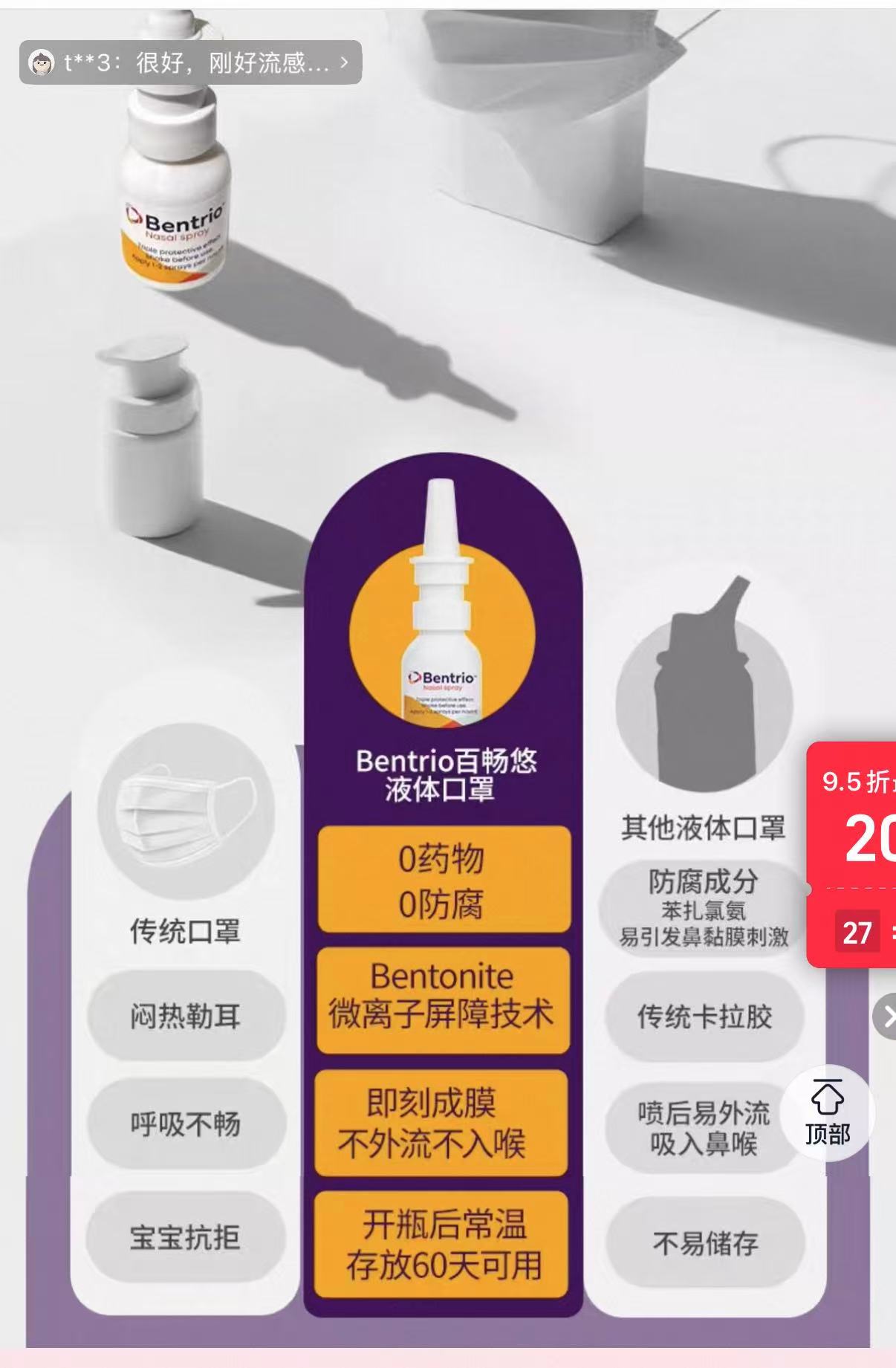
Core Viewpoint - The article discusses the rising popularity of a product called "liquid mask," a nasal spray that claims to provide protection against respiratory viruses, particularly during the winter season when such infections are prevalent. However, medical experts express skepticism about its effectiveness and safety [1][6]. Group 1: Product Popularity and Claims - The "liquid mask" nasal spray has seen significant sales, with some products selling over 1 million bottles annually, capitalizing on the market demand during the peak of respiratory infections [1]. - Some merchants claim that the spray can create a "physical barrier" in the nasal cavity, asserting a "99.9% blockage rate" against viruses [2]. Group 2: Medical Expert Opinions - Medical professionals, including Dr. Li Bo from Guizhou University of Traditional Chinese Medicine, indicate that while the gel may adsorb viruses, its effectiveness is highly dependent on the spray's coverage area and uniformity within the nasal cavity. They caution that viruses can still be transmitted through the mouth, reducing the overall protective effect [4]. - Dr. Zhang Dawei from the Fifth Medical Center of the PLA General Hospital emphasizes that the "liquid mask" has not undergone clinical validation, and its protective claims lack supporting research data. The product's effectiveness is only demonstrated in laboratory settings, which do not accurately reflect real-world conditions [4]. - The anatomical structure of the nasal cavity complicates the spray's ability to provide comprehensive coverage, leaving areas unprotected and susceptible to infection [4]. - The durability of the protective film created by the spray is questioned, as everyday actions like nose-picking or sneezing can disrupt its effectiveness [4]. Group 3: Regulatory and Safety Concerns - According to lawyer He Shengtian from Guangdong Guoding Law Firm, many "liquid masks" are classified as consumer products rather than medical devices, lacking large-scale clinical validation. Claims of "99.9% virus blockage" may constitute false advertising [5]. - Dr. Li Jia from Capital Medical University asserts that the "liquid mask" lacks scientific credibility and cannot replace traditional masks. Current products are registered as ordinary consumer goods, not as drugs or medical devices, and there is no reliable clinical evidence to support their efficacy in preventing viral infections [7]. - Long-term use of the "liquid mask" may pose health risks, particularly for individuals with allergies, as the ingredients could potentially cause adverse reactions. There is also a lack of systematic evaluation regarding the impact of residual components on nasal health and the effectiveness of other nasal medications [7].


“液体口罩”调查:宣称防新冠抗流感,99%阻隔病毒,靠谱吗?
Bei Ke Cai Jing· 2025-12-08 09:31
Core Viewpoint - The article highlights the controversy surrounding liquid mask products marketed as having virus-blocking capabilities, emphasizing that these products are classified as daily necessities rather than medical devices, raising concerns about their efficacy and compliance with advertising regulations [1][10][40]. Product Classification and Claims - Liquid masks are marketed as providing physical protection by forming a barrier in the nasal cavity to block viruses and allergens, with prices ranging from tens to hundreds of yuan [2][4]. - Products like "A Dong" liquid mask claim annual sales of 1 million bottles, while other brands such as BHM and Bentrio also offer similar products [2][4]. - These products are not classified as drugs or medical devices, and their claims of preventing COVID-19 and flu viruses are considered potentially misleading [1][10]. Regulatory Concerns - There are no national standards for liquid masks, and the lack of regulatory oversight raises questions about the validity of their advertised protective claims [1][10][40]. - Experts argue that advertising these products with medical claims violates the Advertising Law of the People's Republic of China, which prohibits non-medical products from making health-related claims [10][15]. Efficacy and Testing - Many claims of high efficacy, such as "99.9% virus blockage," are based on laboratory tests rather than real-world effectiveness, leading to skepticism about their actual protective capabilities [17][24][26]. - The article notes that while some core ingredients may have demonstrated antiviral properties in studies, this does not guarantee the overall effectiveness of the final product [21][22]. Market Dynamics and Consumer Perception - Consumer reviews are mixed, with some praising the products while others criticize them as ineffective or overpriced, indicating a divide in public perception [37][40]. - The marketing strategies of these products often involve comparing them unfavorably to traditional masks, which raises ethical concerns about misleading consumers regarding their protective capabilities [35][38]. Recommendations for Industry Regulation - Experts suggest enhancing regulatory frameworks for liquid masks, including establishing unified standards and increasing oversight to prevent false advertising [40][41]. - There is a call for improved consumer reporting mechanisms to address quality issues and misleading claims in the market [42].