液体口罩

Search documents
“液体口罩”真能防住病毒吗
Xin Lang Cai Jing· 2025-12-28 18:23
Group 1 - The core viewpoint of the articles is the skepticism surrounding the effectiveness of "liquid masks" as a substitute for traditional masks, highlighting the lack of clinical validation and potential health risks associated with their use [1][2]. Group 2 - "Liquid masks" have gained popularity on e-commerce platforms, with some products selling over 1 million bottles annually, claiming to provide a 99.9% blockage rate against viruses [1]. - Experts emphasize that "liquid masks" have not undergone clinical trials, and their protective effects are not supported by research data, making their efficacy questionable in real-world scenarios [1][2]. - Unlike traditional surgical masks, which have clear technical standards and mechanisms for blocking pathogens, "liquid masks" are classified as consumer products and may contain exaggerated claims regarding their virus-blocking capabilities [2].
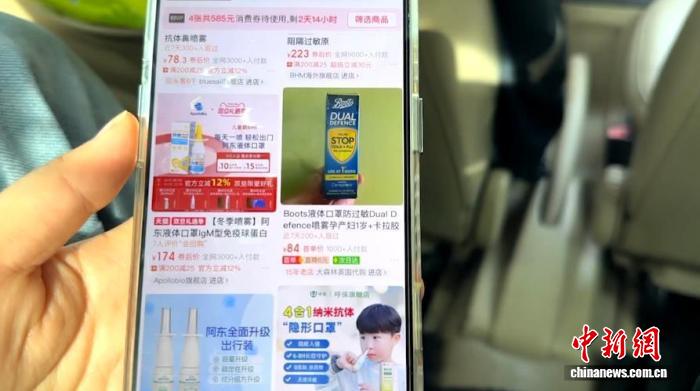
“液体口罩”网上热销 医生提醒:科学防护不可替代
Zhong Guo Xin Wen Wang· 2025-12-28 08:55
Core Viewpoint - The "liquid mask" nasal spray has gained popularity online, but its reliability as a protective measure is questioned by both the public and professionals [1][2]. Group 1: Product Overview - The "liquid mask" is marketed as a nasal spray that forms a protective barrier in the nasal cavity, claiming to reduce the risk of droplet exposure and prevent illnesses like colds and flu [1]. - Prices for the product range from 35 yuan to 188 yuan, which is significantly higher than traditional masks [1]. Group 2: Public Perception - Some consumers express interest in the product for its convenience, especially for those who wear glasses and find traditional masks fogging up their lenses [2]. - However, opinions vary among the public regarding its effectiveness and necessity [2]. Group 3: Medical Perspective - Medical professionals clarify that the "liquid mask" is not classified as a drug or medical device, but rather as a common consumer product [2]. - There is a lack of clinical validation or rigorous testing to support the claims of high blockage rates made by the product [2]. - Experts emphasize that the product only protects the nasal cavity and does not address oral transmission of pathogens, highlighting the limitations of its protective capabilities [2]. Group 4: Recommended Health Practices - Medical advice suggests that effective protection against illnesses should focus on vaccination, good hygiene practices, and the proper use of medical masks [2].

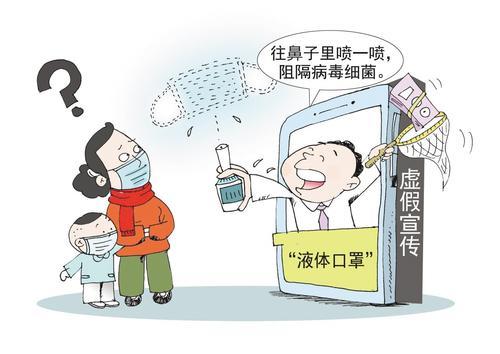
“液体口罩”不值得追捧
Xin Lang Cai Jing· 2025-12-22 23:27
Core Viewpoint - The "liquid mask," a nasal spray product, is gaining popularity on e-commerce platforms, but its effectiveness in preventing viruses is questionable, and it may mislead consumers into neglecting proper protective measures [3][4]. Group 1: Product Description and Claims - The "liquid mask" is marketed as a nasal spray that creates a "physical barrier" and claims to block viruses with a "99.9% blocking rate" [3]. - Most of these products are classified as "daily necessities" rather than drugs or medical devices [3]. Group 2: Expert Opinion and Concerns - Dr. Zhang Dawei, a deputy chief physician at the Infectious Disease Department of the Fifth Medical Center of the PLA General Hospital, expresses skepticism about the virus-blocking effectiveness of the "liquid mask" [3]. - The product is accused of false advertising, which could lead consumers to waste money and potentially abandon scientifically proven protective measures [3].
“液体口罩”来了,防护效果究竟如何
Xin Lang Cai Jing· 2025-12-21 19:38
Market Overview - The "liquid mask" has emerged as a new protective product, available in spray, lotion, or gel forms, designed to create a protective film in the nasal cavity to block pathogens, dust, and allergens [2][3] - Various brands of "liquid masks" are available on platforms like Taobao, with significant price differences; for example, a brand priced at 50 yuan for 30 grams can be sprayed approximately 300 times, while another at 270 yuan for 20 milliliters offers around 160 sprays [2] Product Claims - Some vendors claim that "liquid masks" contain lgM nano-immunoglobulin, providing "invisible protection" with a 99.9% blocking rate against respiratory viruses, positioning it as a more effective alternative to traditional masks [3] - To enhance credibility, certain sellers present 24-hour in vitro activity test results and various "authoritative testing reports" asserting the product's ability to "precisely combat viruses" [3] Expert Opinions - Experts caution that "liquid masks" should not be considered primary protective gear; they are classified as "ordinary daily necessities" and lack reliable clinical evidence for virus prevention [4] - The core function of traditional masks is to block the inhalation and exhalation pathways of respiratory diseases, which "liquid masks" do not effectively replicate [4] - In high-risk environments, such as hospitals or crowded places, the use of compliant masks is essential for effective disease prevention [4]
喷一喷就能防流感? “液体口罩”走红,医生提醒
Xin Lang Cai Jing· 2025-12-21 18:36
Core Viewpoint - The "liquid mask" nasal spray is gaining popularity as a product that claims to block viruses and bacteria, especially during the peak season for respiratory infections, with some products reportedly selling over 1 million bottles annually [1][2]. Group 1: Product Description and Claims - The "liquid mask" is typically available in spray form and claims to create a physical barrier in the nasal cavity to isolate pathogens and allergens [3]. - Advertisements assert that the product can achieve a "99.9% blockage" of viruses, which is considered exaggerated and potentially misleading [5]. Group 2: Effectiveness and Limitations - The effectiveness of the "liquid mask" is questioned, as it has not undergone clinical validation, and its protective capabilities are only supported by laboratory results, which may not reflect real-world conditions [4]. - The anatomical structure of the nasal cavity makes it difficult for the spray to cover all areas effectively, leaving some mucous membranes exposed to pathogens [4]. - The protective film created by the spray is likely to be disrupted by everyday actions such as nose-picking or sneezing, leading to inconsistent effectiveness [4]. Group 3: Comparison with Traditional Masks - Traditional masks, particularly surgical masks, are designed with clear technical standards to physically block the transmission of respiratory pathogens, while the "liquid mask" lacks such rigorous classification and validation [5]. - The "liquid mask" is categorized as a consumer product rather than a medical device, which means it does not require the same level of clinical testing for safety and efficacy [5]. Group 4: Health Concerns - Long-term use of the "liquid mask" may pose health risks, especially for individuals with allergies, as they may react negatively to the ingredients in the spray [7]. - There is currently no comprehensive assessment of the residual components of the spray and their potential impact on nasal mucosa health or the effectiveness of other nasal medications [7].
“液体口罩”能防流感? 医生:涉嫌虚假宣传
Xin Lang Cai Jing· 2025-12-21 17:39
Core Viewpoint - The "liquid mask" nasal spray is gaining popularity in the market, especially during the winter respiratory disease season, with annual sales exceeding 1 million bottles. However, its effectiveness and safety are under scrutiny, as it lacks clinical validation and may not replace traditional masks [2][3][4]. Product Description and Claims - The "liquid mask" claims to create a physical barrier in the nasal cavity to block viruses and bacteria, with a stated effectiveness of 99.9% [3][6]. - It is primarily marketed as a consumer product rather than a medical device, raising concerns about the accuracy of its claims [6]. Effectiveness Concerns - The product has not undergone clinical trials, and its protective effects are only supported by laboratory data, which may not translate to real-world effectiveness [4]. - The anatomical structure of the nasal cavity makes it difficult for the spray to cover all areas effectively, leaving some mucous membranes exposed to pathogens [5]. Comparison with Traditional Masks - Traditional masks, especially surgical masks, are designed with clear technical standards to physically block respiratory pathogens, while the "liquid mask" lacks such rigorous validation [5][6]. Health Risks of Long-term Use - Prolonged use of the "liquid mask" may pose health risks, particularly for individuals with allergies, as they may react negatively to the ingredients [7]. - There are concerns about the residual components of the spray affecting nasal health and the efficacy of other nasal medications [8]. Alternative Protection Methods - Other popular methods for preventing respiratory infections, such as gargling with salt water or taking vitamin C supplements, have been deemed ineffective or potentially harmful [9][10]. - The most effective preventive measure remains wearing masks, especially in high-risk seasons, along with proper hygiene practices [11][12]. Recommendations for Public Health - During the winter season, it is crucial for the public to be cautious of exaggerated claims and to avoid purchasing unverified products. Vaccination and proper mask-wearing are emphasized as the best strategies for preventing respiratory infections [14].

液体口罩年销百万瓶,专家质疑其阻断病毒效果
Xin Lang Cai Jing· 2025-12-21 13:34
Group 1 - The core viewpoint of the article highlights concerns regarding the health risks associated with the long-term use of a product called "liquid mask," which is marketed as a nasal spray that claims to provide a physical barrier against viruses with a 99.9% blocking rate [1] Group 2 - The product has gained significant popularity on e-commerce platforms, with some vendors reporting annual sales exceeding 1 million bottles [1] - Medical experts, including Zhang Dawei, a deputy chief physician at the Respiratory and Critical Care Medicine Department of the PLA General Hospital, express skepticism about the product's effectiveness, noting it has not undergone clinical validation and cannot provide comprehensive coverage in the nasal cavity [1] - There are potential health risks associated with long-term use, particularly for individuals with allergic rhinitis or asthma, as they may be sensitive to the ingredients, which could adversely affect their health [1] - The article raises concerns about the lack of systematic evaluation regarding the impact of residual components on nasal mucosa health [1]
“液体口罩”突然火了!医生提醒
财联社· 2025-12-21 11:49
Core Viewpoint - The article discusses the rising popularity of a product called "liquid mask," a nasal spray that claims to provide protection against respiratory viruses, particularly during the winter season when such infections are prevalent. However, medical experts express skepticism about its effectiveness and safety [1][6]. Group 1: Product Popularity and Claims - The "liquid mask" nasal spray has seen significant sales, with some products selling over 1 million bottles annually, capitalizing on the market demand during the peak of respiratory infections [1]. - Some merchants claim that the spray can create a "physical barrier" in the nasal cavity, asserting a "99.9% blockage rate" against viruses [2]. Group 2: Medical Expert Opinions - Medical professionals, including Dr. Li Bo from Guizhou University of Traditional Chinese Medicine, indicate that while the gel may adsorb viruses, its effectiveness is highly dependent on the spray's coverage area and uniformity within the nasal cavity. They caution that viruses can still be transmitted through the mouth, reducing the overall protective effect [4]. - Dr. Zhang Dawei from the Fifth Medical Center of the PLA General Hospital emphasizes that the "liquid mask" has not undergone clinical validation, and its protective claims lack supporting research data. The product's effectiveness is only demonstrated in laboratory settings, which do not accurately reflect real-world conditions [4]. - The anatomical structure of the nasal cavity complicates the spray's ability to provide comprehensive coverage, leaving areas unprotected and susceptible to infection [4]. - The durability of the protective film created by the spray is questioned, as everyday actions like nose-picking or sneezing can disrupt its effectiveness [4]. Group 3: Regulatory and Safety Concerns - According to lawyer He Shengtian from Guangdong Guoding Law Firm, many "liquid masks" are classified as consumer products rather than medical devices, lacking large-scale clinical validation. Claims of "99.9% virus blockage" may constitute false advertising [5]. - Dr. Li Jia from Capital Medical University asserts that the "liquid mask" lacks scientific credibility and cannot replace traditional masks. Current products are registered as ordinary consumer goods, not as drugs or medical devices, and there is no reliable clinical evidence to support their efficacy in preventing viral infections [7]. - Long-term use of the "liquid mask" may pose health risks, particularly for individuals with allergies, as the ingredients could potentially cause adverse reactions. There is also a lack of systematic evaluation regarding the impact of residual components on nasal health and the effectiveness of other nasal medications [7].

“液体口罩”突然火了!医生提醒
Xin Lang Cai Jing· 2025-12-21 10:25
Group 1 - The core concept of the article revolves around the rising popularity of a product called "liquid mask," a nasal spray that claims to block viruses and bacteria, with some products reportedly selling over 1 million bottles annually during the peak season for respiratory infections [1][2]. - The product is marketed as creating a physical barrier in the nasal cavity to isolate pathogens and allergens, with claims of a 99.9% blockage rate [1][5]. Group 2 - Medical experts express skepticism regarding the effectiveness of the "liquid mask," highlighting that it has not undergone clinical validation and lacks supporting research data for its protective claims [6]. - The nasal cavity's complex structure makes it difficult for the "liquid mask" to provide comprehensive coverage, leaving areas unprotected and potentially vulnerable to infection [6]. - The durability of the protective film created by the "liquid mask" is questioned, as everyday actions like nose-picking or sneezing can compromise its effectiveness [6]. Group 3 - The article warns against exaggerated claims and advises consumers to be cautious about purchasing unverified alternatives to traditional masks, especially during the winter season when respiratory viruses are prevalent [9]. - It emphasizes that wearing proper masks, such as surgical masks or N95 respirators, remains one of the simplest and most effective methods for protection against respiratory infections [10].

“液体口罩”火了!能阻隔99.9%的病毒?医生提醒
Xin Lang Cai Jing· 2025-12-21 06:19
Core Viewpoint - The "liquid mask" nasal spray is gaining popularity as a product that claims to block viruses and bacteria, especially during the winter season when respiratory infections are prevalent. However, its effectiveness and safety are under scrutiny, with experts questioning its claims and potential health risks [1][3][5]. Group 1: Product Description and Market Performance - The "liquid mask" is marketed as a nasal spray that forms a physical barrier in the nasal cavity to isolate pathogens and allergens, with some products reportedly selling over 1 million bottles annually [1][3]. - The product claims to have a "99.9% blocking rate" against viruses, which is considered exaggerated and potentially misleading [8]. Group 2: Effectiveness and Scientific Validation - Experts express skepticism about the effectiveness of the "liquid mask," noting that it has not undergone clinical validation, and its protective effects are only supported by laboratory data, which may not reflect real-world conditions [5][6]. - The nasal cavity's complex structure makes it difficult for the spray to cover all areas effectively, leaving some mucous membranes exposed to pathogens [6]. Group 3: Comparison with Traditional Masks - The "liquid mask" is not a substitute for traditional masks, particularly medical surgical masks, which have established technical standards for blocking respiratory pathogens [8]. - Traditional masks provide a clear physical barrier, while the "liquid mask" lacks the rigorous testing and classification as a medical device, raising concerns about its safety and efficacy [8]. Group 4: Health Concerns and Long-term Use - Long-term use of the "liquid mask" may pose health risks, especially for individuals with allergies, as they may react negatively to the ingredients in the spray [9]. - There is a lack of systematic evaluation regarding the residual components of the spray and their potential impact on nasal mucosa health and the effectiveness of other nasal medications [9]. Group 5: Recommendations for Public Health - During the winter season, it is advised to wear proper masks, such as medical surgical masks or N95 masks, to effectively reduce the risk of virus transmission [10][11]. - Public health measures should include vaccination, proper mask usage, hand hygiene, and ventilation to combat respiratory infections [11].