混合所有制企业

Search documents
八年拉锯,一纸空文:日照合资造车停摆始末
Di Yi Cai Jing· 2025-11-14 02:57
Core Viewpoint - The partnership between Rizhao Zhongxing Automobile Co., Ltd. and Rizhao High-tech Development Group has faced significant challenges over eight years, leading to a failed vehicle manufacturing project due to disputes over asset evaluation and funding issues [2][22]. Group 1: Partnership Background - In 2017, Zhongxing Automobile ended its collaboration with GAC and sought a new production base, leading to a partnership with Rizhao High-tech Development Group to establish a vehicle manufacturing facility [2][3]. - The joint venture aimed to create Rizhao's first complete vehicle manufacturing plant, but has since become a shell company due to unresolved issues such as stalled evaluations and failed production [2][22]. Group 2: Asset Injection Challenges - Initial asset injection faced delays due to the identification of the original factory as illegal construction, requiring a year and a half for reconstruction [3]. - The financial burden of taxes on asset injection and the need to retain certain assets for production qualification further complicated the process [3][4]. - Delays in asset injection led to expired evaluation reports, necessitating a second evaluation, which both parties failed to complete [4][6]. Group 3: Disputes and Coordination Efforts - Disputes over asset evaluation methods and the introduction of "earn-out clauses" created friction, with Zhongxing opposing the binding of future earnings to share adjustments [9][20]. - Coordination meetings held by the Rizhao High-tech Development Committee aimed to resolve conflicts but ultimately highlighted the deep-seated issues between the parties [7][12]. Group 4: Project Failure - The joint venture's inability to produce vehicles stemmed from unresolved funding issues and a lack of trust between the partners, leading to no successful product launches [13][21]. - The governance structure of the joint venture was chaotic, with decision-making authority unclear, further hindering progress [19][22]. - The project ultimately failed, with the joint venture becoming a "shell" company, and the original vehicle manufacturing dream unfulfilled [22][23]. Group 5: Future Prospects - Following the dissolution of the partnership, Rizhao has shifted focus to new projects, such as introducing a pickup truck initiative with Chery Commercial Vehicle, aiming for significant production and economic contributions [22][23].
万达信息:公司属于国有资本参股的混合所有制企业
Zheng Quan Ri Bao Wang· 2025-10-28 10:11
Group 1 - The company, Wanda Information, is a mixed-ownership enterprise with state capital participation [1] - China Life Insurance, which is a publicly listed company, is the largest shareholder of Wanda Information [1]


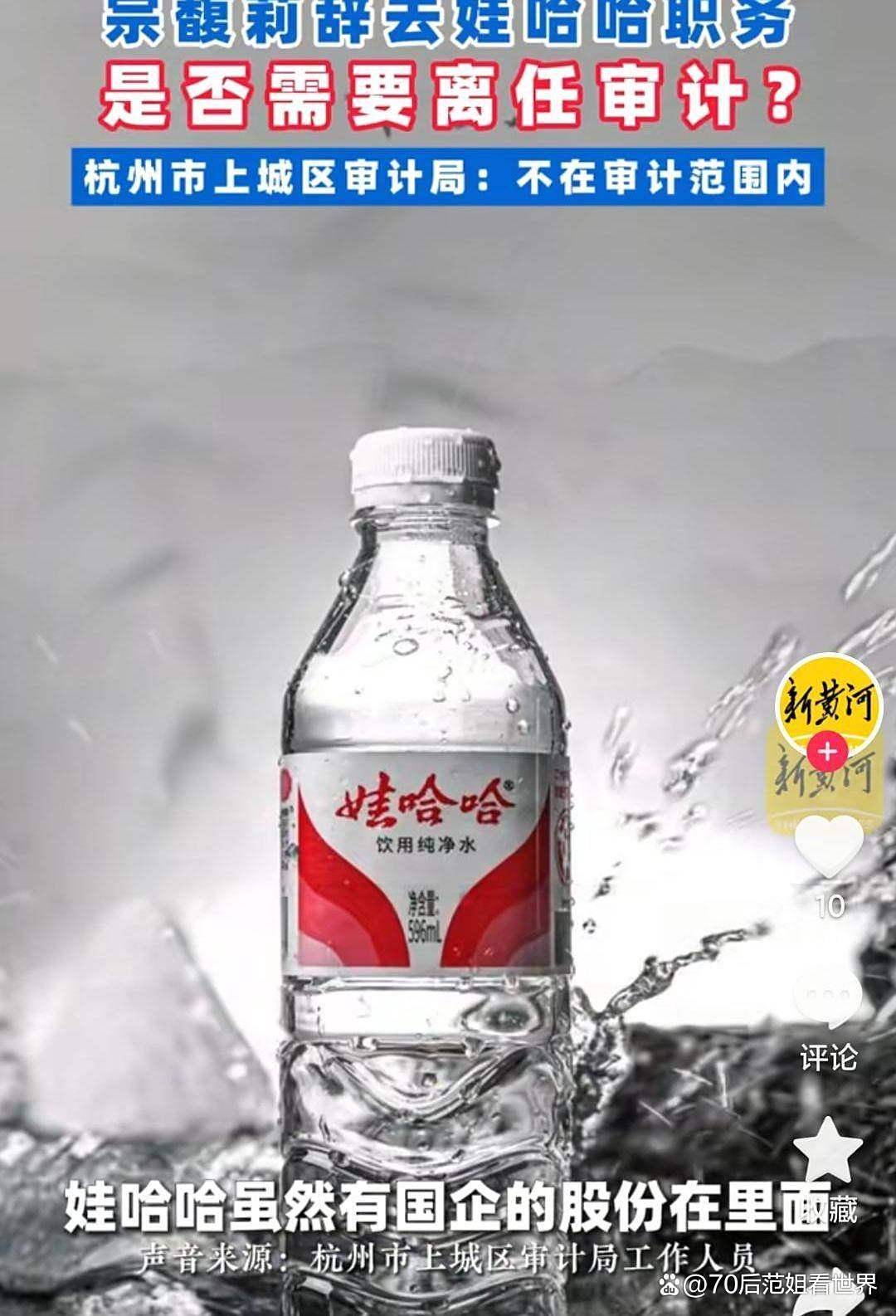
赢了!娃哈哈不是国企,宗馥莉离职不需要审计!国资参股而已
Sou Hu Cai Jing· 2025-10-12 07:52
Core Viewpoint - The resignation of Zong Fuli from her position as chairwoman of Wahaha Group has raised questions about the company's ownership structure and the implications of her departure on the company's governance and control [1][4]. Group 1: Company Ownership Structure - Wahaha Group is classified as a mixed-ownership enterprise rather than a state-owned enterprise, as the state-owned capital does not exceed half of the board members and lacks controlling power [4][11]. - Zong Fuli holds a 29.4% stake in Wahaha, while Hangzhou Wen Shang Lv holds 46%, and the employee stockholding committee holds 24.6%, giving Zong Fuli significant decision-making power through a unified action agreement [4][10]. - The state-owned capital in Wahaha does not contribute financially, which means it does not receive dividends, reinforcing the notion that Wahaha is primarily a private enterprise controlled by the Zong family [10][11]. Group 2: Historical Context - Wahaha's origins trace back to a school-run enterprise in Hangzhou, where Zong Qinghou took over a loss-making distribution department in 1987 and later established the first product, Wahaha Children's Nutritional Liquid, in collaboration with Zhejiang University [7][9]. - The initial funding for Wahaha came from a loan and sales revenue, indicating that the company was built on private capital rather than state investment [7][10].