港航新质生产力

Search documents
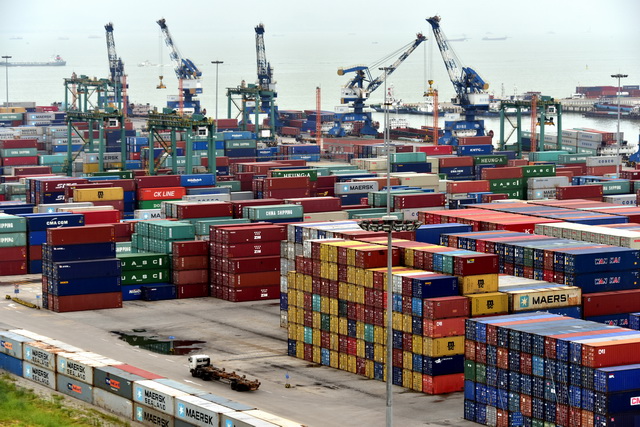
从规模增长向质量跃升转型,我国港航业瞄准智能航运
Di Yi Cai Jing· 2025-11-28 02:33
Core Viewpoint - The development of new productivity in China's port and shipping industry has laid a solid foundation for high-quality water transport development, transitioning from scale growth to quality improvement, with a focus on technological innovation and green, low-carbon initiatives [1][2]. Group 1: Industry Transformation - China's port and shipping industry is undergoing a transformation from "scale growth" to "quality improvement," emphasizing technological leadership and focusing on smart shipping and green low-carbon initiatives [1]. - The industry aims to achieve a systematic transformation by upgrading all elements including "ship, port, cargo, and people," and moving from factor-driven to innovation-driven growth [1][5]. Group 2: Infrastructure and Capacity - During the 14th Five-Year Plan period, China added 379 berths of 10,000 tons or more, bringing the total to 2,971, with over 70% of important coastal port areas having rail access [2]. - In 2024, China's port cargo throughput is projected to reach 17.6 billion tons, a year-on-year increase of 3.7%, while container throughput is expected to reach 33 million TEUs, up 7% [2]. Group 3: Automation and Efficiency - Major domestic ports have achieved automation in key operational processes such as loading and unloading, with examples like the Yangshan Phase IV automated terminal demonstrating a 50% increase in efficiency through innovative technologies [3]. - The introduction of automated systems, such as dual-container automated cranes, has significantly improved operational efficiency in container handling [3]. Group 4: Technological Innovation - The industry is increasingly focusing on independent innovation, achieving breakthroughs in key technologies, such as the development of proprietary terminal operation systems by ports like Shanghai and Shandong [5]. - The Shanghai Port's automated terminal utilizes a fully domestically developed intelligent operation control system, showcasing advancements in self-sufficiency in technology [5]. Group 5: Future Directions - The industry is encouraged to strengthen technological innovation, overcome key technological bottlenecks, and enhance green and low-carbon transformation to improve overall efficiency across the supply chain [5]. - The China Maritime Association aims to continue fostering technological leadership and collaboration in smart shipping and green initiatives, promoting the transition of innovative results from research to practical applications [5].