游牧文化

Search documents
尕玛求开和他的游牧学堂
Xin Lang Cai Jing· 2026-01-04 19:01
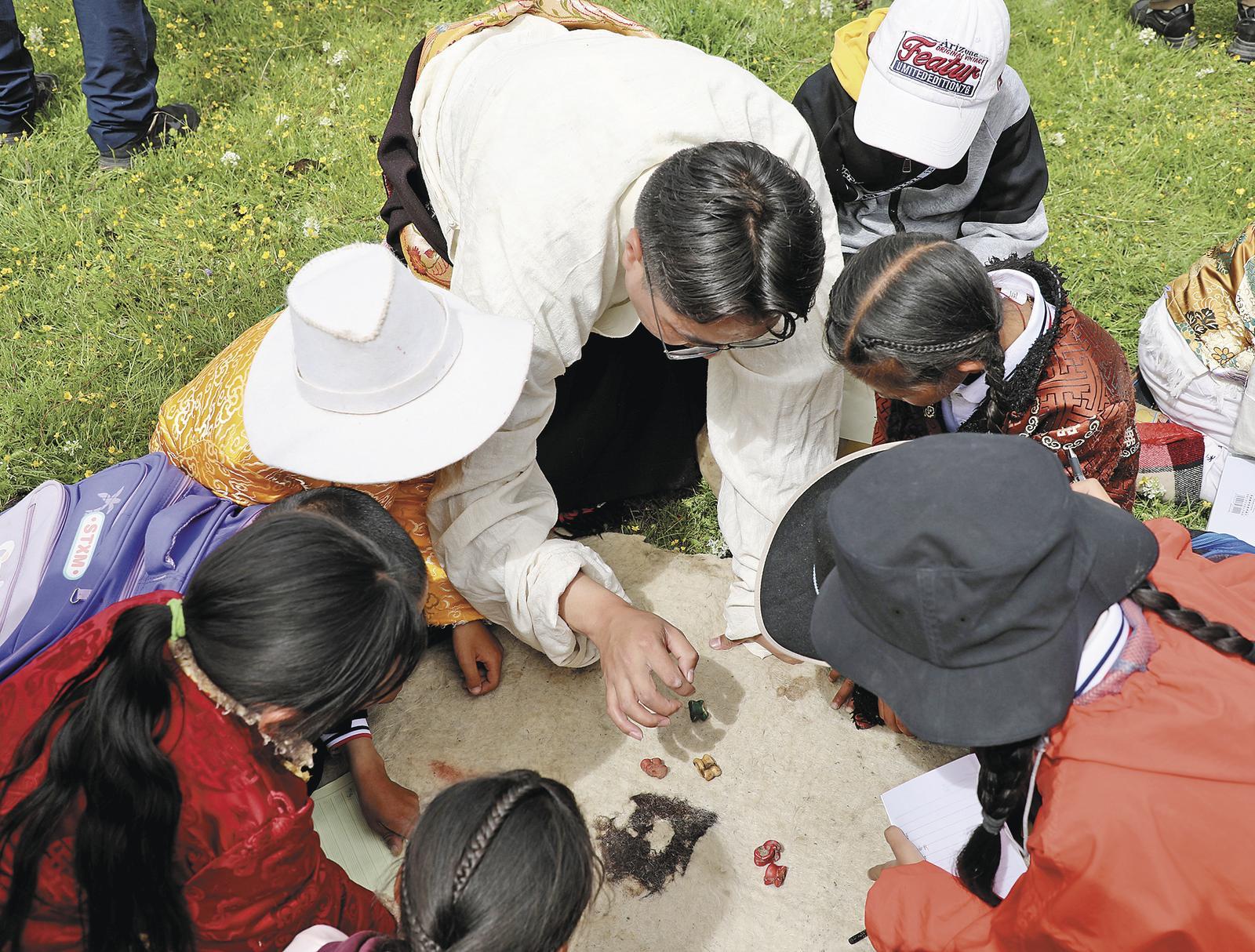
Core Viewpoint - The article highlights the efforts of Gama Qiukai in preserving and promoting nomadic culture and ecological awareness through the establishment of the "Extreme Nomadic School" in the source region of the Yangtze River, emphasizing the importance of cultural transmission and environmental protection in the face of modern challenges [2][4][8]. Group 1: Background and Motivation - Gama Qiukai, a native herder, has a deep connection to the grassland and a strong desire to protect it, influenced by his experiences with environmental degradation caused by mining activities during his youth [3][4]. - His educational background at Northwest Minzu University opened his eyes to the outside world but did not diminish his love for his homeland, leading him to prioritize the protection of the ecological and cultural heritage of the region [3][4]. Group 2: Establishment of the Extreme Nomadic School - In 2017, Gama Qiukai founded the "Extreme Nomadic School" to educate others about the value of nomadic culture and ecological conservation, utilizing his family's traditional black tent and historical buildings as educational tools [4][6]. - The school serves as a cultural bridge, connecting the source region with the outside world, and has been recognized as an ecological protection research base by various organizations [7][8]. Group 3: Educational Approach and Activities - The school employs immersive experiences, allowing visitors and students to engage with nomadic life, learn about biodiversity, and understand the sustainable practices of nomadic peoples [6][9]. - Activities include hands-on experiences such as building traditional tents, participating in cultural games, and tasting local foods, all aimed at fostering a deeper appreciation for the nomadic way of life [6][9]. Group 4: Impact and Recognition - The Extreme Nomadic School has attracted numerous visitors from diverse backgrounds, including writers and photographers, who contribute to the documentation and promotion of ecological beauty and cultural heritage [9]. - Gama Qiukai's efforts have inspired young people to return to their roots, using modern knowledge to revitalize and express traditional nomadic culture, thus ensuring its continuity [9].

350余件鄂尔多斯青铜器亮相山东 展“马背上的游牧文化”
Zhong Guo Xin Wen Wang· 2025-04-02 09:28
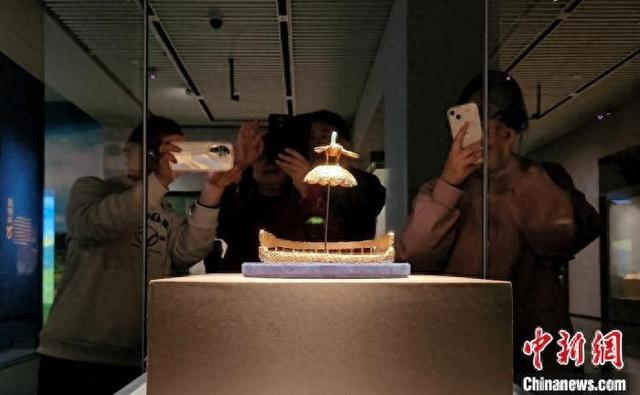
Core Viewpoint - The exhibition "Long River Drinking Together, Grassland Golden Culture" showcases over 350 pieces of Ordos bronze artifacts, highlighting the nomadic culture from the Shang and Zhou dynasties to the Han dynasty, with a focus on the unique Ordos bronze crown featuring animal motifs [2]. Group 1 - The Ordos eagle-topped gold crown is the only known physical example of a "Hu crown" discovered in China [1]. - The exhibition features a variety of bronze items adorned with animal imagery, such as tigers, wolves, horses, and eagles, reflecting the nomadic people's reverence for vitality [2]. - Ordos bronze artifacts exhibit distinct regional characteristics, with most animal patterns derived from northern nomadic ecology, while some designs show influences from Central Plains culture [2]. Group 2 - The Ordos region has historically been a melting pot of various ethnic interactions, as evidenced by the bronze artifacts that illustrate the cultural exchange between grassland and Central Plains cultures [2]. - The exhibition is co-hosted by the Shandong Museum and the Ordos Museum, and it will run for three months [2]. - The Shandong Museum director emphasizes the interconnectedness of the Yellow River culture and the grassland culture, revealing the deep layers of multi-faceted coexistence within Chinese civilization [2].