
漕运文化

Search documents
跨越三百年的家族传奇
Xin Lang Cai Jing· 2026-01-10 00:53
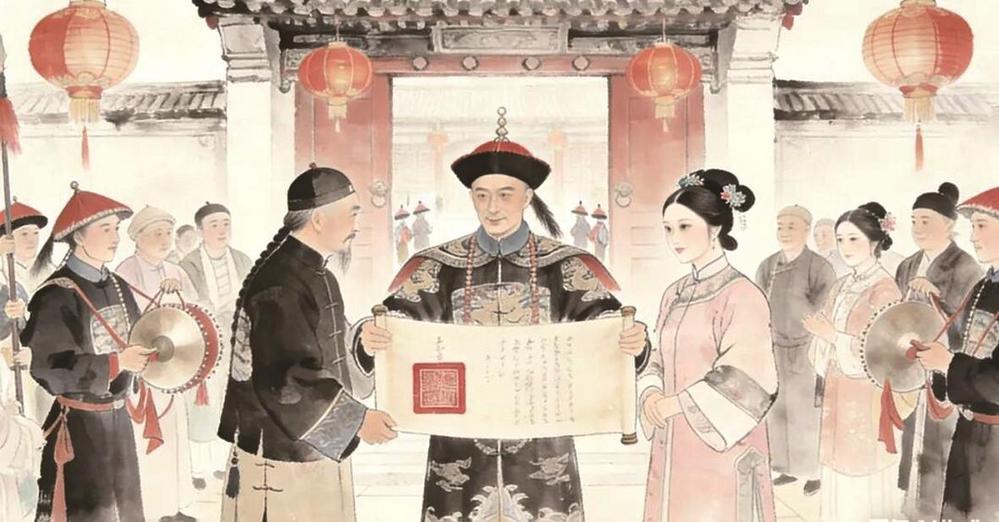
Core Viewpoint - The article narrates the historical significance of a family legacy tied to a decree from the Kangxi Emperor, highlighting the journey of the Wang family from Anhui to Quzhou, and the lasting impact of this heritage on subsequent generations [2][3][4][5]. Group 1: Historical Context - The decree from the Kangxi Emperor recognized the achievements of Wang Dingyuan, who played a crucial role in the grain transportation system during the early Qing Dynasty, which was vital for political stability and economic development [2][3]. - Wang Dingyuan's career progressed from a military officer to various significant positions, culminating in his role overseeing the transportation of copper for currency production, reflecting the trust placed in him by the emperor [3][4]. Group 2: Family Legacy - The Wang family's roots in Quzhou were established by Wang Dingyuan after his retirement, where he applied his military and logistical skills to local governance and community welfare [4]. - The family history is preserved through a significant artifact, the decree, which symbolizes the connection between past and present, and serves as a reminder of the family's enduring legacy [5]. Group 3: Cultural Significance - The article emphasizes the emotional and cultural importance of the decree, which has become a symbol of the family's identity and continuity over three centuries [5]. - The preservation of the decree in a local cultural museum highlights its role as a historical artifact that bridges the past with the present, embodying the shared memories and values of the family [5].

齐风鲁韵,山东的“世界瑰宝”知多少?
Jing Ji Guan Cha Bao· 2025-06-22 01:09
Group 1 - Shandong is home to five UNESCO World Heritage sites, showcasing its rich cultural and natural heritage [1][2][3] - Mount Tai, a dual heritage site, symbolizes ancient Chinese civilization and is known for its geological and cultural significance, with a peak elevation of 1545 meters [1] - The Confucian Temple, Confucius Mansion, and Confucius Forest in Qufu represent the largest and best-preserved Confucian cultural complex globally, recognized for its moral and educational significance [3][2] Group 2 - The Shandong section of the Grand Canal is a core part of the UNESCO World Heritage designation, exemplifying ancient water conservancy engineering [4][5] - The Grand Canal features 15 heritage sites and 8 river sections, reflecting the historical integration of transportation and commerce [5] - The Qi Great Wall, predating the Qin Dynasty, spans over 1200 miles and showcases ancient architectural wisdom in military defense and ecological protection [6] Group 3 - The Yellow River Delta is recognized as a natural heritage site, hosting the most complete and expansive wetland ecosystem in China, vital for migratory birds [7][8] - This area serves as a crucial stopover for millions of migratory birds, including 26 species of national first-class protected birds, highlighting its ecological importance [8]