
特种作战

Search documents
美以被曝考虑派特种部队夺取伊朗浓缩铀
中国能源报· 2026-03-08 14:33
Core Viewpoint - The article discusses the potential military actions by the United States and Israel against Iran, specifically focusing on the plan to deploy special forces to seize high-purity enriched uranium from Iranian facilities [3]. Group 1 - The U.S. and Israel are considering sending special forces into Iran during the later stages of military operations to capture high-purity enriched uranium [3]. - Two options have been discussed by the Trump administration: either transporting all enriched uranium out of Iran or allowing nuclear experts to dilute it on-site [3]. - The operation would involve special forces working alongside experts from the International Atomic Energy Agency, facing challenges in locating the enriched uranium and securing control over it [3]. Group 2 - The planned action is characterized as a small-scale special operations raid rather than a traditional ground troop deployment [3]. - The U.S. and Israel would only proceed with the operation if they determine that the Iranian military does not pose a "serious threat" to their deployed forces [3]. - President Trump indicated that U.S. ground troops could be sent to Iran, but only with "very sufficient reasons" [3].

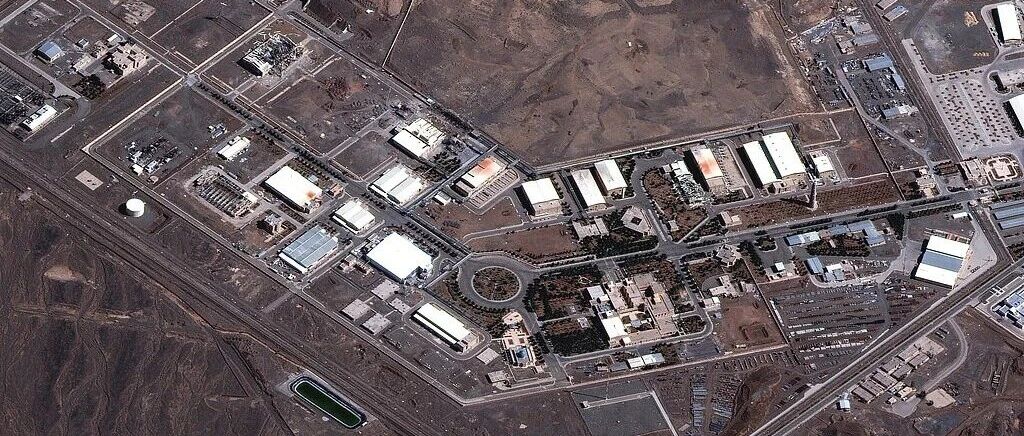
“美国和以色列考虑派遣特种部队”
财联社· 2026-03-08 10:25
Core Viewpoint - The article discusses the potential military actions by the U.S. and Israel against Iran, specifically focusing on the retrieval of high-purity enriched uranium, which may involve the deployment of special forces [1][2]. Group 1: Military Action Plans - The U.S. and Israel are considering sending special forces into Iran to either remove enriched uranium or to have nuclear experts dilute it on-site [1]. - Two plans have been discussed: one involves transporting all enriched uranium out of Iran, while the other allows for on-site processing by experts [1]. Group 2: Challenges of the Operation - The operation faces two main challenges: identifying the exact location of the enriched uranium and securing control over that location [2]. - This operation is characterized as a small-scale special operations raid rather than a traditional ground troop engagement, contingent on the assessment that Iranian forces do not pose a significant threat [2]. Group 3: Official Statements - U.S. President Trump indicated that the deployment of ground troops to Iran is possible but requires "very compelling reasons" [3].

与控制马杜罗前惊人相似!美军精锐大举集结欧洲,这次盯上了谁?
Jin Shi Shu Ju· 2026-01-06 08:01
Core Insights - The article discusses a significant increase in U.S. military aircraft deployments to Europe, raising speculation about potential special operations missions in the region, particularly concerning the interception of a Russian-flagged oil tanker, Marinera [1][5]. Group 1: Military Deployments - Online flight tracking data indicates that at least 10 C-17 "Globemaster III" aircraft departed from the U.S. to Europe on January 3, with at least four flights originating from Fort Campbell, Kentucky, suggesting an influx of U.S. special operations aviation assets [2][3]. - The 160th Special Operations Aviation Regiment, known as "Night Stalkers," is based at Fort Campbell and has played a crucial role in operations targeting Venezuelan President Maduro and his wife [3][4]. - Reports suggest that several modified MH-47 "Chinook" and MH-60M "Black Hawk" helicopters may have arrived at RAF Fairford, although no eyewitness evidence has confirmed this [3]. Group 2: Potential Operations - The deployment of these aircraft appears to be in support of a potential operation to forcibly board the Marinera oil tanker, which has been tracked by the Coast Guard since last month [1][4]. - The U.S. Navy's P-8 "Poseidon" maritime patrol aircraft has been observed tracking the Marinera, further supporting theories of an imminent special operations boarding mission [5]. - The Marinera is part of a "shadow fleet" that violates sanctions imposed by the U.S. and other nations, transporting oil for Russia, Iran, and Venezuela [4][5]. Group 3: Other Considerations - There are speculations that some U.S. military personnel may be heading to the Middle East in response to potential conflicts with Iran, similar to movements seen before the "Midnight Hammer" operation [6]. - The ongoing NATO exercise "Steadfast Dart 2026," which began on January 2, is another potential reason for the deployment of special operations assets to Europe, although the timing of the deployments suggests a more urgent nature [5]. - The 160th Special Operations Aviation Regiment is also set to conduct recruitment activities in Germany starting January 6, though it remains unclear if the aircraft are related to these recruitment efforts [5].
特朗普提名特战副司令执掌南方司令部
Xin Hua She· 2025-12-20 13:29
Group 1 - The core point of the article is the nomination of Francis Donovan as the commander of the Southern Command, reflecting the Trump administration's increased focus on military operations in Latin America and the Caribbean, particularly in anti-drug efforts and potential military threats against Venezuela [1][2] - The previous commander, Alvin Halsey, announced his resignation effective December, which is two years earlier than the typical term, and did not provide a public reason for his early departure [1] - Since early September, the U.S. military has conducted nearly 30 strikes against "drug boats" in the Caribbean and Eastern Pacific, resulting in the deaths of over a hundred individuals, although no evidence has been provided to substantiate the drug-related claims of these targets [1] Group 2 - Donovan's nomination indicates a growing emphasis by the Trump administration on the potential for special operations in Latin America, particularly following a controversial incident where a drug boat was attacked, leading to multiple casualties [2] - There were reported deep disagreements between Halsey and Defense Secretary Mark Esper regarding operations in the Caribbean, with Halsey facing pressure from Esper over the responsiveness of Southern Command to orders [1] - The recent anti-drug operations have faced criticism for potentially violating international law, raising concerns about the legality and justification of U.S. military actions in the region [1]