生命语言大模型

Search documents
西湖大学许田:AI正在颠覆创新药研发进程
Zhong Guo Ji Jin Bao· 2025-12-28 02:31
Core Viewpoint - AI is revolutionizing the drug development process in the biopharmaceutical industry, significantly enhancing efficiency and effectiveness in research and innovation [6][8]. Group 1: Human Evolution and Technological Revolution - The essence of humanity is rooted in its evolution from herbivorous to omnivorous diets, which has influenced societal traits and behaviors [2]. - Technological revolutions are identified as the core driving force of human development, following a cyclical pattern of slow incubation, rapid output, and eventual stagnation [4]. - Historical technological milestones include the Industrial Revolution initiated by Richard Arkwright in 1771, the steam engine by George Stephenson in 1852, and the advent of computers in 1939, culminating in the rise of artificial intelligence in the 1980s [4]. Group 2: Current Technological Waves - The world is currently experiencing overlapping technological waves, including the ongoing information network revolution and the emerging biopharmaceutical and AI waves [5]. - AI is reshaping social cognition and information dissemination, leading to changes in societal behaviors and decision-making processes [5]. Group 3: AI in Biopharmaceuticals - The integration of AI in biopharmaceuticals has led to the establishment of successful companies, with a notable success rate of 90% in projects initiated by the speaker's team [6]. - AI has significantly shortened drug development timelines, with three new drugs entering clinical phase II within six years, marking them as world-first innovations [8]. - The development of AI algorithms has enabled the standardization of biopharmaceutical data, expanding usable patient data from thousands to billions, thus enhancing the training of AI models [8].

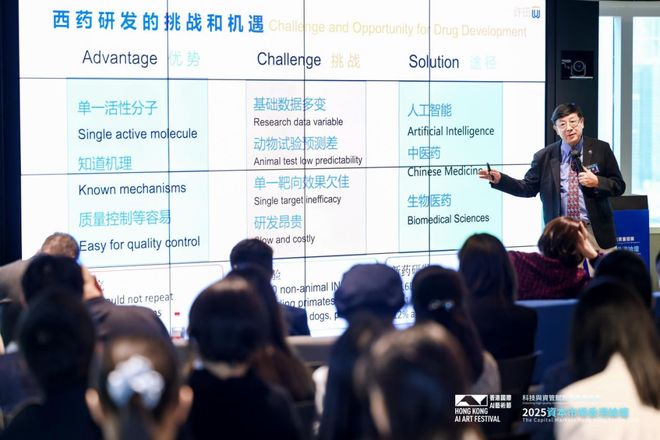
西湖大学许田:AI正在颠覆创新药研发进程
中国基金报· 2025-12-28 02:22
Core Viewpoint - AI is revolutionizing the drug development process in the biopharmaceutical industry, significantly enhancing efficiency and effectiveness [10][14]. Group 1: Human Evolution and Technological Revolution - The essence of humanity is rooted in a plant-based diet, with a shift to meat consumption around three million years ago leading to significant evolutionary changes [4]. - Technological revolutions are the core narrative of human development, characterized by a cycle of slow incubation followed by rapid output and eventual stagnation [6][7]. - Historical technological revolutions include the Industrial Revolution, the rise of the automobile, and the advent of the internet, each marking significant economic and societal shifts [7]. Group 2: Current Technological Waves - The world is currently experiencing overlapping technological waves, including the ongoing information network revolution and the emerging biopharmaceutical and AI waves [8]. - AI is reshaping social cognition and information dissemination, leading to changes in societal behavior and decision-making processes [8]. Group 3: Biopharmaceutical Industry Insights - In 2022, China's biopharmaceutical industry achieved over $100 billion in external licensing, surpassing the export value of new energy vehicles, indicating a significant growth trajectory [8]. - Despite lower investment levels compared to the new energy vehicle sector, the biopharmaceutical field's growth reflects the irreversible nature of technological waves [8]. Group 4: AI in Drug Development - The integration of AI in biopharmaceuticals has led to the establishment of successful companies, with a 90% success rate in projects initiated by the speaker's team, resulting in 10 companies being launched [11]. - AI has drastically reduced drug development timelines, with three drugs entering clinical phase II within six years, marking them as "First-in-Class" innovations [14]. - AI algorithms have enabled the standardization of biopharmaceutical data, expanding usable patient data from thousands to billions, thus enhancing the training of AI models [14].