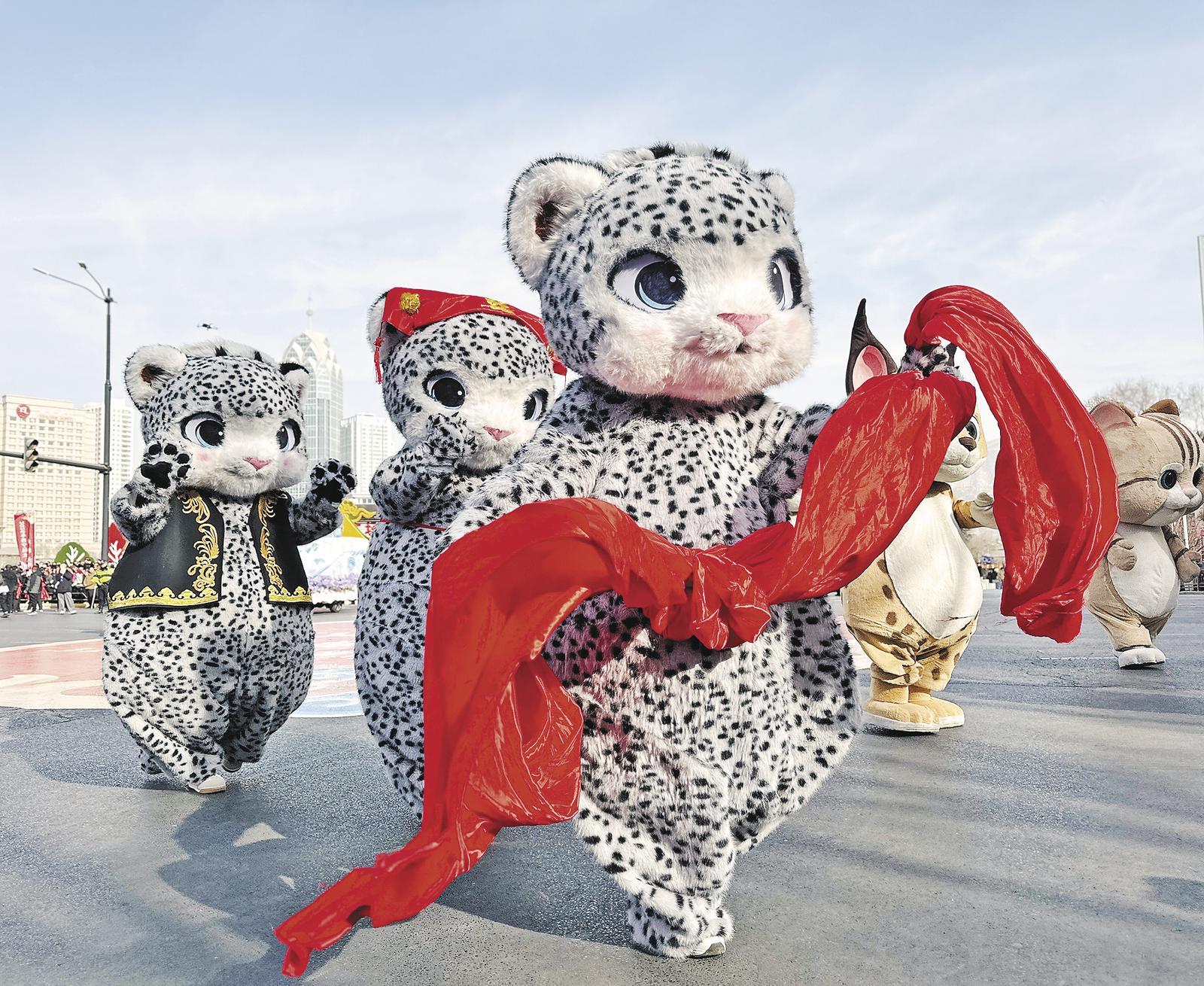
生态文明彰显

Search documents
社火闹春年味浓 正月初十满城欢
Xin Lang Cai Jing· 2026-02-26 18:39
Core Viewpoint - The 2026 Xining Shouhuo Festival, themed "Leaping into the New Year," successfully integrated traditional cultural elements with modern interactive features, attracting significant public interest and participation [6][9]. Group 1: Event Highlights - The festival featured a grand opening with a performance titled "Leaping into the New Year," showcasing a theme float and various cultural performances, including traditional dances and modern interpretations [6][7]. - Over 90% of participants in a pre-event survey had previous experience attending the festival, with 70% expressing a desire for traditional elements to be incorporated into modern festivities [7]. - The event included diverse performances such as dragon and lion dances, high stilt performances, and a blend of Latin and street dance, appealing to both traditional and contemporary audiences [7][8]. Group 2: Community Engagement - The festival was shaped by community feedback, with extensive surveys conducted to ensure the program resonated with local tastes and preferences [7]. - Participants expressed a strong desire to engage with the festival, with 56.84% indicating they wanted to participate actively in the performances [7]. - The event fostered a sense of unity and cultural pride among attendees, as reflected in the emotional responses of both performers and spectators [8][9]. Group 3: Technological Integration - The incorporation of technology was evident, with performances featuring smart robots and 3D-printed costumes, enhancing the visual appeal and modernizing traditional elements [8]. - A "robot guide" became a focal point of the event, showcasing innovative costume design and performance art [8]. Group 4: Cultural Significance - The festival was described as a celebration of local culture, blending ancient traditions with contemporary expressions, symbolizing the vibrant spirit of Xining [9][10]. - The event resonated deeply with attendees, evoking nostalgia and a sense of belonging, particularly among those who had returned home for the celebrations [10].