生态系统健康

Search documents
“失序”的植物正拉响警钟
Xin Lang Cai Jing· 2025-12-31 07:36
Core Insights - The delayed blooming of osmanthus in Shanghai in 2025, occurring approximately three weeks later than previous years, signals the impact of climate change on plant life cycles and ecological systems [1][2]. Group 1: Phenological Anomalies and Climate Impact - The flowering of plants like osmanthus is controlled by an intricate balance between internal biological clocks and external environmental signals, with temperature playing a crucial role in breaking dormancy [2]. - In 2025, Shanghai experienced an extended summer with high temperatures, causing the flowering process of osmanthus to be delayed until a significant drop in temperature was observed in late October [2]. - Research indicates that climate warming has led to earlier spring phenology, affecting the timing of plant growth and carbon absorption [2][3]. Group 2: Tree Growth and Carbon Dynamics - Observations in a forest on Chongming Island revealed that while trees begin to leaf out earlier due to warming, their radial growth lags behind, indicating a disconnect between carbon absorption and storage under climate stress [3][4]. - The phenomenon of "source-sink decoupling" suggests that despite prolonged growth periods, actual carbon storage may not increase proportionately, complicating assessments of forest carbon functions [4]. Group 3: Resilience and Ecological Strategies - Diverse plant communities exhibit lower sensitivity to climate warming, suggesting that biodiversity can buffer against the impacts of climate change on phenology [5]. - Urban areas, experiencing the "urban heat island" effect, face unique challenges in plant species composition and phenological responses, necessitating careful selection of tree species for urban greening [5][6]. - The need for real-time monitoring and advanced ecological sensing technologies is emphasized to protect urban vegetation and ecosystems under climate change [6][7]. Group 4: Future Directions and Knowledge Integration - The integration of new knowledge regarding biodiversity, carbon cycling, and climate stress mechanisms into future Earth system models is crucial for accurately simulating urban ecological changes [7]. - Long-term observations and research are vital for understanding ecological changes and guiding effective management practices for urban vegetation [7].
在武汉 住着至少175种蝴蝶
Chang Jiang Ri Bao· 2025-05-04 00:41
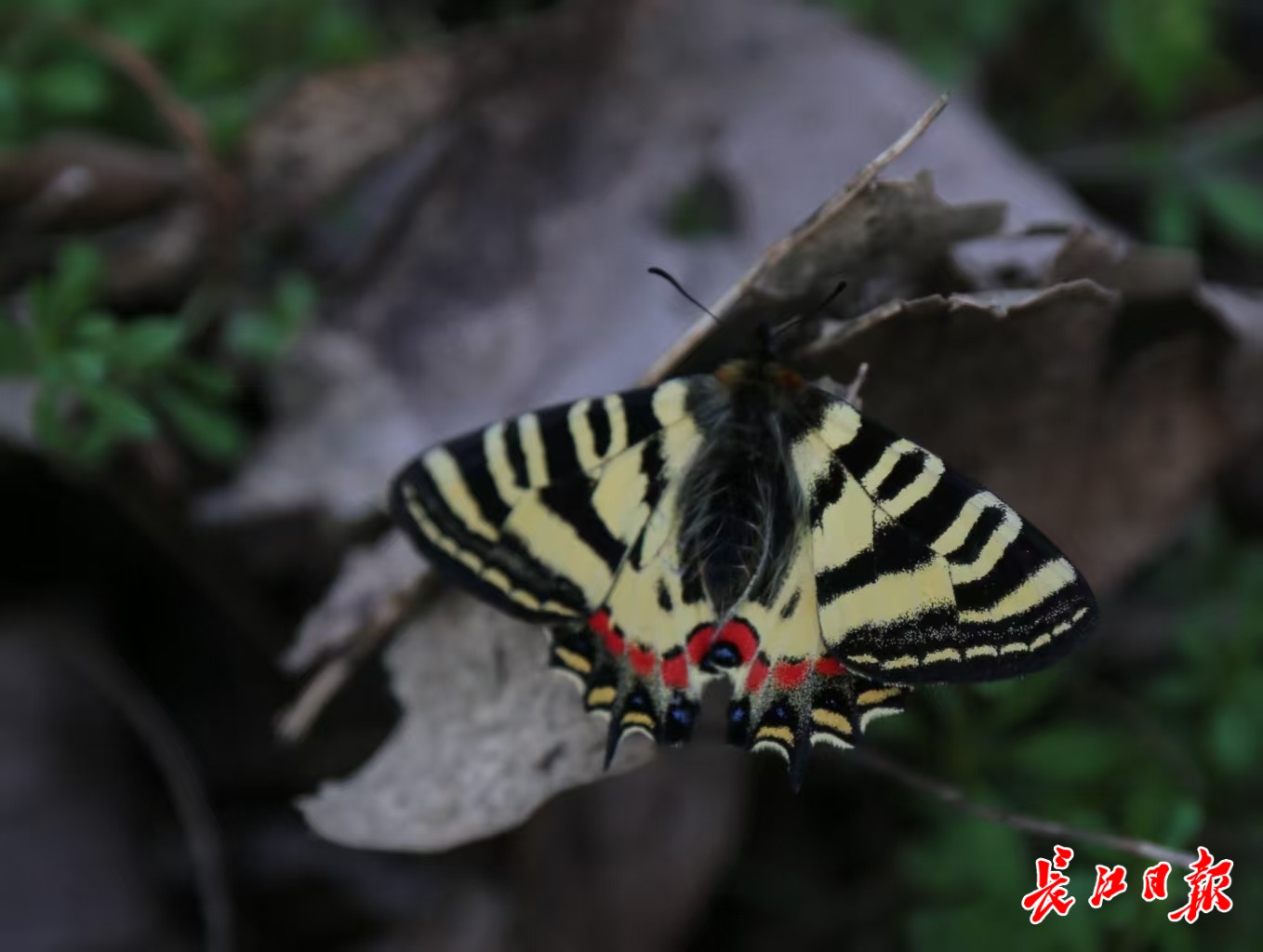
5月3日世界花园大会上,首个"武汉蝴蝶名录"揭晓谜底:6科175种蝴蝶落户江城,其中包括中华虎凤蝶、金裳凤蝶等一批国家二级以 上保护物种。 蝴蝶,号称"会飞的花朵",也是敏感的生态信使。随着人们对于生物多样性保护意识的不断加深,在野外观察与生态保护过程中,亟 需一份相对严谨的武汉本土蝴蝶底本数据。 武汉这座被长江吻过的城市,地理轮廓形如一只展翅彩蝶。那么,这个"蝶形城市"到底住着多少蝴蝶"居民"? 在武汉山地发现的中华虎凤蝶 但武汉市域内的蝴蝶文献极其有限,也一直没有见到一份公开发布的本土蝴蝶名录。 于是,一群热心的武汉蝴蝶爱好者挺身而出,发起了一个"武汉蝴蝶观察"公益活动。 "中华虎凤蝶身披'虎纹战袍',金裳凤蝶自带'黄金衣甲'……随着调查的深入,一批国家二级保护物种集体亮相,很多冷门蝶种纷纷出 镜。"名录发起人之一的董立坤介绍,这份"蝶类户籍"藏着太多惊喜。 81位"追蝶人"持续一年,共完成2929次野外记录,为115种蝶类在江城"蝶形地图"上勾勒生态坐标。 为了更好地完成武汉首次"都市寻蝶记",武汉蝴蝶爱好者自主开发了一个"观蝶"小程序,如同一个"AI蝴蝶记录簿",让大家更方便上 传观察记录。 "观蝶" ...