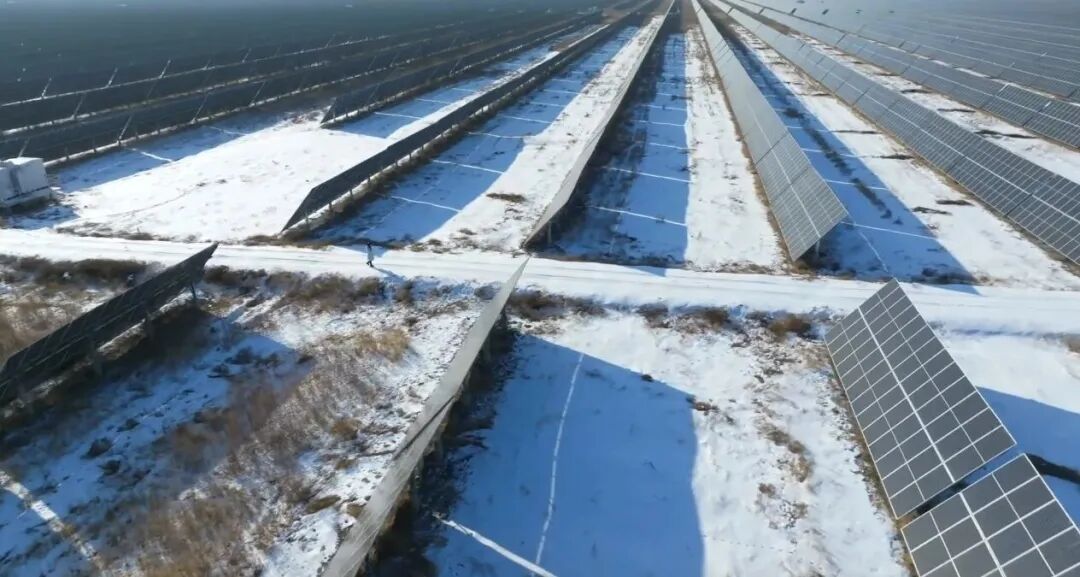
电力智能化

Search documents
泰永长征:AI应用技术聚焦电力智能化场景
Zheng Quan Ri Bao Zhi Sheng· 2026-01-26 11:07
Core Viewpoint - The company focuses on AI application technology in the context of power intelligence, integrating AI algorithms for various functionalities [1] Group 1: AI Application Technology - The TYT FUTURE platform combines AI algorithms to achieve load forecasting, fault warning, and energy efficiency optimization [1] - The solid-state circuit breaker incorporates AI fault prediction capabilities, providing intelligent support for scenarios such as AI server power distribution [1] - The technology empowers digital operation and maintenance throughout the entire lifecycle of equipment [1]
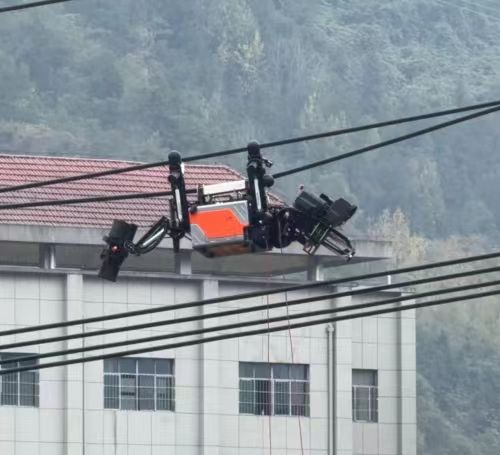
湖北首例!保康供电机器人“上岗”高空接电更安全高效
Zhong Guo Neng Yuan Wang· 2025-10-31 08:37
Core Insights - The introduction of an intelligent robot for live wire connection tasks marks a significant advancement in electric power operations in Baokang County, transitioning from high-risk manual work to ground-controlled automation [1][5]. Group 1: Technological Advancement - The intelligent live wire connection robot successfully completed its task on a 10 kV line, indicating a shift towards smart operations in the region [1]. - The robot features a lightweight design, weighing only 25 kg, making it suitable for various challenging environments [3]. Group 2: Operational Efficiency - The use of the robot allows for remote operation, eliminating the need for personnel to work at heights and significantly reducing the risk of electric shock [3]. - This innovation enhances safety management and improves work efficiency in power supply operations [3]. Group 3: Future Plans - The Baokang power supply company plans to fully promote the application of robotic technology in operations, aiming for a comprehensive transition to intelligent live working methods [5]. - The initiative is expected to strengthen core business capabilities and improve power supply reliability, supporting economic development in Baokang [5].


华为的“电力哲学”——做“最懂行的赋能者”
3 6 Ke· 2025-10-13 03:18
Core Insights - The article emphasizes the necessity of intelligence in the energy transition, highlighting that smart technology has become essential for survival in the power industry as it faces challenges from the dual carbon goals [2] - Huawei positions itself as an "enabler" rather than a disruptor in the power sector, focusing on collaboration and long-term growth through a philosophy of "technology foundation + ecological collaboration + long-termism" [2][3] Huawei's Power Philosophy - Huawei aims to be the best partner in the power industry, recognizing the high professional barriers and safety requirements, and seeks to complement existing industry experts rather than replace them [3] - The company emphasizes that technology must be rooted in real-world scenarios and provide measurable value, focusing on specific pain points in the industry [3][4] - Huawei adopts a long-term approach, fostering industry capabilities through platforms and ecosystems, helping companies evolve from merely using AI to understanding and implementing it [4] Pain Points Driving the Need for Huawei's Solutions - The transition to a new power system faces challenges due to the conflict between traditional models and intelligent demands, with significant issues in power generation predictability leading to substantial energy waste [5] - Huawei addresses the issue of inaccurate forecasting in renewable energy, improving prediction accuracy from 85% to 93% and reducing daily energy wastage by 40% [5][6] - The company tackles the problem of outdated maintenance practices by implementing digital twin technology, which enhances predictive maintenance and reduces unplanned outages significantly [6] - Huawei also addresses data silos in the industry by providing a platform for data sharing and collaboration, ensuring data security while enhancing operational efficiency [7] Comprehensive Solutions Across the Power Value Chain - Huawei's solutions aim to enhance predictability and control in renewable energy generation, targeting a 30% reduction in energy wastage and a significant increase in operational efficiency [8] - The company has developed an intelligent scheduling system that improves fault location time and enhances supply reliability, benefiting millions of households [9] - On the consumer side, Huawei's demand response models help users save on electricity costs while increasing their participation in energy management [10] - The introduction of smart energy management systems optimizes energy storage operations, significantly improving financial returns and attracting investment [11] Conclusion - Huawei's approach to the power industry is characterized by a commitment to collaboration and capability building, aiming to transform the sector from reactive to proactive management [12] - The company's philosophy is centered on enabling the industry to become stronger, more efficient, and more responsive to the evolving energy landscape [12]