电动社会

Search documents
海空一体,是宁德时代的新大陆?
Xin Lang Cai Jing· 2025-11-26 10:59
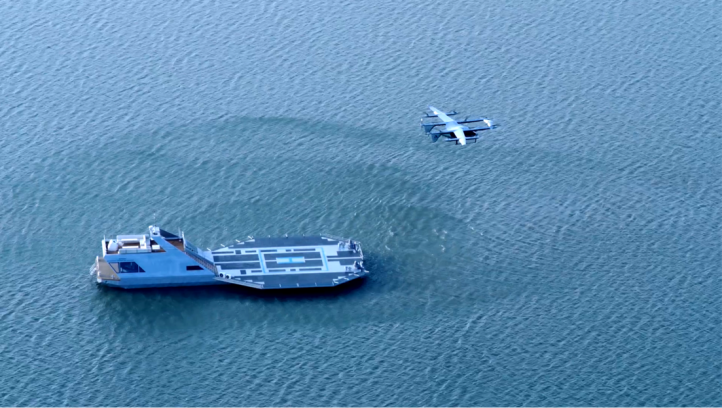
Core Viewpoint - CATL is expanding its focus from electric vehicles to a comprehensive "electric society," aiming to integrate green transportation across land, sea, and air, with a particular emphasis on the emerging low-altitude economy, projected to reach a market size of 4 trillion yuan by 2035 [1][2]. Group 1: Low-altitude Economy Development - The low-altitude economy is currently in its early development stage, facing several constraints that need to be addressed [1]. - CATL is motivated to expand its battery applications into this new sector, leveraging its position as an industry leader to reshape the low-altitude economy and enhance the integration of renewable energy technologies across various sectors [1][2]. Group 2: Innovative Solutions - CATL has introduced the world's first zero-carbon water airport designed specifically for eVTOL aircraft, which features a large deck for takeoff and landing, and a cabin serving as a waiting area and maintenance room [4][6]. - This water airport is powered by a solar energy and battery system, enabling rapid charging for eVTOLs and supporting all-weather operations [4][6]. Group 3: Infrastructure and Efficiency - The zero-carbon water airport addresses traditional low-altitude infrastructure challenges such as site selection, slow deployment, and heavy maintenance, significantly improving efficiency and reducing overall costs [6][8]. - The proposed "sea and air integration" solution aims to fill the gap in low-altitude smart infrastructure, potentially creating the most intelligent and green low-altitude infrastructure network globally within the next 5-10 years [8]. Group 4: Application Scenarios - The "sea and air integration" solution is designed to meet various application needs, including marine energy platform operations, high-frequency commuting, marine tourism, emergency rescue, and mobile airport cluster operations [11]. - Initial demonstrations have shown that eVTOLs can drastically reduce travel times to offshore wind farms and oil platforms, enhancing operational efficiency by over ten times [12]. Group 5: Future Prospects - CATL plans to establish a flexible network of vessels and eVTOLs that can adapt to seasonal demands and project requirements, providing a level of operational flexibility not achievable with traditional infrastructure [13]. - The introduction of the "sea and air integration" solution signifies CATL's expansion of battery products from land vehicles to low-altitude aviation, with the potential for large-scale application [14].