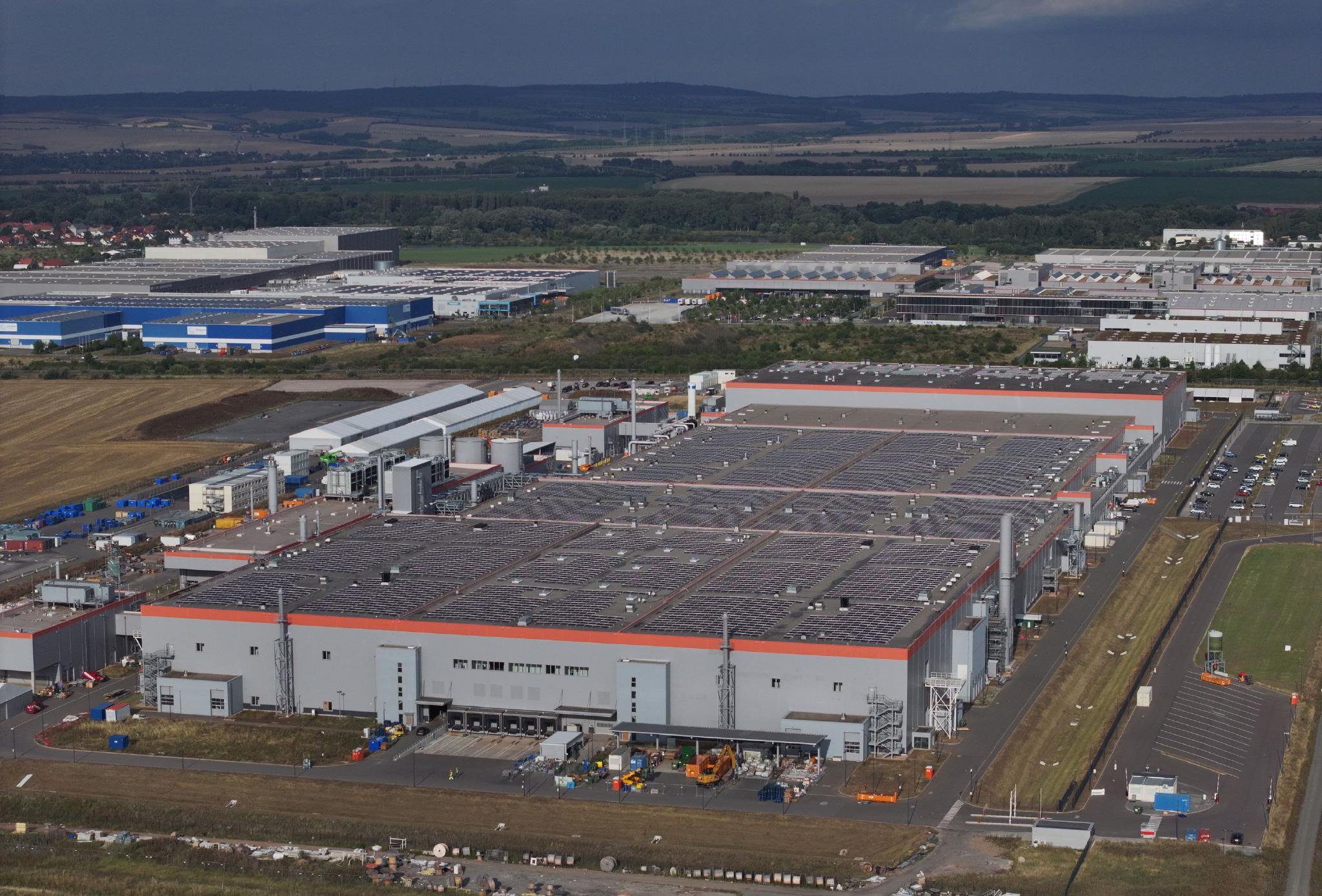
电池产能过剩

Search documents
【联合发布】新能源商用车周报(2026年1月第3周)
乘联分会· 2026-01-19 09:07
Policy and Regulations - The Ministry of Industry and Information Technology (MIIT) is working to further regulate the competitive order of the power and energy storage battery industry, addressing issues such as irrational competition and overcapacity [8][9][10] - The MIIT highlighted that China's planned battery production capacity will exceed 2000 GWh by 2025, while actual demand is only about 1000 GWh, leading to a utilization rate of less than 50% [9] - The city of Yangzhou is promoting the use of new energy dump trucks and concrete mixers, encouraging companies to update their fleets [12][13] Market Insights - The main technical routes for the new energy VAN market include pure electric, methanol-hydrogen electric, and hybrid power [19][20] - New energy large VANs have significant advantages in space, load capacity, range, and road rights, making them suitable for various applications such as urban logistics and outdoor camping [20][22] - User experience for new energy VANs has improved, with features like longer ranges (370-560 km for mainstream models) and larger cargo volumes (7-13 cubic meters) [28][29] Company Monitoring - Successful Automobile has set a production and sales target of 50,000 units for 2026, with 20,000 units aimed for overseas sales, and plans to launch nine new or upgraded products [33][35] - Farizon Auto aims for a sales target of 260,000 units in 2026, introducing a comprehensive product matrix covering various commercial vehicle segments [36][37] - Beiqi Heavy Truck has set a sales target of 20,000 units for 2026, focusing on new technology applications and product launches [38] - Honeycomb Energy announced the launch of the world's largest plug-in hybrid battery pack, "Fortress 2.0," with a capacity of 80 kWh, set for mass production in March 2026 [41] - Honeycomb Energy also reported a breakthrough in its stacking technology, achieving a 100% efficiency increase and a 34% reduction in costs [43][44]

日媒:全球电池产业淘汰赛开始,欧洲对中国企业依赖加深
Guan Cha Zhe Wang· 2025-08-25 02:16
Group 1 - The global battery production capacity is projected to reach 3930 GWh by 2025, significantly exceeding the demand of 1161 GWh, indicating a capacity that is 3.4 times the actual demand [1] - The global battery installation volume in the first half of this year reached 504.5 GWh, marking a year-on-year increase of 37.3%, which is 15 percentage points higher than the growth rate of the previous year [2] - Chinese companies dominate the global battery market, holding nearly 70% of the market share, with six out of the top ten battery manufacturers being Chinese [2] Group 2 - CATL leads the global battery installation with 190.9 GWh, maintaining its position for eight consecutive years, and has a market share of 37.9% [2] - BYD ranks second with an installation volume of 89.9 GWh and a remarkable growth rate of 58.4%, capturing 17.8% of the market share [2] - Other notable Chinese battery manufacturers include Zhongxin Innovation, Guoxuan High-Tech, Yiwei Lithium Energy, and Honeycomb Energy [2] Group 3 - Despite a decline in domestic market share, Chinese companies are expanding their presence in international markets, with significant growth in battery installations outside China [4] - In the U.S., battery supply is in excess, with production capacity reaching 4.8 times the market demand, leading to a reassessment of investment strategies by companies like Panasonic [5] - Chinese manufacturers, including BYD and CATL, are increasing investments in Europe, while Western companies are scaling back their investments in battery production [6]