畜牧产业发展新格局

Search documents
记者手记:养殖是“祖业”也是“新业”
Zhong Guo Xin Wen Wang· 2025-10-14 05:35
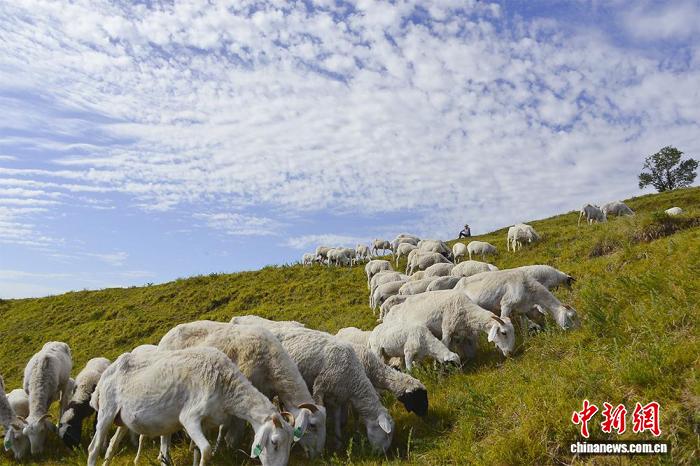
Core Viewpoint - The livestock industry in Gansu's Linxia Prefecture is both a traditional "ancestral industry" and a newly revitalized "new track," showcasing a blend of historical significance and modern advancements in farming practices [1][6]. Group 1: Traditional Livestock Industry - The breeding of cattle and sheep has been a longstanding "ancestral industry" in Linxia, with the saying "no cattle and sheep, no family" highlighting their importance in local livelihoods [2][4]. - The "Dongxiang Tribute Sheep" from Dongxiang County has become a regional public brand with a brand value exceeding 6.3 billion yuan, reflecting the historical significance and economic potential of local livestock [4]. - Dongxiang County transitioned from scattered breeding to large-scale operations, implementing a "task reward system" that links subsidies to livestock output, thus encouraging villagers to engage in breeding [4][5]. - Over 71% of households in Guanghe County are involved in livestock farming, with a robust system comprising 35,000 farming households and 636 cooperative farms, making it a key meat production base in Northwest China [4][5]. Group 2: Modernization and New Opportunities - Recent years have seen the rise of new sectors such as egg-laying hens and smart aquaculture, leveraging technology and policy support to create new growth points in the livestock industry [6][8]. - The Zhongbo Breeding Farm in Linxia County exemplifies modern egg production, achieving an annual output value exceeding 80 million yuan through automation and traceability systems [6][8]. - The smart aquaculture industry park in Yongjing County features advanced systems for breeding salmon and recycling water, significantly enhancing water resource utilization and filling a gap in high-end aquaculture [8]. - The integration of traditional and modern practices has led to a new development pattern in the livestock industry, where "ancestral" and "new" industries coexist and thrive together [8].