畸形吃播

Search documents
大批抖音吃播网红被封杀,彻底凉凉
Xin Lang Cai Jing· 2026-01-18 13:34
Core Viewpoint - The eating broadcast (mukbang) industry is facing a significant backlash due to the rise of extreme and bizarre content, leading to the banning of several creators and a call for a return to the original essence of sharing food joy [2][20][36] Group 1: Industry Trends - The mukbang industry has shifted from genuine food enjoyment to extreme eating challenges, where creators focus on bizarre and excessive consumption to attract views [2][21] - Recent bans on creators who engage in bizarre eating behaviors reflect a growing trend of platforms tightening regulations against low-quality content [3][21] - The industry is undergoing a "cleansing" phase, with platforms implementing strict measures against creators who promote unhealthy eating habits and waste food [21][24] Group 2: Case Studies - A notable case involves a creator known as "快快超快乐," who faced bans for posting videos of eating leftover food and even scavenging from trash, which sparked widespread controversy [4][9][12] - Another creator, "陈晨辰," also faced backlash for promoting dangerous eating practices, such as consuming inedible items, highlighting the risks associated with extreme mukbang content [13][16] - These cases illustrate the negative public perception and the potential dangers of extreme eating broadcasts, especially for impressionable audiences [17][20] Group 3: Regulatory Response - Platforms have responded to the controversy by banning accounts and removing content that violates community standards, indicating a commitment to maintaining a healthy content ecosystem [21][24] - The Chinese Consumers Association has called for a collective effort to resist extreme eating broadcasts and promote responsible content creation [26][30] - Official media has criticized the extreme practices in mukbang, emphasizing the need to uphold cultural values and public decency [30][34] Group 4: Future Outlook - The current backlash against extreme mukbang content may lead to a resurgence of creators who focus on authentic food experiences and cultural appreciation, rather than shock value [36] - The industry is at a turning point where genuine food sharing and cultural representation could replace the sensationalism that has dominated recent trends [36] - Moving forward, content creators are encouraged to prioritize health and positive messaging in their broadcasts to align with evolving audience expectations and regulatory standards [36]

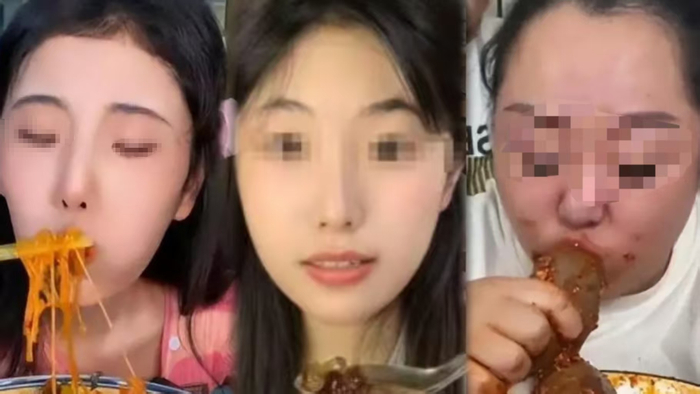
人民网评:“吃垃圾桶里的剩饭”,恶心谁呢?
Xin Lang Cai Jing· 2026-01-08 08:42
Core Viewpoint - The article criticizes the rise of "abnormal eating broadcasts" that exploit grotesque content for views, highlighting a disturbing trend where lowbrow entertainment undermines societal values and public decency [1][3][4]. Group 1: Abnormal Eating Broadcasts - A popular blogger has been posting videos of eating leftover food from trash bins, which has sparked public outrage and calls for action against such content [1][3]. - This trend is described as a shift from "self-harm eating" to "disgusting performances," challenging public tolerance and promoting low-quality content as a means to gain attention [1][3]. Group 2: Platform Responsibility - The article questions why relevant platforms have not taken action against these videos, despite numerous complaints from viewers expressing discomfort [3][4]. - It argues that platforms should act as gatekeepers of content, rather than allowing bizarre and lowbrow content to thrive for the sake of traffic [3][4]. Group 3: Societal Impact - The dangers of abnormal eating broadcasts extend beyond mere discomfort; they erode fundamental societal values and could mislead younger audiences, distorting their understanding of normalcy [4]. - The article emphasizes the need for strict regulation and accountability from platforms to prevent the normalization of such content, advocating for a return to quality and meaningful content in food broadcasting [4].

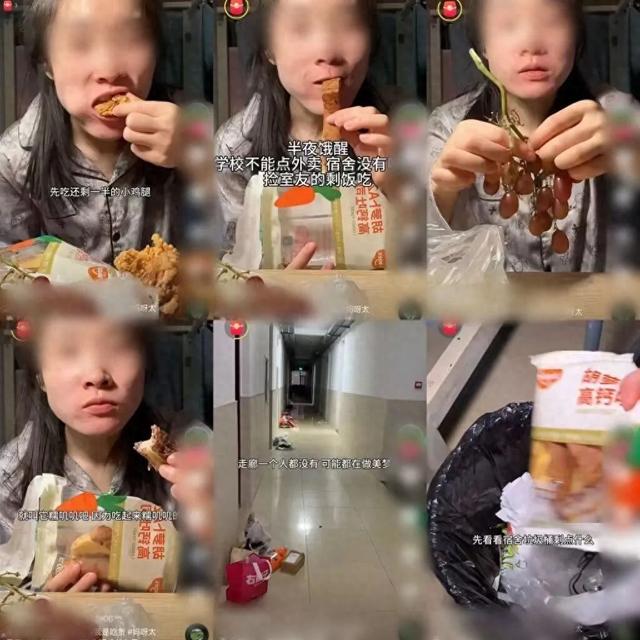
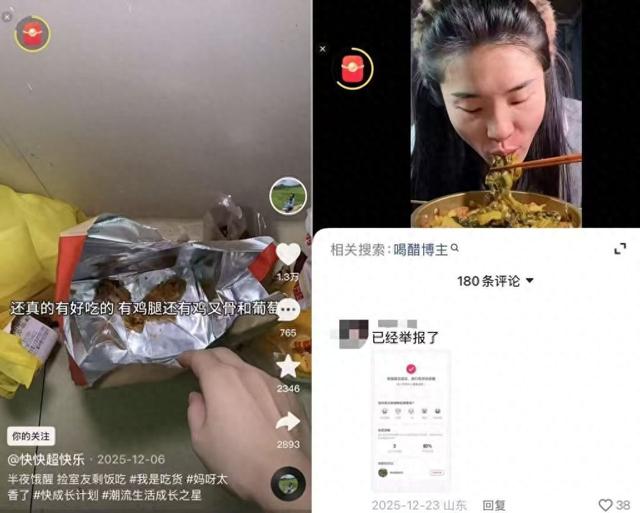
扫描“主播”丨吃播室友剩菜饭博取流量,博主“快快超快乐”被平台封禁
Xin Lang Cai Jing· 2026-01-08 07:38
Core Viewpoint - The article discusses the banning of the controversial content creator "快快超快乐" across multiple social media platforms due to the nature of their eating broadcast videos, which involve consuming leftover food in a manner deemed inappropriate and unsanitary [1][2]. Group 1: Content Creator's Activities - The content creator, identified as a university student, gained attention by posting videos of eating leftover food from roommates, including items retrieved from a trash bin [2][3]. - The creator's accounts on platforms like Kuaishou, Douyin, Xiaohongshu, and WeChat Video have been banned, with the Kuaishou account having 212,000 followers and 3.781 million likes prior to the ban [2]. Group 2: Public Reaction and Legal Perspective - Viewers reported the content, but the videos remained online for a time, indicating a delay in platform response to community concerns [4]. - Legal experts noted that such content violates normal dietary habits and hygiene standards, fitting the criteria for "abnormal eating broadcasts," which should be regulated more strictly by platforms [6].
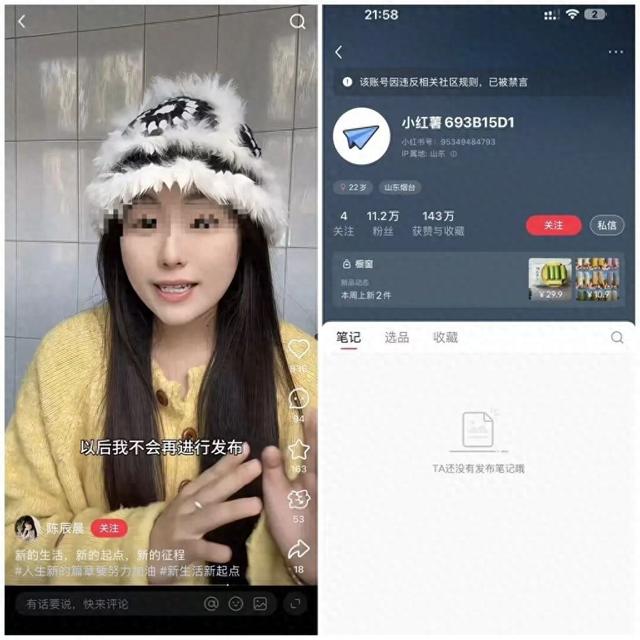
博主“陈晨辰”,被禁言
Xin Lang Cai Jing· 2025-12-13 16:18
Core Viewpoint - The incident involving the influencer "Chen Chen Chen (Vinegar Version)" highlights the growing concern over "abnormal eating broadcasts" on social media platforms, leading to account bans and calls for responsible content creation [1][6]. Group 1: Incident Overview - On December 11, Douyin and Kuaishou banned the account of influencer "Chen Chen Chen (Vinegar Version)" for promoting "abnormal eating broadcasts" [1]. - Following the ban, the influencer posted a response video on Xiaohongshu, stating she would no longer post bizarre food videos and would label her content with "video effects, please do not imitate" [1][3]. - The influencer, a college student from Yantai, Shandong, claimed her content was not fabricated and was inspired by her interest in vinegar and unusual foods [1][3]. Group 2: Content and Audience Reaction - The influencer had over 700,000 followers and received more than 10 million likes across multiple platforms, gaining attention through bizarre eating content such as vinegar-soaked gum and fish oil [4]. - A specific video where she consumed vinegar-soaked gum garnered 391,000 likes and 141,000 comments, with concerns raised about the potential for imitation by viewers [5]. - Other videos included her consuming unusual items like "human middle white" and "cockroaches," which drew negative feedback for potentially harmful influence on minors [5][6]. Group 3: Regulatory and Community Response - Following media coverage, the influencer's accounts were banned, and her Xiaohongshu account was renamed and had controversial videos removed, although her shop remained operational [6]. - Legal experts noted that her actions deviated from normal consumption practices, categorizing them as "abnormal eating broadcasts" [6]. - The China Consumers Association issued a call against food waste and extreme eating broadcasts, urging content creators to adhere to ethical standards and platforms to enforce responsibility [6].