
零食

Search documents
万辰集团(300972):2025年年报点评:业务持续扩张,效率加速提升
Changjiang Securities· 2026-03-30 09:07
Investment Rating - The investment rating for the company is "Buy" and it is maintained [5]. Core Insights - The company reported a total revenue of 51.459 billion yuan in 2025, representing a year-on-year increase of 59.17%. The net profit attributable to shareholders was 1.345 billion yuan, up 358.09%, while the net profit excluding non-recurring items reached 1.277 billion yuan, an increase of 395.03% [1][3]. - In Q4 2025, the total revenue was 14.897 billion yuan, reflecting a growth of 27.15%. The net profit attributable to shareholders for this quarter was 490 million yuan, a 133.76% increase, and the net profit excluding non-recurring items was 471 million yuan, up 159.36% [1][3]. Summary by Relevant Sections Business Expansion - As of the end of 2025, the company had a total of 18,314 stores nationwide, with 4,720 new stores opened and 602 closed, resulting in a net increase of 4,118 stores. The closure rate was 3.18%, an increase of 1.07 percentage points year-on-year [10]. - The company is strategically expanding its "snack+" product matrix, introducing low-temperature short-shelf-life food and beverages, frozen foods, and licensed IP products, with plans to further expand into household cleaning and personal care sectors [10]. Profitability Improvement - The net profit margin for 2025 increased by 1.71 percentage points to 2.61%, and the gross profit margin rose by 1.64 percentage points to 12.4%. The expense ratio decreased by 1.52 percentage points to 6.07% [10]. - In Q4 2025, the net profit margin improved by 1.5 percentage points to 3.29%, and the gross profit margin increased by 2.8 percentage points to 14.15% [10]. Financial Forecast - The company is expected to achieve net profits attributable to shareholders of 2.349 billion yuan, 3.114 billion yuan, and 3.815 billion yuan for the years 2026, 2027, and 2028, respectively. The corresponding price-to-earnings ratios at the current stock price are projected to be 15x, 11x, and 9x [10].
FUJIAN WANCHEN BIOTECHNOLOGY GROUP CO., LTD.(H0065) - Application Proof (1st submission)
2026-03-29 16:00
The Stock Exchange of Hong Kong Limited and the Securities and Futures Commission take no responsibility for the contents of this Application Proof, make no representation as to its accuracy or completeness and expressly disclaim any liability whatsoever for any loss howsoever arising from or in reliance upon the whole or any part of the contents of this Application Proof. Application Proof of FUJIAN WANCHEN FOOD GROUP CO., LTD. 福建萬辰食品集團股份有限公司 (the "Company") (A joint stock company incorporated in the Peopl ...
量贩零食店开进三环
经济观察报· 2026-03-29 04:11
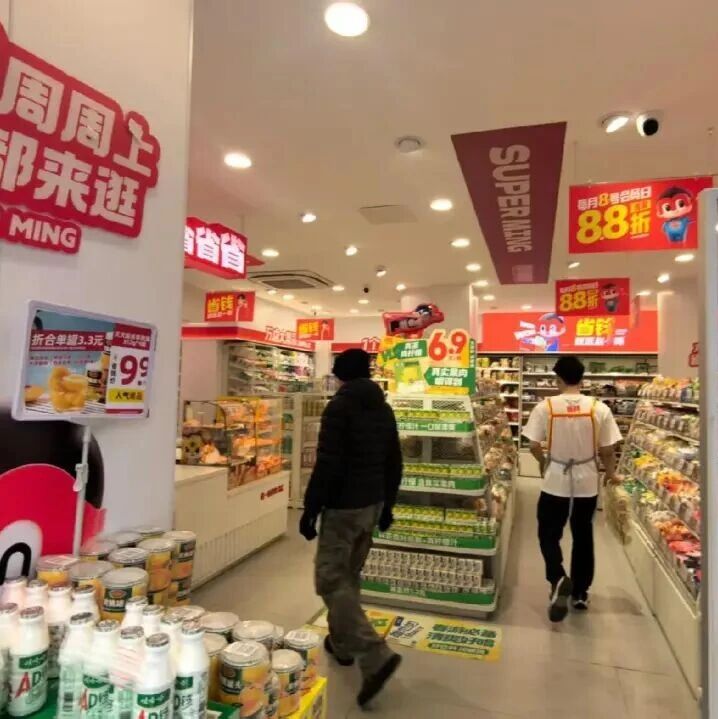
Core Insights - The core viewpoint of the article is that leading snack retail brands are shifting their focus to core areas of first-tier cities, where market penetration is still low, marking a new phase of growth in the industry [1][11]. Group 1: Market Expansion - Snack retail brands like Zhao Yiming and Hao Xiang Lai are rapidly opening new stores in Beijing's core areas, indicating a strategic shift from expansion in lower-tier markets to exploring new growth opportunities in high-tier cities [2][6]. - The industry has reached a stage of high market concentration, with the CR2 (market share of Ming Ming Hen Mang and Wan Chen Group) reaching 75.1% by 2024 [8]. Group 2: Store Characteristics - New stores in first-tier cities are smaller, around 100 square meters, compared to larger stores in lower-tier markets, and feature a more compact layout with a focus on convenience items like drinks and snacks [5]. - Customer traffic patterns show that these stores experience low foot traffic during weekdays but see significant increases during after-school and after-work hours, indicating a reliance on local student and working populations [4][5]. Group 3: Cost Challenges - Opening stores in first-tier cities presents significant cost pressures, with annual rent for a store in Beijing's core area reaching 500,000 yuan, and average gross margins around 20% [13]. - In contrast, the cost structure in lower-tier markets is more favorable, with lower rent and investment requirements, making it easier for brands to operate profitably [13]. Group 4: Strategic Adaptations - In response to market saturation in lower-tier cities and high costs in first-tier cities, brands are diversifying their product offerings and exploring new store formats, such as discount supermarkets [14][15]. - Both Ming Ming Hen Mang and Hao Xiang Lai are developing private labels and optimizing supply chains to enhance operational efficiency and differentiate their product offerings across various locations [15].

价格战里熬不出伟大品牌!投出多个万店巨头的他,凭什么敢聊“不涨价的消费升级”?
混沌学园· 2026-03-26 12:05
Core Insights - The consumer market has shifted dramatically from a period of growth (2016-2021) to a downturn in 2022 and 2023, leading to concerns about consumer spending and perceived economic challenges [1][2] - The traditional model of supply-driven consumption is being replaced by a consumer-driven approach, where consumers prioritize convenience and emotional connection over mere product quality and price [2][3] Consumer Behavior Changes - Consumers now have more power and are more discerning, leading to a decline in the effectiveness of traditional low-price strategies [3] - The concept of "not raising prices while upgrading consumption" is introduced as a counterintuitive strategy to adapt to changing consumer expectations [5] Strategic Insights from Industry Leaders - Chang Bin, founder of Qicheng Capital, emphasizes the importance of understanding the underlying logic of consumer behavior and the need for traditional and new brands to adapt their strategies [4][6] - Traditional companies ("old brands") need to shift their focus to user value, while new brands ("emerging brands") must develop their capabilities to navigate market challenges [7] Case Studies and Practical Applications - Qicheng Capital has successfully assisted brands like Lin Qingxuan in transforming their strategies, demonstrating the potential for growth through strategic innovation [8] - The article highlights the importance of aligning business strategies with organizational capabilities to achieve sustainable growth [9] Course Offerings - The article promotes a course that aims to provide insights into consumer behavior, strategies for "not raising prices while upgrading consumption," and practical methods for traditional and emerging brands to adapt [9][10][15]

国泰海通|“远望又新峰”2026春季策略会观点集锦(下)——消费、医药、科技、先进制造、金融
国泰海通证券研究· 2026-03-24 14:00
Group 1: Food and Beverage Industry - The core investment strategy for the food and beverage sector in 2026 emphasizes the importance of price increases, with a focus on resilient segments such as condiments, beer, and beverages [4][5] - The white liquor industry is nearing the end of its adjustment phase, transitioning from a "U-shaped" to a "V-shaped" recovery, with expectations of a quicker bottoming process starting from Q3 2025 [4] - The beer sector is expected to improve due to the stabilization of dining scenarios and a gradual recovery in consumer spending, with historical trends indicating profitability benefits during periods of rising CPI [5] Group 2: Consumer Goods - The consumer goods sector is witnessing a bottoming out, with a focus on companies that can effectively pass on price increases amidst diminishing cost advantages [5] - The demand for condiments is anticipated to recover, with expectations of price increases and improved profitability in the dairy sector as supply and demand cycles align [5] Group 3: Beauty and Personal Care - The beauty and personal care industry is experiencing a recovery in demand, with significant growth in the cosmetics and personal care segments, particularly in online sales [7][8] - The market is seeing a resurgence in high-end and affordable brands, with domestic brands maintaining rapid growth amidst a competitive landscape [8] Group 4: Service Consumption - The service consumption sector is benefiting from favorable policies, with a focus on travel and leisure services, as well as improvements in traditional retail [10][11] - The education sector is expected to see robust demand, particularly in vocational training and skill development, supported by policy initiatives [10] Group 5: Home Appliances - The home appliance industry is awaiting a recovery in domestic demand, with a focus on companies that possess pricing power amidst rising costs [15] - The global supply chain for home appliances is becoming more resilient, with expectations of improved export conditions [15] Group 6: 3D Printing Industry - The 3D printing market is projected to grow significantly, driven by both industrial and consumer demand, with a forecasted CAGR of 18% from 2024 to 2034 [18][19] - The demand for PLA materials in consumer-grade 3D printing is expected to increase, with domestic manufacturers ramping up production capabilities [19] Group 7: Textile and Apparel - The textile and apparel sector is showing signs of recovery, with strong growth in retail sales and exports, particularly in the context of rising cotton prices [23][24] - The market is expected to see a shift towards mid-to-high-end products, with brands focusing on innovation and sustainability [24] Group 8: Agriculture - The agricultural sector is anticipated to benefit from rising commodity prices, with a focus on the recovery of pig farming and the potential for pet product valuations to rebound [27] Group 9: Pharmaceutical Industry - The pharmaceutical sector is witnessing a shift towards innovative drugs, with a focus on oncology and metabolic treatments, as well as improvements in domestic demand for medical devices [30][31] Group 10: Financial Services - The financial services sector is focusing on wealth management and internationalization, with a notable increase in demand for investment consulting services [59][62] - The insurance industry is expected to see stable growth in premium income, driven by savings demand and improved asset-liability management [66]

鸣鸣很忙20260322
2026-03-22 14:35
Summary of the Conference Call for Mingming Hen Mang Group Company Overview - Mingming Hen Mang Group is a leading player in the snack wholesale industry, formed by the merger of "Lingshi Hen Mang" and "Zhao Yiming" in November 2023. [2][3] - The company aims to achieve a GMV exceeding 90 billion yuan and a net profit of over 2.2 billion yuan by 2025, driven by rapid store expansion and net profit margin recovery. [2][3] Financial Performance and Projections - The company expects to have over 22,000 stores by the end of 2025, with a significant contribution from the Zhao Yiming brand, which accounts for over 60% of total revenue. [2][3] - Projected net profits for 2025, 2026, and 2027 are 2.2 billion, 3.3 billion, and 4.3 billion yuan respectively, with a compound annual growth rate (CAGR) exceeding 35% starting in 2026. [2][14] - The company’s net profit margin is expected to improve from 3.4% to over 5% in the medium term, driven by enhanced bargaining power and operational efficiency. [2][12][14] Market Dynamics and Competitive Landscape - The snack wholesale industry is characterized by low gross margins (approximately 10%), high turnover (inventory turnover around 10 days), and low expense ratios (operating expenses at 5-6%). [2][7] - The competitive landscape is consolidating, with Mingming Hen Mang holding over 40% market share and a CR2 close to 75%. The company’s store closure rate is significantly lower than its competitor, Wancheng Group. [2][8][12] - The industry has seen a compound annual growth rate of about 80% over the past five years, with the market share of snack wholesale expected to reach 20% by 2025. [8] Brand Performance - The Zhao Yiming brand has shown a significant increase in revenue contribution and gross margin improvement, with its gross margin rising from approximately 6-7% to nearly 10% post-merger. [4][5] - As of Q3 2025, Zhao Yiming operates over 11,000 stores, generating approximately 27.1 billion yuan in revenue, while Lingshi Hen Mang operates 8,400 stores with around 19.3 billion yuan in revenue. [4] Operational Efficiency - The company’s operational efficiency is highlighted by a lower store closure rate (0.76%) compared to Wancheng Group (1.9%), indicating stronger store management. [5][12] - Average annual store GMV for Mingming Hen Mang is 5.27 million yuan, outperforming Wancheng Group's 4.5 million yuan, attributed to larger store sizes and faster expansion rates. [5][12] Future Growth Drivers - Future growth is expected to come from increased store density, with potential for 20,000 additional stores in the market. [12][13] - The company plans to enhance single-store revenue through the introduction of new product categories and improved operational strategies. [12][14] Valuation and Investment Rating - The company is projected to have a target price of 4,309.65 HKD per share, reflecting a 15% upside from current levels, based on a 25x PE ratio for 2026. [15] - The investment rating is set at "Buy," considering the company's high growth potential and market positioning. [15] Key Catalysts - Important catalysts to watch include potential developments in May and the performance of new business models introduced by Zhao Yiming. [15]
行业周报:消费前景乐观展望,多维度布局龙头标的
KAIYUAN SECURITIES· 2026-03-22 07:45
Investment Rating - The industry investment rating is "Positive" (maintained) [1] Core Viewpoints - The food and beverage sector demonstrates strong defensive attributes, with multiple avenues for investment opportunities. The sector's recent performance shows a decline of 0.5% from March 16 to March 20, ranking third among primary sub-industries and outperforming the CSI 300 by approximately 1.7 percentage points. The sub-industries of liquor (+0.3%), other foods (+0.0%), and soft drinks (-0.7%) performed relatively well. The sector's stability is appealing to investors seeking refuge amid geopolitical tensions and a declining market risk appetite. The underlying logic supporting the current investment opportunity is based on consumer recovery, with expectations of improved corporate profitability as PPI continues to rise. Overall liquidity remains favorable, with social financing data for January-February 2026 exceeding market expectations, indicating a potential rebound in private sector loan growth, which will support valuation recovery in the sector [3][10][12]. Summary by Sections Weekly Insights - The food and beverage index experienced a decline of 0.5%, ranking third among 28 primary sub-industries, and outperformed the CSI 300 by about 1.7 percentage points. The liquor sector showed a slight increase of 0.3%, while other foods remained stable, and soft drinks saw a decline of 0.7% [10][12]. Market Performance - The food and beverage sector's performance indicates strong defensive characteristics, with a focus on consumer recovery as a key driver. The sector's valuation is currently at a relatively low level, making it an attractive investment opportunity [10][12]. Investment Strategy - The liquor sector is positioned for medium to long-term investment, with leading companies showing strong performance and reasonable valuations. The strategy includes prioritizing leading liquor companies, focusing on products with strong competitive advantages and cost transfer capabilities, and considering sectors like snacks and beer for short to medium-term investments. The beer sector is expected to benefit from the upcoming 2026 World Cup and potential high-temperature weather due to El Niño, which could drive sales growth [11][12]. Upstream Data - Recent data indicates a decline in some upstream raw material prices, with whole milk powder auction prices down 8.5% year-on-year, and fresh milk prices down 1.9% year-on-year. This trend suggests a continued decrease in domestic milk prices in the short to medium term [14][19]. Liquor Industry News - In January-February 2026, retail sales of tobacco and alcohol increased by 19.1% year-on-year, indicating a significant recovery in the liquor sector. The performance of major brands like Moutai and the expansion of international channels are noteworthy developments [37][38].





万辰集团:内功夯实,盈利向上-20260319
Xinda Securities· 2026-03-19 10:30
Investment Rating - The investment rating for the company is "Buy" [3] Core Views - The company reported a revenue of 51.46 billion yuan for 2025, representing a year-on-year increase of 59.2%, and a net profit of 2.42 billion yuan, up 301.8% year-on-year [2][3] - The company has solidified its internal operations and supply chain, enhancing its intrinsic value, with the snack wholesale business achieving a revenue of 50.86 billion yuan in 2025 [3] - The market has concerns regarding the sustainability of profit margins, but the current competitive landscape in discount retail is relatively mild, allowing for continued profitability [3] - The company has a strong cash position with 4.74 billion yuan in cash at the end of 2025, indicating robust cash-generating capabilities [3] - The company is expected to accelerate store openings in 2026, with a total of 18,314 stores by the end of 2025 [3] Financial Summary - The company’s projected revenue for 2026 is 67.22 billion yuan, with a net profit of 2.38 billion yuan, corresponding to a price-to-earnings ratio (P/E) of 15.7x [4][5] - The gross profit margin is expected to be 12.7% in 2026, with a return on equity (ROE) of 67% [5] - The company’s earnings per share (EPS) is projected to be 12.43 yuan in 2026, with a significant increase in net profit forecasted for the following years [5]
万辰集团(300972):全年收入高增,利润率创新高
GF SECURITIES· 2026-03-19 00:53
Investment Rating - The report upgrades the investment rating of the company to "Buy" based on its strong performance and growth potential in the snack retail sector [7][19]. Core Insights - The company achieved a revenue of RMB 51.46 billion in 2025, representing a year-on-year growth of 59%, and a net profit of RMB 1.34 billion, up 358% year-on-year [7][8]. - The company is in a phase of "store expansion + single-store recovery + profit margin improvement," benefiting from the ongoing growth in the snack retail industry [7][19]. - The report forecasts revenues for 2026-2028 to be RMB 65.88 billion, RMB 78.02 billion, and RMB 87.50 billion, respectively, with net profits projected at RMB 2.37 billion, RMB 3.02 billion, and RMB 3.53 billion [3][8]. Revenue Performance - In 2025, the company’s snack retail business generated RMB 50.86 billion, accounting for 99% of total revenue, with a year-on-year growth of 60% [7][8]. - The company opened 4,118 new stores in 2025, bringing the total to 18,314 stores, with a focus on the East China region [7][8]. - Average revenue per store in 2025 was approximately RMB 3.13 million, showing a decline of 6.9% year-on-year, but with signs of recovery in the latter quarters [8][11]. Profitability Analysis - The company’s gross margin improved significantly, with Q4 net profit margin reaching 5.7%, up from 3.9% in Q1 [7][8]. - The report attributes the profit margin improvement to supply chain optimization, cost control, and enhanced operational efficiency [7][8]. - The projected net profit margins for 2026-2028 are expected to be 5.5%, 5.9%, and 6.2%, respectively [11][19]. Valuation Metrics - The report suggests a price-to-earnings (P/E) ratio of 20x for 2026, leading to a target price of RMB 247.38 per share [7][19]. - The company’s return on equity (ROE) is projected to be 90.7% in 2025, declining to 45.7% by 2028 [3][19]. - The estimated enterprise value to EBITDA (EV/EBITDA) ratio is expected to decrease from 9.6 in 2024 to 3.2 by 2028 [3][19].
食品饮料行业点评报告:春节提振消费表现,1-2月社零增速环比提升
KAIYUAN SECURITIES· 2026-03-18 08:50
Investment Rating - The industry investment rating is "Positive" (maintained) [1] Core Views - The report highlights a steady recovery in social retail sales data for January-February 2026, with significant growth in essential food and beverage categories, particularly benefiting from concentrated consumption during the Spring Festival [3][4] - The food and beverage sector is currently at a low market expectation and valuation, indicating a likely rebound in capital allocation intentions [3] - Key recommendations include prioritizing leading companies in the liquor sector, such as Kweichow Moutai, Luzhou Laojiao, and Shanxi Fenjiu, while also focusing on snack foods, dairy products, and the restaurant supply chain [3][4] Monthly Observation - In January-February 2026, the total retail sales of consumer goods increased by 2.8% year-on-year, with a month-on-month growth of 1.9 percentage points compared to December 2025 [4] - The food and beverage categories saw year-on-year increases of 10.2% for grain and oil products, 6.0% for beverages, and 19.1% for tobacco and alcohol, with significant month-on-month improvements [4][11][16] Quarterly Observation - It is anticipated that the retail sales data for Q1 2026 will show a good recovery, particularly in grain, oil, and tobacco categories, driven by the Spring Festival consumption [5] - The expected year-on-year growth rates for grain and oil products, beverages, and tobacco in January-February 2026 are 3.9 percentage points, 2.0 percentage points, and 20.1 percentage points, respectively, compared to Q4 2025 [5] Industry Observation - The high-end liquor segment demonstrates strong resilience, with core products from Moutai and Wuliangye showing positive year-on-year sales growth during the Spring Festival [6] - The restaurant sector continues to recover, with stable growth in B-end consumption and solid demand in C-end markets, indicating improved profitability for leading restaurant companies [6]
