疏解北京非首都功能

Search documents
疏解提质,一场惠及京津冀的系统性重构
Xin Jing Bao· 2026-02-26 14:04
Core Viewpoint - The article emphasizes the strategic importance of Beijing's role in promoting coordinated development in the Beijing-Tianjin-Hebei region, focusing on the need to relieve non-capital functions in Beijing to enhance regional collaboration and development efficiency [2][3]. Group 1: Beijing's Development Strategy - Beijing has implemented a new urban master plan over the past twelve years, focusing on strict control of growth and the reduction of existing functions, leading to a cumulative reduction of 150 square kilometers of urban construction land during the 14th Five-Year Plan period [3]. - The city has successfully upgraded nearly 1,000 regional professional markets and logistics centers, and over 3,000 general manufacturing enterprises have exited the market [3]. - The transformation of traditional business models in areas like the Dahongmen district into innovation parks has become a key method for Beijing to foster new productive forces [3]. Group 2: Economic Growth and Regional Collaboration - The economic total of the Beijing-Tianjin-Hebei region has increased from 5.95 trillion yuan in 2014 to nearly 12 trillion yuan by 2025, achieving a doubling of total economic output [3]. - Tianjin's GDP has grown at an average annual rate of 4.4%, with strategic emerging industries accounting for over 30% of industrial output, and the service sector contributing over 70% to economic growth [4]. - Hebei has seen significant development with the Xiong'an New Area emerging as a modern city, and by 2025, it is expected to rank among the top three provinces in GDP growth nationwide [4]. Group 3: Overall Impact on the Region - The reduction of non-capital functions in Beijing has not diminished its status but has instead released stronger development momentum, enhancing regional collaboration and resource flow [5]. - The coordinated efforts among Beijing, Tianjin, and Hebei are aimed at meeting the new requirements for modernization and high-quality development in China, pushing the region towards higher levels of collaboration and efficiency [5].


资金流入,新两翼“比翼齐飞”
Xin Jing Bao· 2026-02-26 02:25
Core Insights - The Beijing Urban Sub-center and Xiong'an New Area are being developed as key components of the Beijing-Tianjin-Hebei coordinated development strategy, with significant investments driving their growth [9][10] - The Beijing Urban Sub-center has maintained an annual fixed asset investment exceeding 100 billion yuan, while Xiong'an New Area has sustained an investment scale of 200 billion yuan each year [2][10] Investment and Development - The Beijing Urban Sub-center has accumulated over 960 billion yuan in fixed asset investment since its construction began in 2016, with a continuous annual investment exceeding 100 billion yuan for five consecutive years [2] - In 2024, the investment composition in the Beijing Urban Sub-center is projected to be 26% from government and 74% from social capital, indicating a shift towards increased private investment [2] - Xiong'an New Area has achieved a cumulative investment exceeding 1 trillion yuan, with an average annual GDP growth rate of 17.1% since the "14th Five-Year Plan" [10] Infrastructure and Urban Development - Major infrastructure projects in the Beijing Urban Sub-center include the completion of the Beijing Tongzhou Station, which is part of a comprehensive transportation hub expected to enhance connectivity [2][3] - The development of cultural and tourism projects, such as the Universal Resort and various cultural landmarks, has significantly contributed to the urban landscape and local economy [3][4] Policy and Regulatory Framework - The introduction of the "Beijing Urban Sub-center Regulations" marks a significant milestone, providing a legal framework to clarify the development goals and support policies for the area [5] - The regulations aim to attract quality enterprises and talent to the urban sub-center, promoting high-level construction and development [5] Collaborative Development - The collaboration between Tongzhou District and the North Three Counties has led to the establishment of a national forest park and numerous joint projects, enhancing ecological and economic integration [6][7] - The "Tongbei Demonstration Zone" has made significant progress in transportation, healthcare, and education, improving resource sharing and quality of life for residents [7][8] High-Tech Industry Growth - High-tech enterprises are increasingly attracted to Xiong'an New Area, benefiting from favorable policies and a growing ecosystem for innovation [12][13] - Companies are shifting their focus from individual growth to collaborative development within the industrial ecosystem, fostering a community of shared success [13]
北京立法推进城市副中心建设 打造现代金融等六大产业
Zhong Guo Xin Wen Wang· 2026-01-29 09:59
Core Viewpoint - Beijing has enacted legislation to implement the coordinated development strategy of the Beijing-Tianjin-Hebei region, focusing on the development of six key industries in the Beijing urban sub-center, including digital economy, modern finance, advanced manufacturing, business services, cultural tourism, and modern seed industry [1][2] Group 1: Legislative Framework - The Beijing Municipal People's Congress has approved the "Beijing Urban Sub-center Regulations," which consists of nine chapters and sixty-five articles, aimed at relieving non-capital functions of Beijing and establishing a high-quality development model for the sub-center [1] - The regulations will take effect on May 1 of this year, emphasizing the need for a harmonious relationship between the main urban area and the sub-center, as well as the integration with the Xiong'an New Area in Hebei [1] Group 2: Development Focus - The sub-center will prioritize administrative offices, business services, cultural tourism, and technological innovation, while also supporting the establishment of a national green technology trading center and a global-level green exchange [2] - The regulations outline plans for the integration of Tongzhou District in Beijing with surrounding areas in Tianjin and Hebei, including the development of industrial cooperation platforms and improvements to regional transportation networks [2] Group 3: Legislative Insights - The regulations incorporate nearly ten years of planning and construction experience for the sub-center, addressing legal needs for development and governance while allowing for adjustments based on practical exploration [2]
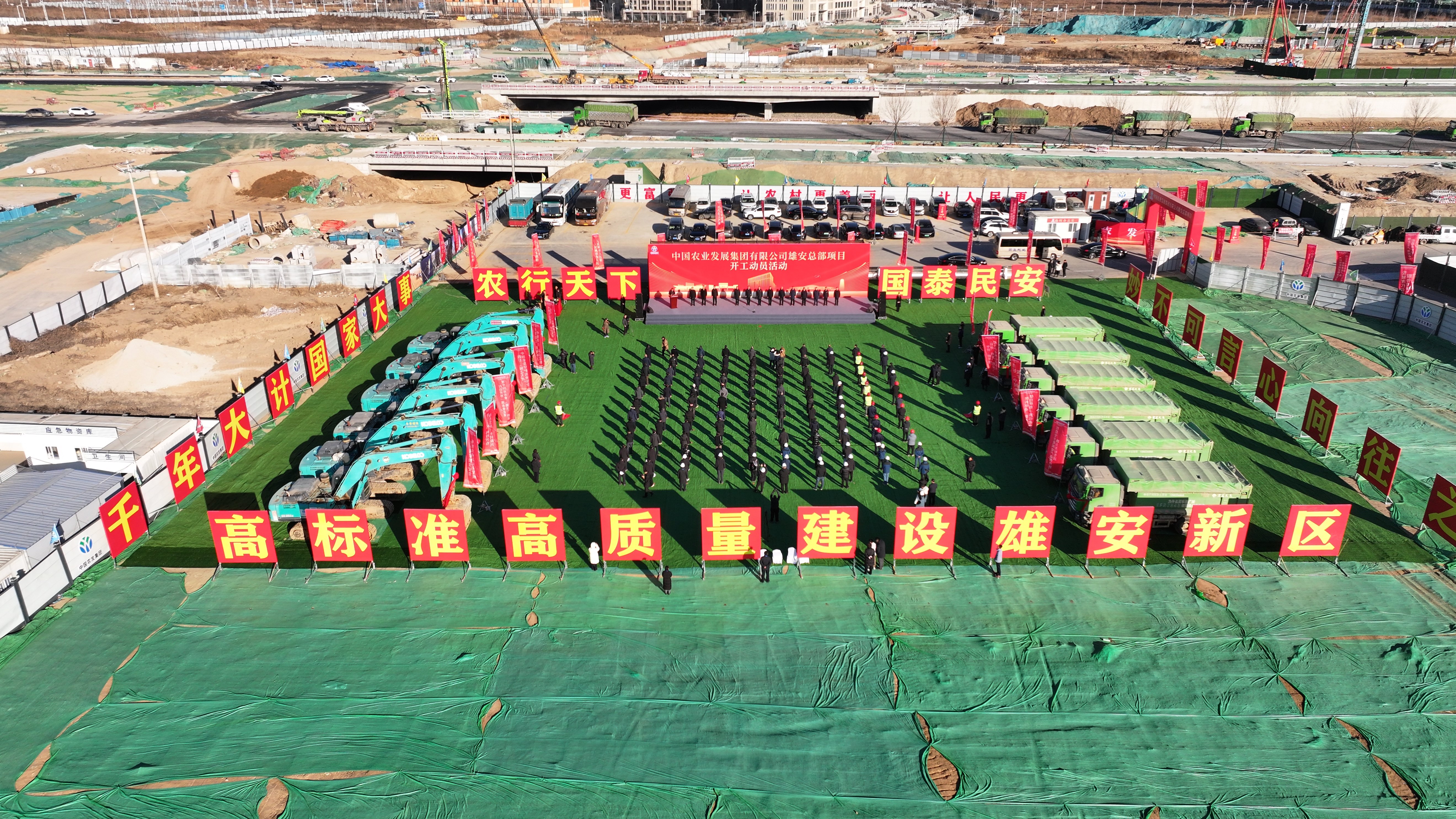
第二批疏解央企有序落地,中国农发集团雄安总部项目开工
Jing Ji Wang· 2025-12-26 08:02
Core Viewpoint - China Agricultural Development Group (China Agri-Development Group) is actively responding to the national strategy of relieving non-capital functions from Beijing by initiating the construction of its headquarters project in Xiong'an New Area, aiming to integrate into the high-quality development process of the area [1][4]. Group 1 - The headquarters project is located in the central area of the Xiong'an New Area's startup zone and is part of the enterprise headquarters functional sector [3]. - The project adopts a design philosophy of "technology empowerment, green leadership, and open collaboration," combining traditional architectural essence with modern elements, focusing on ecological sustainability and cultural integration [3]. - Upon completion, the project will serve as a significant platform for gathering agricultural technology resources and promoting high-quality agricultural industry development in Xiong'an New Area, enhancing its leadership in agricultural technology innovation and industry collaboration [5]. Group 2 - China Agri-Development Group aims to deepen its integration with Xiong'an New Area and strengthen collaboration with agricultural-related industries in the Beijing-Tianjin-Hebei region [5]. - The project is positioned as a benchmark for high-quality construction in Xiong'an New Area, contributing to the development of a modern city with high standards [5].
放得下行囊 圆得了梦想——雄安新区提升项目承载服务能力
Xin Hua Wang· 2025-12-13 23:46
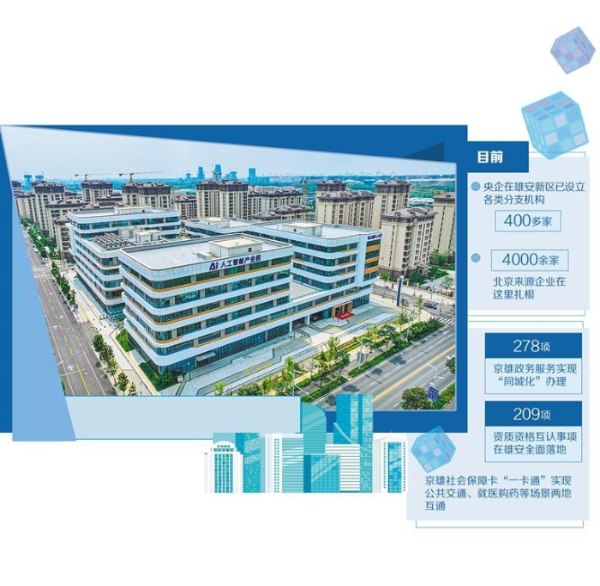
Core Insights - The article highlights the ongoing development and establishment of key projects in Xiong'an New Area, aimed at relieving non-capital functions from Beijing and enhancing the area's service and support capabilities [3][4][5]. Group 1: Project Development - Construction of the Beijing Union Medical Center in Xiong'an has commenced, with significant progress on various educational institutions, including Beijing Forestry University, which is expected to open by September 2027 [4]. - Major state-owned enterprises (SOEs) such as China Huaneng and China Sinochem have officially relocated to Xiong'an, with three SOE headquarters now established in the area [4][5]. - The Xiong'an New Area is witnessing a shift from early-stage construction to a focus on regional development, technological innovation, and industrial clustering, with several market-oriented projects already operational [5][6]. Group 2: Housing and Living Conditions - Xiong'an has provided nearly 2,000 rental housing units for the first batch of relocated SOEs, ensuring that living conditions meet or exceed those in Beijing [7][8]. - The area has developed a "15-minute living circle," offering convenient access to essential services such as parks, supermarkets, hospitals, and restaurants [7]. - A comprehensive housing guarantee mechanism is being established to support the influx of personnel, ensuring equal rights for renters in terms of social services and benefits [7][8]. Group 3: Service Optimization - The "one-click migration" service platform has streamlined the process for companies relocating to Xiong'an, integrating multiple administrative tasks into a single online service [9][10]. - Xiong'an has implemented a series of reforms to expedite project approvals and enhance the overall business environment, including a new approval system that reduces bureaucratic delays [10][11]. - A comprehensive service center has been established to address the needs and concerns of relocated enterprises, ensuring efficient communication and resolution of issues [11].
放得下行囊 圆得了梦想 ——雄安新区提升项目承载服务能力
Jing Ji Ri Bao· 2025-12-13 21:55
Core Viewpoint - The Xiong'an New Area is actively promoting the relocation of non-capital functions from Beijing, with significant progress in various projects and the establishment of numerous enterprises in the region [1][2][3]. Group 1: Project Progress - The construction of the Beijing Forestry University campus in Xiong'an is on track, with the first phase expected to be completed by the end of the year and the campus set to open in September 2027 [2]. - Major state-owned enterprises (SOEs) such as China Huaneng and China Sinochem have officially relocated to Xiong'an, with three SOE headquarters now established in the area [2][3]. - The Xiong'an New Area is witnessing the completion and operation of several market-oriented projects, including smart city innovation centers by major telecom companies [3]. Group 2: Support and Infrastructure - Over 1,000 employees from China Huaneng and nearly 1,000 from China Sinochem are now working in Xiong'an, supported by comprehensive living and working arrangements [4]. - The Xiong'an New Area has provided nearly 2,000 rental housing units for the first batch of relocated SOEs, with plans to enhance housing support further [4][5]. - A "15-minute living circle" has been established, offering convenient access to essential services such as parks, supermarkets, and hospitals [5]. Group 3: Service Optimization - The "one-click migration" service platform simplifies the process for enterprises relocating to Xiong'an, integrating multiple administrative tasks into a single online process [6]. - The Xiong'an New Area has implemented a series of reforms to streamline project approval processes, significantly reducing the time from land acquisition to project commencement [7]. - A comprehensive service mechanism has been established to address the needs of relocated enterprises, ensuring a supportive environment for their development [7].
驻中国中化纪检监察组紧盯关键环节强化监督 做实向雄安疏解搬迁工作
Zhong Yang Ji Wei Guo Jia Jian Wei Wang Zhan· 2025-10-15 00:34
Core Points - China Sinochem has officially moved its headquarters to Xiong'an New Area, marking it as one of the first central enterprises to relocate [1] - The Central Commission for Discipline Inspection and National Supervisory Commission has been actively supervising the relocation process, ensuring compliance with policies and high standards in project execution [2] Group 1 - The relocation ceremony for China Sinochem at the Xiong'an New Area headquarters was held recently, emphasizing the company's commitment to the government's directive to relieve non-capital functions from Beijing [1] - The supervisory team has been closely monitoring key aspects of the headquarters project, including site selection, policy implementation, and preparation for the official move [1][2] - The supervisory group has integrated the Xiong'an relocation work into its annual key supervision tasks, promoting monthly reviews by the company's leadership and ensuring effective communication regarding supportive policies [2] Group 2 - The supervisory team has developed a work plan to monitor the relocation process, focusing on air quality management, equipment configuration, and transitional housing arrangements [2] - China Sinochem's headquarters has now entered a phase of regular operations, with ongoing supervision to ensure compliance with relocation policies and support for the company's integration into national strategic initiatives [2]
新华财经晚报:中方对美船舶收取船舶特别港务费
Xin Hua Cai Jing· 2025-10-10 14:09
Key Points - The Ministry of Transport announced a special port fee for U.S. vessels starting from October 14, 2025, affecting various categories of U.S.-owned or operated ships [1] - The Ministry of Industry and Information Technology is soliciting opinions on a draft notice to conduct commercial trials for satellite IoT services, aiming to enhance market supply and support emerging industries [2] - The Ministry of Civil Affairs has initiated a subsidy program for elderly care services, with an initial funding of 1.16 billion yuan allocated to support pilot projects in select provinces [3] - The National Financial Regulatory Administration issued a notice to strengthen the regulation of non-auto insurance businesses, emphasizing fair pricing and consumer protection [4] - The Hainan Free Trade Port Tourism Regulations will take effect on December 1, 2025, promoting international investment in the tourism sector [5] - Qualcomm is under investigation for failing to legally report its acquisition of Autotalks, potentially violating antitrust laws [3] - The Shenzhen government has implemented measures to promote the semiconductor industry, benefiting over 40 enterprises since the announcement [5] Domestic News - The State Council has published regulations for clinical research and application of biomedical technologies, effective from May 1, 2026, to enhance medical innovation and safety [1] - The Ministry of Industry and Information Technology is working on a two-year commercial trial for satellite IoT services to stimulate market activity and establish a regulatory framework [2] - The Ministry of Civil Affairs has launched a nationwide subsidy program for elderly care services, with 1.16 billion yuan allocated for initial support [3] International News - The U.S. government continues to impose export controls on Chinese entities, which has raised concerns about the stability of global supply chains [2] - Japan's public opinion on inflation is rising, with 88% of households expecting price increases in the next year [6] - Italy's industrial output fell by 2.4% month-on-month in August, significantly below market expectations [6]
又一国企迁驻雄安
Zhong Guo Ji Jin Bao· 2025-10-10 12:40
Group 1 - The Beijing-Tianjin-Hebei Railway Company has officially relocated its office to Xiong'an New Area to enhance its role in railway construction investment and support the high-quality development of Xiong'an and the coordinated development of the Beijing-Tianjin-Hebei region [1] - The company, established in March 2015 with a registered capital of 80 billion yuan, is responsible for planning, construction, operation, financing, and comprehensive development of intercity railway projects in the Beijing-Tianjin-Hebei area [1] - During the 14th Five-Year Plan period, the company is tasked with constructing 11 railway projects with a total length of approximately 1,220 kilometers and a total investment of about 295 billion yuan [1] Group 2 - The National Development and Reform Commission has been actively promoting the relocation of non-capital functions from Beijing to Xiong'an New Area, achieving significant progress in landmark projects [2] - Several universities, including Beijing Jiaotong University and Beijing University of Science and Technology, are accelerating the construction of their campuses in Xiong'an, with others having confirmed land for their campuses [2] - Major hospitals, such as Peking University People's Hospital and Beijing Union Medical College Hospital, are advancing their construction projects in Xiong'an, with several others in the planning stages [2] - Several central enterprises, including China Star Network and China National Chemical Corporation, have established their headquarters in Xiong'an, with ongoing projects and site selections for additional enterprises [2]
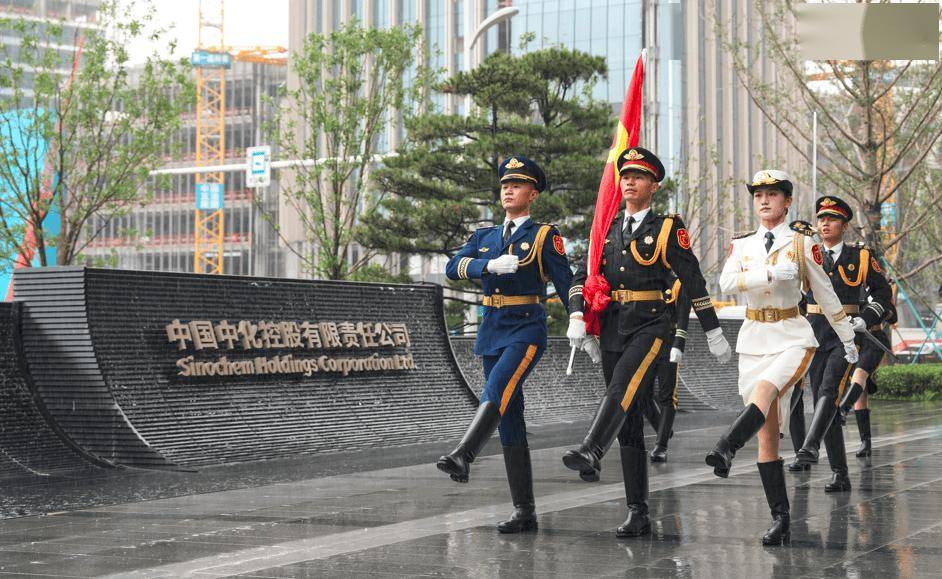
【明辉说油】中国中化正式迁驻雄安
Sou Hu Cai Jing· 2025-10-09 20:35
Core Points - China Sinochem Holdings Corporation has officially relocated its headquarters to Xiong'an New Area, marking a significant milestone in its development and alignment with national strategies [2][3][5] - The relocation is seen as a historical opportunity for the company to integrate into national strategic frameworks and contribute to the construction of Xiong'an New Area [5][6] Group 1 - The flag-raising ceremony on October 9 symbolizes the beginning of a new chapter for China Sinochem in Xiong'an [2] - The company aims to leverage the innovative policies, talent aggregation, and cooperative platforms in Xiong'an to foster new growth drivers [3] - Nearly 1,000 employees have already started working in the new office, demonstrating a proactive approach to adapting to the new environment [5][6] Group 2 - China Sinochem is a major state-owned enterprise formed by the merger of Sinochem Group and China National Chemical Corporation, with a global presence in over 150 countries [4] - The company is committed to high-quality development and aims to align its operations with the strategic goals of Xiong'an, focusing on innovation, green transformation, and industrial development [5][6] - The relocation is part of a broader initiative to relieve Beijing of non-capital functions and promote coordinated development in the Beijing-Tianjin-Hebei region [5]