
京津冀协同发展

Search documents
北京“十五五”规划建议
Zhong Shang Chan Ye Yan Jiu Yuan· 2026-03-13 00:05
Investment Rating - The report does not explicitly provide an investment rating for the industry or company Core Insights - The report emphasizes the significant achievements during the "14th Five-Year Plan" period, which laid a solid foundation for continued development, highlighting that Beijing's economic total is expected to exceed 5 trillion yuan this year, with per capita GDP and labor productivity leading the nation [5][6] - The "15th Five-Year Plan" period is identified as a critical phase for solidifying the foundation for socialist modernization, with both strategic opportunities and challenges present [7][8] - The report outlines the guiding ideology for economic and social development, emphasizing the importance of high-quality development, innovation, and the integration of various sectors [10][11] Summary by Sections Achievements and Foundations - The "14th Five-Year Plan" period has seen major accomplishments, including enhanced central governance functions and improved public services, with a focus on economic stability and growth [5][6] - The report notes that Beijing's economic development has crossed significant thresholds, with a focus on technological innovation and reform [6][7] Strategic Importance of the "15th Five-Year Plan" - The "15th Five-Year Plan" is positioned as a key period for advancing socialist modernization, with a focus on optimizing capital functions and enhancing innovation capabilities [7][8] - The report highlights the need for continued reform and opening up to stimulate economic vitality and address urban governance challenges [11][12] Economic and Social Development Goals - The report sets forth major goals for the "15th Five-Year Plan," including improving capital functions, achieving high-quality economic growth, and enhancing public services [13][14] - It emphasizes the importance of cultural influence, environmental quality, and safety levels in achieving these goals [15][16] Urban Development and Governance - The report discusses the need for effective urban governance and the integration of urban and rural development, with a focus on enhancing the quality of life for residents [12][13] - It outlines plans for the development of a modern capital metropolitan area and the importance of collaborative development with surrounding regions [21][22] Innovation and Economic Transformation - The report stresses the importance of fostering new productive forces and promoting high-quality economic development through education, technology, and talent development [24][25] - It highlights the need for a robust digital economy and the integration of traditional and emerging industries [26][27] Consumer Demand and Investment - The report calls for measures to boost consumer demand and effective investment, emphasizing the importance of a balanced approach to economic growth [30][31] - It outlines strategies for enhancing the logistics system and supporting the national unified market [31][32] Reform and Opening Up - The report emphasizes the need for comprehensive reforms to enhance the business environment and promote high-level opening up [32][33] - It discusses the importance of protecting various ownership rights and fostering a collaborative economic environment [33][34]
现代化首都都市圈空间协同规划详解:“都”与“城”相融,疏解与协同并举
Yin He Zheng Quan· 2026-03-12 07:35
Overview of the Planning Framework - The "Modern Capital Urban Circle Spatial Coordination Planning" aims to address the mission of creating a demonstration area for Chinese-style modernization, focusing on the integration of Beijing, Tianjin, and Hebei[10] - The planning framework includes 1 vision, 3 spatial layers, 6 key collaborative areas, and N implementation points, emphasizing a structured approach to regional development[29] Economic Assessment - The GDP of the Beijing-Tianjin-Hebei region is projected to reach approximately $1.6 trillion by 2024, comparable to that of Spain, indicating significant economic scale[40] - Despite its large GDP, the region's per capita GDP stands at $15,000, ranking last among major global city clusters, highlighting a need for improvement in economic productivity[44] Development Challenges - The region faces challenges in innovation and investment, with a notable decline in the number of listed companies and a lack of strong representation in hard technology sectors[40] - Compared to the Yangtze River Delta and Guangdong-Hong Kong-Macau regions, the Beijing-Tianjin-Hebei area shows a widening gap in technological innovation and investment activity[40] Key Highlights of the Planning - The planning document is the highest-level approved urban circle plan by the central government, reflecting its strategic importance in national development[7] - The spatial organization shifts from concentric circles to a solid circle model, promoting functional proximity over mere geographical closeness[7] Strategic Goals - Short-term goals by 2030 include significant progress in urban circle construction and effective governance of urban issues, such as "big city disease" and industrial collaboration[31] - Long-term goals by 2050 aim for a fully modernized capital urban circle, with significant achievements in urban integration and innovation-driven economic growth[35] Implementation Focus - The planning emphasizes the establishment of a comprehensive transportation network and ecological protection strategies to support sustainable development[39] - Key collaborative areas include innovation-led industrial development, transportation connectivity, ecological space management, and cultural heritage protection[39]

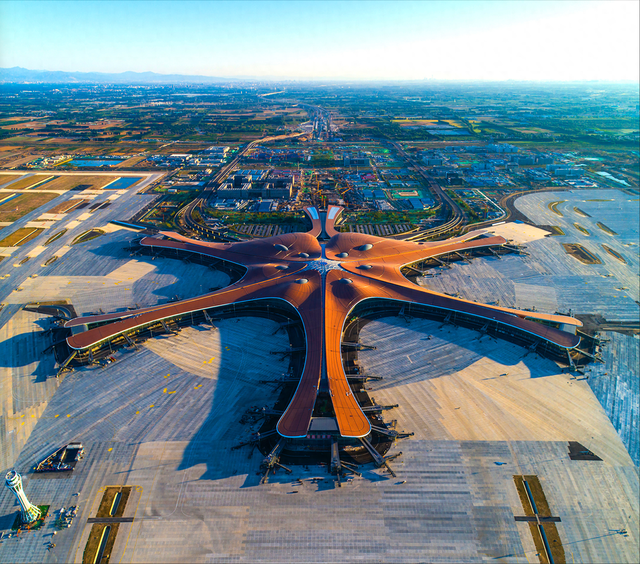
19号线南延、三大公园联通等,大兴精耕482个“十五五”重点项目
Bei Jing Ri Bao Ke Hu Duan· 2026-02-28 04:11
Core Viewpoint - Daxing District is seizing new opportunities in the "14th Five-Year Plan" period, with 482 key projects underway across various sectors, including transportation, ecology, healthcare, education, and industry, aimed at injecting new momentum into high-quality development in southern Beijing [1][3]. Group 1: Transportation Development - Daxing is promoting the south extension of Metro Line 19, which will activate the area east of the Jingkai Expressway [4] - The southern road network will be further improved to support development around Beijing Daxing International Airport [4] - The planned Daxing International Tourism Resort will leverage the airport's "magnetic" and "first station" effects to attract entertainment projects [4] Group 2: Ecological Initiatives - Daxing will connect three major parks and create new public parks, garden blocks, urban galleries, and small green spaces to integrate a "15-minute park leisure circle" into residents' lives [6] - Infrastructure in key areas will be enhanced, with the introduction of quality medical and educational resources from institutions like Capital Medical University and An Ding Hospital [6] Group 3: Industrial Development - Daxing's industrial strategy focuses on the integration of innovation, industry, finance, and talent [6] - The district aims to attract high-end talent and facilitate the transformation of scientific achievements from central urban areas [6] - Key industrial parks will undergo upgrades, with a focus on aviation, biomedicine, hydrogen energy, digital economy, and commercial aerospace sectors [9]

从“双城生活”到“同城体验”,看京津冀如何改写通勤日常?
Xin Lang Cai Jing· 2026-02-28 02:44
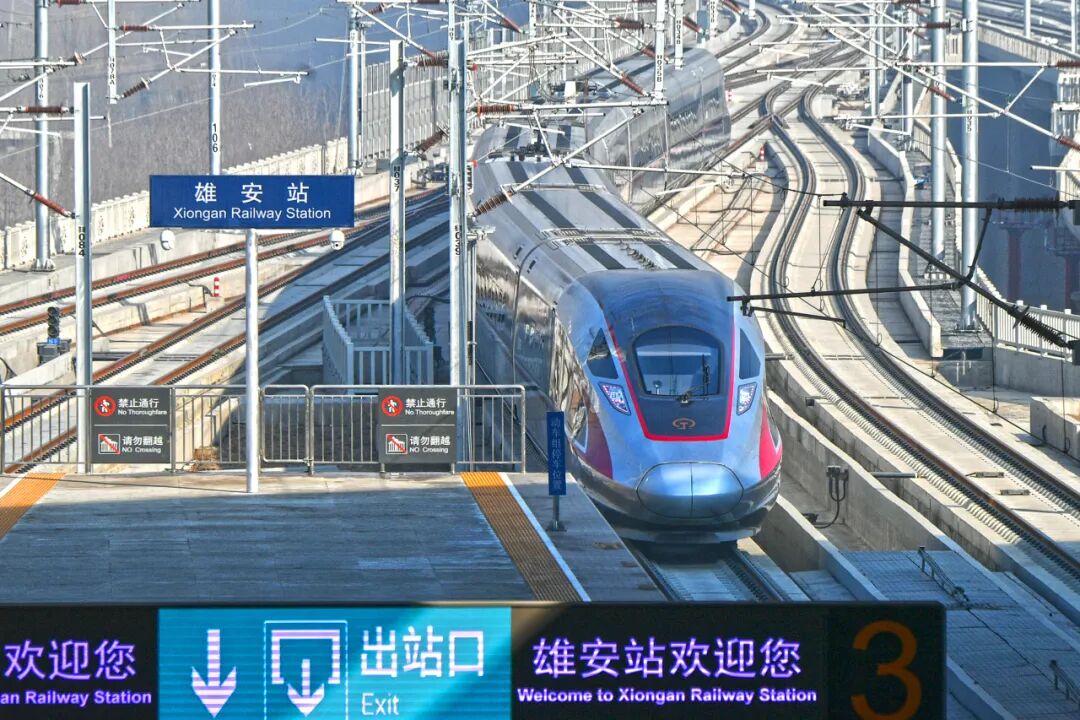
Core Insights - The integration of transportation networks in the Beijing-Tianjin-Hebei region has advanced significantly, transitioning from connectivity to rapid connectivity, with customized express buses and regular cross-province public transport operations enhancing commuter experiences [1][4] Group 1: Transportation Infrastructure Development - By the end of 2025, the operational railway mileage in the Beijing-Tianjin-Hebei region is expected to exceed 11,000 kilometers, marking a nearly 40% increase since 2014, while the total highway mileage will reach 11,000 kilometers, reflecting a 41.7% growth [2] - Major railway projects such as the Beijing-Harbin High-Speed Railway and the Beijing-Tanggu Intercity Railway have been completed, enabling travel between major cities in the region within 1.5 to 2 hours [2] Group 2: Cross-Province Commuting Solutions - The transportation department has launched 41 regular cross-province bus routes, serving 17 surrounding counties and cities, with an average daily passenger volume exceeding 230,000 [4] - Customized express buses have been introduced, with 12 main lines and over 50 branch lines, transporting an average of 9,500 commuters daily [4] Group 3: Technological Advancements - The Beijing section of the Jingxiong Expressway has become the first smart highway in the country to achieve full 5G coverage, while autonomous driving trials are being conducted on various routes [5] Group 4: Future Planning and Integration - The "Modern Capital Metropolitan Area Spatial Coordination Plan (2023-2035)" aims to integrate key sectors such as industry, transportation, ecology, and public services into a cohesive spatial framework [6] - Beijing will focus on enhancing the transportation network and optimizing customized bus services based on commuter demand, with plans to promote intercity bus operations from Tianjin to Tongzhou [6][8]
北京丰台区委书记王少峰:交通为基、人才为本、发展为要,深度融入现代化首都都市圈建设
Xin Lang Cai Jing· 2026-02-28 02:43
Core Viewpoint - The Beijing-Tianjin-Hebei (Jing-Jin-Ji) coordinated development has transitioned from a blueprint to reality, with a focus on deep integration and quality improvement in the new phase of the 14th Five-Year Plan [1] Group 1: Transportation Integration - The Fengtai District is enhancing transportation connectivity by developing a "three stations and two buildings" framework centered around major train stations, aiming for a 1.5-hour traffic circle covering the Jing-Jin-Ji region [6] - The construction of the Lize Urban Terminal is expected to be completed by the end of 2026, further improving transportation efficiency [6] Group 2: Functional Upgrading - Fengtai is transforming idle spaces into productive areas, exemplified by the upgrade of the Yongwai Haihutun project into the largest JD Mall in the country, projected to lead in sales by 2025 [8] Group 3: Industrial Collaboration - Fengtai is fostering industrial collaboration by establishing a network of 455 high-quality tech companies, with significant investments in the Tianjin and Hebei regions, creating a dual layout for innovation and production [10] - The district aims to build an industrial collaborative community that shares innovation resources across regions [10] Group 4: Talent Development - Fengtai is prioritizing talent investment as a key element of collaborative development, launching initiatives to enhance talent mobility and integration within the Jing-Jin-Ji framework [11] - The district is developing a talent corridor to facilitate efficient movement of talent across regions, supported by various educational and technological initiatives [13] Group 5: Public Services and Livelihood - Fengtai is enhancing public service collaboration to ensure the flow of essential goods, with the New Fa Di market being a major hub for agricultural products, aiming for a transaction volume of 30.01 billion yuan by 2025 [16] - The district is also focusing on cultural and tourism development, creating new consumption scenarios and enhancing public amenities to benefit residents across the Jing-Jin-Ji region [25]
河北廊坊市市长刘媛:以协同之力 聚融合之势 谋发展新篇
Xin Lang Cai Jing· 2026-02-28 02:43
Core Viewpoint - The article emphasizes the deep integration and high-quality development of the Beijing-Tianjin-Hebei (Jing-Jin-Ji) region, highlighting the strategic initiatives and achievements of Langfang City in this collaborative effort during the 14th Five-Year Plan and the new opportunities presented in the 15th Five-Year Plan [1][3][4]. Group 1: Achievements and Strategic Initiatives - Langfang City has actively integrated into the Jing-Jin-Ji collaborative development framework, leveraging its unique geographical advantages to enhance transportation, industry, public services, and ecology [3][4]. - During the 14th Five-Year Plan, Langfang's GDP exceeded 400 billion yuan, ranking third in per capita GDP in the province, and second in per capita disposable income [4][5]. - The city has established 266 subsidiaries of central enterprises and built 126 joint R&D platforms with Beijing and Tianjin, achieving an annual growth of 41.8% in technology contract transactions with these cities [4][5]. Group 2: Future Plans and Development Goals - In the 15th Five-Year Plan, Langfang aims to deepen its integration into the Jing-Jin-Ji collaborative development, focusing on the spatial coordination outlined in the modern capital metropolitan area plan [7][8]. - The city plans to enhance its role in the "two corridors and four belts" industrial collaborative innovation framework and actively seek to establish a branch of the Beijing-Tianjin-Hebei International Technology Innovation Center [7][8]. - Langfang will continue to develop its transportation, industry, public services, and ecological sectors to achieve greater breakthroughs in collaboration with Beijing and Tianjin [7][8]. Group 3: Economic Corridors and Industry Development - Langfang has constructed a "two chains and five corridors" economic corridor, focusing on integrating into the Jing-Jin-Ji industrial layout [11][12]. - The city is developing two key industrial chains: the new energy and intelligent connected vehicle industry chain, and the robotics industry chain, with significant growth in revenue and project signings [11][12]. - Langfang is also building five distinctive industrial corridors, including logistics, computing power, intelligent manufacturing, health care, and cultural tourism, to enhance its economic competitiveness [13][15][19].

天津北辰区区长徐晖:唱好京津“双城记” 打造协同新高地
Bei Jing Ri Bao Ke Hu Duan· 2026-02-28 02:33
Core Viewpoint - The Beijing-Tianjin-Hebei (Jing-Jin-Ji) coordinated development has transitioned from blueprint to reality, with a focus on deep integration and quality improvement in the "14th Five-Year Plan" period, and is set to continue in the "15th Five-Year Plan" [1] Group 1: Achievements in the 14th Five-Year Plan - The North Chen District has made significant progress in industrial collaboration, innovation synergy, and service connectivity, achieving notable results in the coordinated development of Jing-Jin-Ji [3][4] - A total of 108 major projects were introduced, with a total investment of 37.6 billion yuan during the "14th Five-Year Plan" [6] Group 2: Focus Areas for the 15th Five-Year Plan - The North Chen District aims to enhance quality and efficiency by leveraging its geographical advantages and deepening integration into the Jing-Jin-Ji coordinated development framework [8][10] - Key focus areas include high-end manufacturing, infrastructure, public services, and innovation collaboration [4][11] Group 3: Strategies for Economic Development - The district plans to promote industrial upgrades by focusing on smart, green, and integrated development, while also enhancing the service environment for businesses [12][18] - Specific strategies include revitalizing existing resources, encouraging cross-industry upgrades, and utilizing policy support to empower enterprises [13][18] Group 4: Manufacturing Sector Development - The North Chen District is committed to consolidating and expanding its advanced manufacturing sector, particularly in automotive components, high-end equipment manufacturing, and biomedicine [15][16] - The district will also focus on emerging industries and maintain stability in key sectors such as photovoltaic and wind energy [16] Group 5: Service Optimization for Enterprises - The district emphasizes optimizing the business environment and providing high-level services to support enterprise development, including implementing policies to promote high-quality development of the private economy [18] - Initiatives such as the "Three Questions and Three Solutions" service activity aim to address enterprise challenges effectively [18]
河北在推进京津冀协同发展中彰显新担当
Ren Min Ri Bao· 2026-02-28 01:02
Core Viewpoint - The article emphasizes the ongoing efforts and achievements in promoting coordinated development among Beijing, Tianjin, and Hebei, highlighting innovative mechanisms, key regional demonstrations, and breakthroughs in specific fields to enhance overall development quality and efficiency [1][2][3]. Group 1: Mechanism Innovation - Hebei has implemented innovative mechanisms to break down barriers to collaboration, establishing a multi-level, comprehensive, and cross-sectoral collaborative mechanism system [2][3]. - A pilot project for clean production in the pharmaceutical industry between Beijing's Tongzhou District and Hebei's Langfang City has streamlined the auditing process, saving costs and enhancing efficiency [2][3]. - Regular high-level meetings among the main leaders of Beijing, Tianjin, and Hebei are being held to foster consensus on collaborative development [3]. Group 2: Key Regional Demonstrations - The opening of the Changtong Road has significantly reduced commuting time for residents of Langfang working in Beijing, showcasing improved infrastructure connectivity [6]. - The construction of the Beijing Subway Line 22 (Pinggu Line) is progressing, which will integrate Langfang into Beijing's transportation network, enhancing the "one-hour traffic circle" [6][7]. - The establishment of the Tongbei Demonstration Zone has led to significant advancements in infrastructure, industrial innovation, ecological cooperation, and public service sharing [7]. Group 3: Breakthroughs in Key Fields - Hebei's Eagle Eye Intelligent Technology Group has achieved breakthroughs in AI and robotics through collaboration with Tsinghua University, significantly improving research and development efficiency [8]. - The robot manufacturing sector in Hebei has seen substantial growth, with 468 related companies and a 42.5% increase in total revenue to 22.32 billion yuan, alongside an 80.8% rise in robot production [9]. - Collaborative efforts in transportation, ecology, and public services are extending the benefits of coordinated development across the region, enhancing overall quality of life [9].
行走京津冀|4.7万亿元!京津冀进出口值创新高
Xin Lang Cai Jing· 2026-02-28 00:39
Core Insights - The core viewpoint of the articles highlights the significant growth in import and export values in the Beijing-Tianjin-Hebei (Jing-Jin-Ji) region since the implementation of the national strategy for coordinated development, with projections indicating a 25.7% increase from 2014 to 2025 [1] Group 1: Trade Growth - The import and export value of the Jing-Jin-Ji region increased from 3.74 trillion yuan in 2014 to 4.7 trillion yuan by 2025 [1] - In the previous year, the export value reached a historical high of 1.45 trillion yuan, marking a 6% year-on-year growth and a 56.9% increase compared to 2014 [1] - By 2025, the Jing-Jin-Ji region's import and export value is expected to account for 10.3% of the national total [1] Group 2: Private Sector Performance - The number of private enterprises with import and export achievements reached 49,300, an increase of 4,863 from the previous year, contributing to an import and export value of 1.36 trillion yuan, which is a 12.2% year-on-year growth [1] - Private enterprises accounted for 28.9% of the Jing-Jin-Ji region's total import and export value, an increase of 4.9 percentage points from the previous year and 15.4 percentage points from 2014 [1] Group 3: Trade Partners and Export Destinations - Enterprises in the Jing-Jin-Ji region maintain trade relations with over 240 countries and regions [1] - Major export destinations included ASEAN and the EU, with export values of 240.74 billion yuan and 188.92 billion yuan respectively, reflecting year-on-year growth of 4.9% and 5% [1] - Exports to other BRICS countries reached 155.12 billion yuan, growing by 17.2%, contributing 1.7 percentage points to the overall export growth of the Jing-Jin-Ji region [1] - Exports to the five Central Asian countries saw a remarkable growth rate of 38.2% [1] Group 4: Export Product Categories - Mechanical and electrical products emerged as a key component of exports, with a total export value of 828.73 billion yuan, representing an 8.7% year-on-year increase and accounting for nearly 60% of the region's total exports [2] - Specific categories such as electrical equipment, auto parts, and integrated circuits experienced year-on-year export growth of 16.4%, 9.4%, and 9.1% respectively [2] - Ship exports exhibited a substantial growth rate of 139.7% [2]
深化机制创新 重点区域示范 重点领域突破 河北在推进京津冀协同发展中彰显新担当
Ren Min Ri Bao· 2026-02-27 23:15
Core Insights - The article highlights the progress of the Beijing-Tianjin-Hebei (Jing-Jin-Ji) coordinated development strategy, emphasizing the establishment of a one-stop service for social security matters across the region, which enhances efficiency and accessibility for residents [1][2]. Group 1: Policy and Strategic Developments - The coordinated development strategy aims to elevate the Jing-Jin-Ji region as a model for China's modernization, with a focus on optimizing the capital's functional layout and alleviating non-capital functions from Beijing [2]. - The central government has approved the "Modern Capital Metropolitan Area Spatial Coordination Plan (2023-2035)," which outlines the vision for a world-class metropolitan area centered around Beijing [2]. Group 2: Mechanism Innovations and Collaborations - Mechanism innovations have been implemented to enhance collaborative efficiency, such as the clean production regional collaboration pilot between Beijing's Tongzhou District and Hebei's Langfang City, which has streamlined auditing processes and reduced costs [3][4]. - A multi-layered, cross-sector collaborative mechanism has been established to support the coordinated development, including regular high-level meetings among party and government leaders [3][4]. Group 3: Economic Performance and Growth - In 2025, the GDP growth rates for Beijing, Tianjin, and Hebei were reported at 5.4%, 4.8%, and 5.6% respectively, indicating a continuous release of collaborative development efficiency [5]. Group 4: Infrastructure and Transportation Improvements - The completion of the factory access road has significantly reduced commuting time for residents, showcasing the impact of improved infrastructure on daily life [6]. - The construction of the Beijing Subway Line 22 (Pinggu Line) is progressing, which will connect Hebei's Langfang City to Beijing's transportation network, further enhancing regional connectivity [7]. Group 5: Industry and Technological Advancements - The establishment of the Hebei Eagle Eye Intelligent Technology Group has led to breakthroughs in AI and robotics, demonstrating the effectiveness of collaborative research and development efforts [8][9]. - The robot industry in Hebei has seen substantial growth, with 468 related enterprises and a revenue increase of 42.5% to 22.32 billion yuan in 2025, alongside an 80.8% rise in production [9]. Group 6: Environmental and Social Initiatives - Collaborative efforts in ecological governance have been strengthened, with initiatives for joint emergency responses to pollution and the signing of biodiversity protection agreements [9]. - The integration of educational and healthcare resources across the Jing-Jin-Ji region has improved access to quality services for residents, supporting the overall goal of coordinated development [9].