硬折扣仓储式超市

Search documents
经营仅三个月,乐尔乐上海首店为何濒临关闭?
3 6 Ke· 2025-04-15 03:20
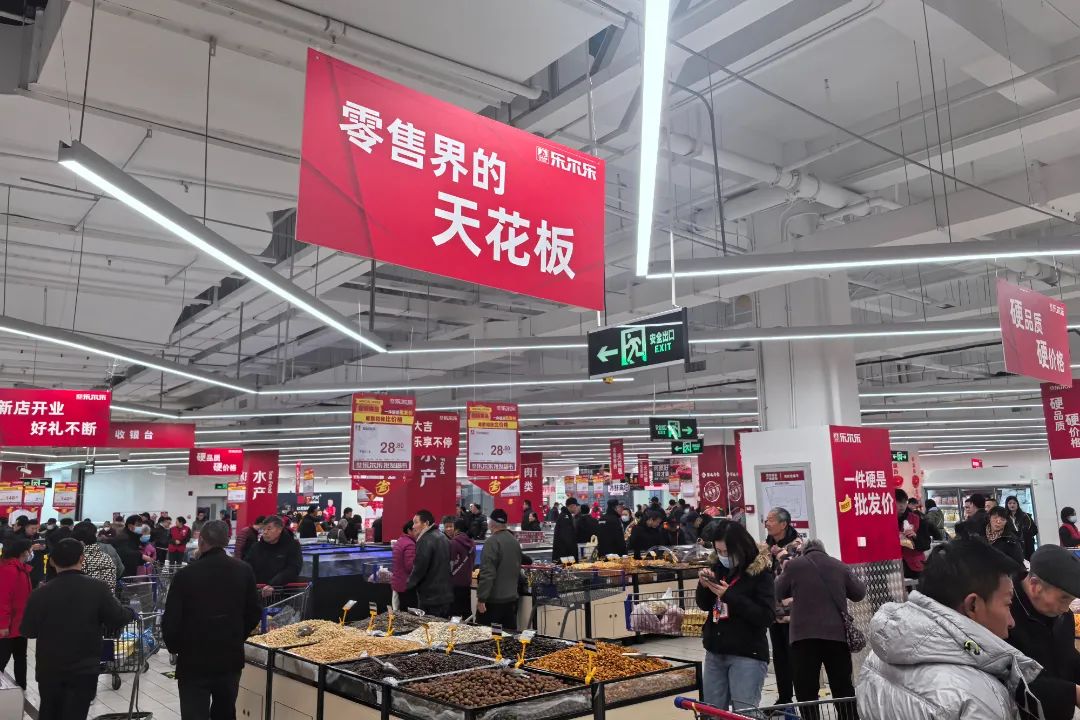
Core Viewpoint - The rapid decline of Lele's first store in Shanghai, which opened only three months ago, raises concerns about its market adaptability and long-term viability in a competitive retail environment [1][3][11]. Group 1: Store Opening and Initial Strategy - Lele opened its first store in East China on January 3, 2025, in the Qingpu district, covering an area of 20,000 square meters and offering a wide range of products [1][3]. - The store was positioned as a "hard discount" warehouse supermarket, aiming to penetrate the first-tier city market and enhance national coverage [1][3]. - The strategic location was chosen due to Qingpu's role as a hub connecting the Yangtze River Delta, leveraging the former Carrefour site for its established traffic flow [3]. Group 2: Core Competitiveness - Lele's rapid growth is attributed to its "hard discount + efficiency revolution" model, with over 7,200 stores and annual sales exceeding 40 billion yuan by 2024 [7]. - The company has established strategic alliances with over 230 suppliers, enabling significant cost reductions through bulk purchasing and cash settlement [7]. - The dual-track strategy of penetrating county-level markets while expanding in urban areas has allowed Lele to cater to diverse consumer needs effectively [8]. Group 3: Challenges Faced by the Shanghai Store - The store's location and market positioning appear misaligned, as the surrounding community primarily attracts local customers, while Lele's model relies on high foot traffic and low margins [11]. - The supply chain's regional adaptability is insufficient, leading to higher costs and reduced competitiveness in the fresh produce category [12]. - There is a noticeable gap between consumer habits in Shanghai and Lele's brand perception, with local shoppers prioritizing quality and shopping experience over low prices [13]. - The intense competition in Shanghai's retail market, including established players like Costco and local innovations, has made it difficult for Lele to differentiate itself [14]. - The rapid expansion strategy has led to resource dilution, putting financial pressure on the Shanghai store to generate stable customer traffic [15]. Group 4: Conclusion and Future Directions - The challenges faced by Lele's Shanghai store highlight a systemic conflict between its efficiency-driven model and the value-oriented ecosystem of first-tier cities [17]. - To survive in the competitive retail landscape, Lele must transition from being a "price disruptor" to a "value co-creator," integrating localized innovations into its business model [17].