
碳酸岩型稀土矿床

Search documents
我国科学家破解稀土成矿难题
中国能源报· 2026-02-05 12:49
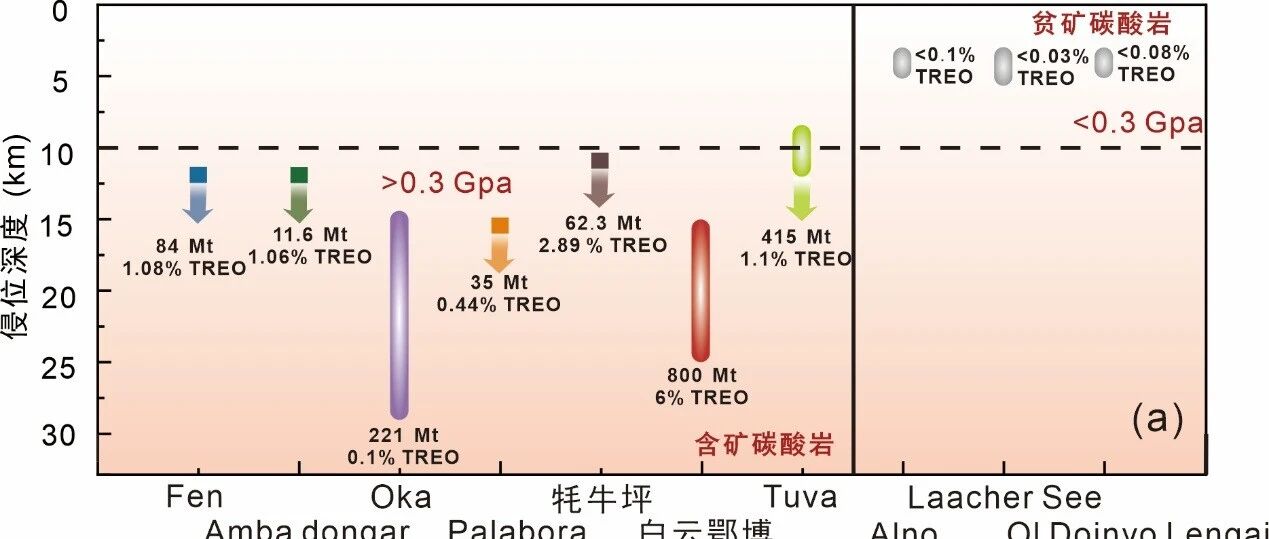
Core Viewpoint - The depth of carbonatite magma intrusion (pressure) is a key factor controlling the extraordinary accumulation of rare earth elements (REEs) [1][2]. Group 1: Research Findings - The research team conducted high-temperature and high-pressure experiments simulating the cooling and crystallization process of carbonatite magma at depths of approximately 6-20 kilometers [1]. - At depths shallower than 10 kilometers (approximately 0.3 GPa), apatite crystallizes early, trapping REEs within its structure, which prevents further migration and accumulation of these elements [1][2]. - In contrast, at depths greater than 0.3 GPa, olivine crystallizes first, consuming silicon and preventing apatite from forming a "cage" to lock in REEs, allowing for higher solubility of REEs in saline melts [2]. Group 2: Implications for Rare Earth Deposits - This discovery explains the distribution patterns of global carbonatite-type rare earth deposits, with world-class deposits like Baiyun Obo in China having intrusion depths greater than 10 kilometers [5]. - Shallow carbonatite bodies, such as those in Sweden and Tanzania, may contain REEs but are often dispersed and lack economic viability for mining [5]. - The research establishes a complete causal chain of "pressure-mineral crystallization sequence-melt properties-REE enrichment," enhancing the understanding of REE accumulation mechanisms and providing new insights for exploration of carbonatite-type rare earth deposits [5].

【科技日报】新研究揭示稀土成矿关键因素
Ke Ji Ri Bao· 2026-02-05 02:23
Core Insights - The research team from the Guangzhou Institute of Geochemistry has identified the key factor controlling the extraordinary accumulation of rare earth elements (REEs) in carbonatite magma, which is the depth of intrusion [1][2] - The findings were published in the international journal "Nature Communications" on February 3, 2026, highlighting the significance of this research in understanding the distribution of carbonatite-type rare earth deposits globally [1][2] Group 1: Research Findings - The study reveals that less than 10% of carbonatite bodies form economically viable rare earth deposits, despite over half of the global rare earth reserves being sourced from carbonatites [1] - High-temperature and high-pressure experiments simulated the cooling crystallization process of carbonatite magma at depths of 6 to 20 kilometers, showing two distinct evolutionary paths based on pressure [1][2] Group 2: Mechanisms of REE Accumulation - At depths shallower than 10 kilometers (approximately 0.3 GPa), early crystallization of apatite occurs, which traps REEs in its structure, preventing their migration and accumulation [1][2] - In contrast, at depths greater than 10 kilometers, olivine crystallizes first, consuming silicon and preventing apatite from forming a "cage" for REEs, allowing for higher solubility of REEs in saline melts, which leads to the formation of economically valuable minerals [2] Group 3: Implications for Exploration - The research establishes a complete causal chain of "pressure—mineral crystallization sequence—melt properties—REE enrichment," enhancing the understanding of the mechanisms behind REE accumulation [2] - This study provides new insights for the exploration of carbonatite-type rare earth deposits, indicating that world-class deposits, such as those in China, are typically found at depths greater than 10 kilometers [2]
新研究揭示稀土成矿关键因素
Ke Ji Ri Bao· 2026-02-05 01:17
Core Viewpoint - The research team from the Guangzhou Institute of Geochemistry has identified the depth of carbonatite magma intrusion as a key factor controlling the extraordinary accumulation of rare earth elements (REEs) [1][2]. Group 1: Research Findings - The study published in the journal "Nature Communications" reveals that over half of the global rare earth reserves come from carbonatite, yet less than 10% of carbonatite bodies form economically viable rare earth deposits [1]. - High-temperature and high-pressure experiments simulated the cooling and crystallization process of carbonatite magma at depths of 6 to 20 kilometers, showing two distinct evolutionary paths based on pressure levels [1][2]. - At depths shallower than 10 kilometers (approximately 0.3 GPa), early crystallization of apatite occurs, which traps REEs in its structure, preventing their migration and accumulation [1][2]. Group 2: Implications for Rare Earth Deposits - At depths greater than 10 kilometers, olivine crystallizes first, consuming silicon and preventing apatite from forming a "cage" to lock in REEs, allowing for higher solubility of REEs in saline melts [2]. - The findings explain the distribution patterns of global carbonatite-type rare earth deposits, with world-class deposits like Baiyun Obo in China being located at depths greater than 10 kilometers [2]. - The research establishes a complete causal chain linking pressure, mineral crystallization sequence, melt properties, and REE enrichment, providing new insights for the exploration of carbonatite-type rare earth deposits [2].