社交机器人的情绪价值

Search documents
登顶《Science》子刊!芝加哥大学最新研究揭示,机器人伴侣能有效缓解儿童朗读焦虑
机器人大讲堂· 2025-09-15 09:08
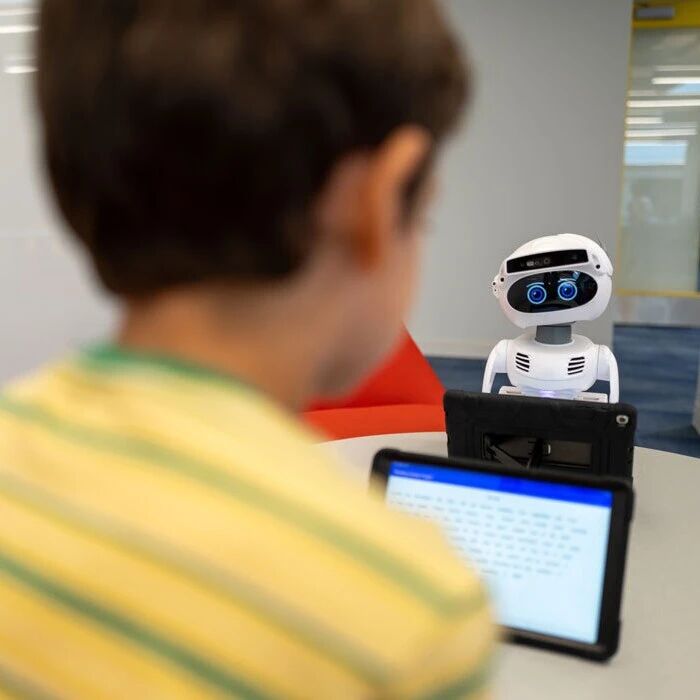
Core Viewpoint - The article discusses a scientific experiment that explores the potential of robots as effective tools to help children reduce anxiety in social reading situations, particularly focusing on "reading anxiety" that affects learning outcomes for children aged 8-11 [5][7][24]. Group 1: Experiment Design and Methodology - The experiment involved 52 children aged 8-11, who participated in three reading sessions: reading alone, reading to a person, and reading to a robot, with the order randomized [9][12]. - Researchers utilized three objective physiological indicators to measure anxiety: voice jitter, facial temperature, and heart rate variability (HRV) [14][15][17]. - The reading materials were scientifically selected to be of moderate difficulty and suitable for approximately 5 minutes of reading, with feedback provided after each page read [18]. Group 2: Findings and Results - Analysis showed that children exhibited significantly less voice jitter when reading to the robot compared to reading to a human, indicating lower anxiety levels [20][21]. - Heart rate variability analysis revealed that while both social situations increased heart rate regularity, reading to a human resulted in a more pronounced stress response than reading to a robot [21][23]. - Children reported feeling less judged and more supported when reading to the robot, expressing that it helped them feel more relaxed and less anxious [22]. Group 3: Implications and Future Directions - The study suggests that social robots can provide emotional value in educational settings without replacing human interaction, serving as practice partners for various activities [24]. - The research opens avenues for further exploration into the long-term benefits of robotic companions in education and their potential to enhance learning experiences [24].