
神经退行性疾病研究

Search documents
段睿:蔡磊直播间全网经济体量第三, 支持科研外资金有盈余
Nan Fang Du Shi Bao· 2026-01-31 16:43
Core Insights - The article discusses the efforts of Cai Lei and his team in tackling Amyotrophic Lateral Sclerosis (ALS), also known as Lou Gehrig's disease, through a public welfare initiative called "Cai Lei Icebreaking Station" [1][4] Group 1: Background and Motivation - Cai Lei, a former vice president of JD.com, was diagnosed with ALS in 2019 and subsequently formed a team to combat the disease, viewing it as a public welfare project rather than a business venture [1][4] - The team faced significant challenges, particularly in securing funding, as the nature of medical research often requires long-term investment with delayed returns [4][5] Group 2: Funding and Financial Contributions - Over the past two years, Cai Lei and his team have invested more than 80 million yuan (approximately 11.2 million USD) in research, primarily funded through revenue generated from live-streaming sales [1][5] - The total research investment by the team has exceeded 100 million yuan (approximately 14 million USD) over six years, with around 60 million yuan (approximately 8.4 million USD) allocated to external research donations [1][5] Group 3: Achievements and Collaborations - The "Cai Lei Icebreaking Station" has become the third-largest live-streaming economy in China, supporting not only ALS research but also aiding women with disabilities and promoting national intangible cultural heritage projects [6] - The research team has provided funding support to over 60 research teams and more than 50 biopharmaceutical companies, resulting in nearly 300 drug pipelines, with 30 entering clinical stages [6] - Collaborations with 10 hospitals have been established, and advancements have been made in treatments for conditions such as stroke, Parkinson's, and Alzheimer's disease [6]


20年内患者数量将翻番,现每年经济负担近千亿元!帕金森病目前仍无特效药
Di Yi Cai Jing· 2026-01-26 10:23
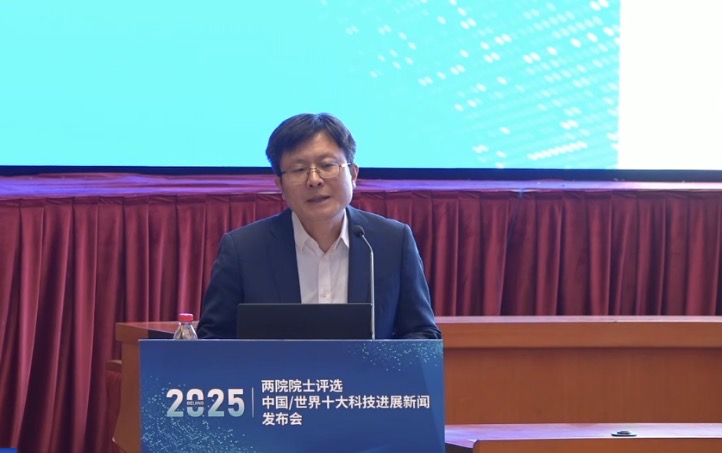
Core Insights - Traditional treatments for Parkinson's disease only address symptoms and do not slow disease progression, prompting global research into the disease's mechanisms and targeted therapies [1][3] Group 1: Research and Development - The research team led by Professor Yu Jintai from Fudan University has identified a new therapeutic target, FAM171A2, and a candidate drug, bemcentinib, for Parkinson's disease, which has been recognized in the 2025 China Top Ten Scientific Advances [1][3] - The team utilized artificial intelligence for protein structure prediction and virtual screening, successfully identifying bemcentinib from over 7,000 compounds, which effectively inhibits the interaction between FAM171A2 protein and pathological alpha-synuclein [3] Group 2: Disease Prevalence and Economic Impact - In China, there are over 5 million Parkinson's disease patients, accounting for about half of the global total, with a projected doubling of patient numbers over the next 20 years due to aging [3] - The economic burden of Parkinson's disease in China is nearly 100 billion yuan annually, expected to rise to approximately 120 billion yuan by 2030 and further to 360 billion yuan by 2050 [4]
最新发表国际合作论文合集:揭示衰老和神经退行性疾病生物标志物
Huan Qiu Wang Zi Xun· 2025-07-16 05:59
Core Insights - The global neurodegenerative disease proteomics alliance (GNPC) has revealed biomarkers related to aging and neurodegenerative diseases, providing new insights into the biology of major neurodegenerative diseases like Alzheimer's and Parkinson's [1][2] - The research published in the journals Nature Medicine and Nature Aging highlights unique protein biomarkers that could lead to early detection and improved outcomes for neurodegenerative diseases [1][3] Group 1: Research Findings - The GNPC's flagship paper analyzed one of the world's largest proteomic datasets, comprising approximately 250 million unique protein measurements from 35,000 biological fluid samples, including plasma and cerebrospinal fluid [2] - The study identified specific proteins associated with Alzheimer's disease, Parkinson's disease, frontotemporal dementia, and amyotrophic lateral sclerosis [2][3] - The research established disease-specific plasma biomarker profiles and identified common protein features among Alzheimer's, Parkinson's, and frontotemporal dementia [3] Group 2: Implications for Diagnosis and Treatment - The authors identified a cerebrospinal fluid and plasma protein feature associated with the APOEε4 allele, known to increase Alzheimer's disease risk, suggesting broader implications for other neurodegenerative diseases [3] - The study also revealed age-related changes in cognition-related proteins, providing new insights into how protein level changes in cerebrospinal fluid and plasma relate to cognitive health [3] - The importance of international collaboration, data sharing, and diverse datasets is emphasized for accelerating discoveries in neurodegenerative research, with future studies aimed at developing new diagnostic, preventive, and therapeutic approaches [3]