
私募合规

Search documents
透视私募骗局:谁做局?谁入局?谁出局?
Shang Hai Zheng Quan Bao· 2026-02-01 18:33
Core Viewpoint - The recent penalties and legal actions against private equity firms like Dingyifeng and Ruifengda highlight a significant trust crisis within the private equity industry, emphasizing the need for investors to adopt a rational perspective to identify risks and for managers to build sustainable trust systems [1][5][10] Group 1: Legal Actions and Penalties - Dingyifeng's core members have been prosecuted for fraud, marking a significant event in the private equity sector [2][4] - Ruifengda and its associated entities were fined 41 million yuan, the heaviest penalty in private equity history, due to fraudulent practices [5] - Youce Investment and its responsible parties were fined over 30 million yuan for misappropriating nearly 1 billion yuan of fund assets [5] Group 2: Investor Behavior and Market Dynamics - Investors are drawn to high-yield, guaranteed return products due to a scarcity of available assets, leading to vulnerability to fraudulent schemes [6][7] - The asset management industry has seen a decline in trust products, with trust assets dropping from 26.25 trillion yuan in 2017 to 20.49 trillion yuan in 2020, a decrease of 21.94% [7] - The allure of guaranteed returns has led investors to overlook risks, as seen in the case of Ruifengda, where investors were attracted by a 12% fixed return [7] Group 3: Industry Trends and Regulatory Environment - The private equity industry is undergoing a phase of consolidation, with a decrease in the number of registered fund managers while the total fund management scale continues to grow [9] - Regulatory scrutiny has intensified, with numerous private equity firms facing penalties for violations, indicating a trend towards stricter compliance [9][10] - The importance of compliance is emphasized as a lifeline for private equity firms, with breaches leading to loss of investor trust and potential penalties [10]
知名量化千惠资产非法经营?知情人士说……
Xin Lang Cai Jing· 2026-01-10 03:57
Core Viewpoint - The recent court announcement regarding Shenzhen Qianhui Asset Management Co., Ltd. being prosecuted for illegal business operations has raised significant industry concerns, highlighting the increasing regulatory scrutiny on private equity firms [1][6]. Company Summary - Shenzhen Qianhui Asset Management was established in March 2016 and registered in June 2017, currently managing assets between 5 billion to 10 billion yuan, with over 200 funds established [2][7]. - The company has 80 employees, of which 75 hold fund practitioner qualifications, and the prosecution includes several key personnel, including the compliance and risk control head [2][7]. Legal Issues - The company and its members are being prosecuted for illegal business operations, with a court date set for January 29, 2026. The specific reasons for the lawsuit remain unclear, although prior investigations indicated potential issues related to "margin trading" [1][3][7]. - A source indicated that the investigation may involve the use of company fund products for margin trading and the possibility of reselling borrowed securities [3][7]. Industry Context - The prosecution of Qianhui Asset serves as a warning to the industry, emphasizing the need for private equity firms to focus on their core responsibilities and prioritize investor interests [3][7]. - Since 2025, multiple private equity firms have been flagged for engaging in unrelated business activities, indicating a trend of increased regulatory oversight [4][8]. Compliance and Regulatory Trends - The industry has seen a shift towards stricter compliance measures, with firms increasingly recognizing compliance as a critical aspect of sustainable development [5][10]. - Many private equity firms are now proactively reviewing and improving their internal control systems to adhere to regulatory standards, moving from a reactive to a proactive compliance approach [10]. - The overall ecosystem of the private equity industry is becoming healthier as more firms focus on compliance and eliminate non-compliant entities [10].

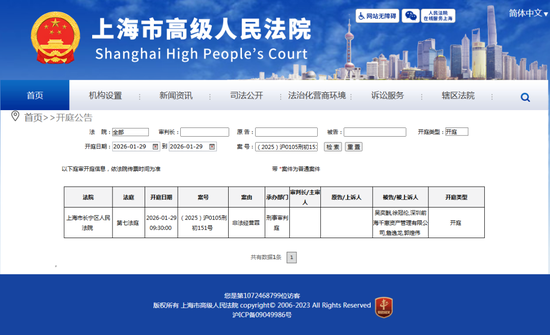
知名量化非法经营?多家私募因不务正业被点名
Shang Hai Zheng Quan Bao· 2026-01-10 03:33
Core Viewpoint - The recent court announcement regarding Qianhui Asset Management has raised significant industry attention due to its indictment for illegal business operations, highlighting the increasing regulatory scrutiny on private equity firms in China [1][2]. Company Summary - Qianhui Asset Management, established in March 2016 and registered in June 2017, has a management scale between 5 billion to 10 billion yuan and operates over 200 funds [2]. - The company currently employs 80 staff members, with 75 holding qualifications for fund management [2]. - The court has scheduled the trial for January 29, 2026, involving not only Qianhui Asset but also several individuals associated with the firm, including its compliance and risk management head [2]. Industry Summary - The case against Qianhui Asset is part of a broader trend where multiple private equity firms have been called out for non-compliance and illegal activities since 2025, indicating a tightening regulatory environment [5]. - Regulatory bodies have been increasingly vigilant, issuing warnings and taking corrective actions against firms engaging in unrelated business activities, which violate the Private Investment Fund Supervision and Administration Regulations [6]. - The industry is witnessing a shift towards compliance as a fundamental principle, with firms actively reassessing their compliance frameworks and internal controls to ensure sustainable development [7].
私募合规自查指南(四)——清算退出环节自查要点与风险防范
Xin Lang Cai Jing· 2025-12-24 10:32
Core Viewpoint - The article emphasizes the importance of compliance in the private equity fund lifecycle, particularly focusing on the liquidation and exit phase, which is critical for investor capital recovery and fund asset management [4][39]. Group 1: Non-Compliance in Liquidation Obligations - A case study of Beijing Zhongfu Private Equity Fund Management Company illustrates the failure to initiate liquidation procedures after the fund's term ended, leading to potential regulatory penalties and investor arbitration [5][41]. - The company did not disclose the triggering of the buyback clause to investors and failed to take necessary actions to recover investments, resulting in significant risks for investors [6][42]. - Regulatory requirements mandate timely liquidation and reporting to the association, with severe penalties for non-compliance [8][43]. Group 2: Misappropriation of Fund Assets - Shanghai Zhongyou Private Equity Fund Management Company is highlighted for misappropriating fund assets by transferring significant profits to an offshore company without proper disclosure [12][46]. - The company utilized a complex offshore structure to obscure the flow of funds, violating regulations that prohibit the misappropriation of fund assets [14][47]. - Regulatory frameworks strictly prohibit such actions, and the consequences for misappropriation can include heavy fines and penalties [15][48]. Group 3: Unfair Treatment of Investors - Shanghai Zhongxian Private Equity Fund Management Company faced scrutiny for implementing a discriminatory distribution plan during the liquidation process, favoring early investors over others [19][20]. - The company’s actions violated the principle of equal treatment for all investors, which is a core regulatory requirement [21][22]. - Regulatory measures can be taken against firms that do not treat investors fairly, including warnings and potential revocation of registration [23][24]. Group 4: Regulatory Compliance and Recommendations - The article outlines the necessity for private equity firms to establish robust compliance frameworks that encompass all stages of fund management, from fundraising to liquidation [31][32]. - Recommendations for firms include immediate initiation of liquidation processes, transparent communication with investors, and adherence to regulatory requirements to avoid severe penalties [44][51]. - Continuous training and accountability measures for responsible personnel are essential to ensure compliance and protect investor interests [11][44].
又有三家被罚!私募网下打新违规频发,这家私募被拉入“黑名单”
Xin Lang Cai Jing· 2025-10-27 03:42
Core Viewpoint - The China Securities Association (CSA) has issued disciplinary measures against three private equity firms for multiple violations during a self-regulatory inspection related to offline investors, highlighting ongoing compliance issues within the private equity sector [1][2]. Group 1: Disciplinary Actions - Three private equity firms, Shanghai Tiancheng Investment, Shanghai Tianyidao Investment, and Shanghai Tuopai Private Equity, received warnings and were subjected to various penalties due to violations identified during the CSA's inspection [1][2]. - Shanghai Tiancheng Investment and Shanghai Tianyidao Investment were mandated to participate in compliance education, while Shanghai Tuopai Private Equity was placed on a six-month restriction list for offline investors [1]. Group 2: Compliance Issues - The CSA has reported a total of 10 disciplinary measures this year, with 7 involving private equity firms, indicating a trend of frequent compliance violations in the industry [2]. - Common issues identified include deficiencies in internal control systems, operational processes, and a lack of compliance awareness among private equity firms [5][6]. Group 3: Specific Violations - The recent violations by the three firms included inadequate pricing basis, flawed evaluation and decision-making processes, and insufficient compliance management systems [3][4]. - Specific examples of violations include Shanghai Tiancheng Investment's reliance on poorly constructed internal research reports, Shanghai Tianyidao Investment's lack of documented decision-making processes, and Shanghai Tuopai Private Equity's failure to conduct collective decision-making meetings [4]. Group 4: Recommendations for Improvement - To mitigate future violations, private equity firms are advised to enhance their compliance awareness, establish robust internal control systems, and ensure adherence to operational procedures [5][6]. - Emphasis on employee training and appointing dedicated personnel for compliance oversight is crucial for effective implementation of internal policies [6].
今年以来多家私募“偏离主业”被监管层点名
Shang Hai Zheng Quan Bao· 2025-09-28 15:12
Core Viewpoint - The regulatory authorities have increasingly pointed out that several private equity firms have deviated from their core business, leading to warnings and administrative measures against them [1][2][4]. Group 1: Regulatory Actions - Hainan Securities Regulatory Bureau issued a warning letter to Green Creation Fund Management (Hainan) Co., Ltd. for using private fund assets for lending activities and failing to report significant matters in a timely manner [2][4]. - Other private equity firms, such as Hainan Zhuodai Fund Management Co., Ltd. and Chongqing Expressway Industry Equity Investment Fund Management Co., Ltd., have also faced similar warnings for using fund assets for lending [2][4]. Group 2: Industry Behavior - The private equity industry is characterized by weak compliance awareness during its rapid growth phase, with some managers seeking profits through lending activities, often using covert methods like disguised debt contracts [3][4]. - Various private equity firms have been found engaging in unrelated business activities, such as selling pseudo-gold exchange products and providing consulting services, which are in conflict with their core asset management responsibilities [4]. Group 3: Future Implications - The tightening of regulations and increased inspections are expected to compress the operational space for non-compliant private equity firms, pushing them towards a focus on core asset management and compliance [3][4]. - Industry insiders emphasize the need for private equity managers to enhance internal compliance mechanisms and focus on investment research and risk control to regain investor trust and ensure sustainable development [4].
私募基金财产用于借贷活动!监管出重拳
券商中国· 2025-09-21 23:36
Core Viewpoint - Recent regulatory actions highlight the increasing scrutiny on private equity firms in China for deviating from their core business activities, particularly involving the misuse of fund assets for lending purposes [2][3][5]. Summary by Sections Regulatory Actions - Hainan Securities Regulatory Bureau issued a warning letter to Green Creation Fund Management (Hainan) Co., Ltd. for failing to report significant matters in a timely manner and for using private fund assets for lending activities [2][3]. - This marks the second instance in September where a private equity firm in Hainan has been penalized for similar violations, following Hainan Zhuodai Fund Management Co., Ltd. [5]. Compliance Issues - The core issue identified is a lack of compliance awareness among personnel in private equity firms, leading them to treat fund management as a typical business and prioritize economic gains over their primary responsibilities [2][3]. - Hainan Zhuodai Fund's main revenue sources were found to be unrelated to private fund management, primarily deriving from financial advisory services [5]. Broader Industry Trends - Other regulatory bodies, such as the Shenzhen Securities Regulatory Bureau, have also intensified their oversight on private equity firms engaging in non-core activities, including selling unrelated products and providing consulting services [6]. - In July, two private equity firms in Chongqing received warning letters for misusing fund assets, including improper investments and lending activities [6][7]. Training and Compliance Initiatives - Hainan Securities Regulatory Bureau has initiated a series of compliance training sessions for private fund managers to reinforce regulatory awareness and operational standards [7].

超400家,主动“不干了”
Shang Hai Zheng Quan Bao· 2025-09-21 11:16
Core Insights - The private equity industry in China is undergoing positive changes, with over 800 private equity firms deregistering as of September 19 this year, and more than 50% of these deregistrations being voluntary [1][3]. Group 1: Industry Transformation - The increase in the proportion of voluntarily deregistered private equity firms reflects a purifying trend in the industry, as regulatory scrutiny has intensified, leading firms to shift from "not daring to violate" to "not wanting to violate" regulations [1][4]. - The number of deregistered private equity fund managers this year reached 851, with voluntary deregistrations (449) surpassing those initiated by the association (332) [3][4]. Group 2: Competitive Landscape - The rapid reshuffling of the billion-yuan tier indicates accelerated industry competition, with several firms, including Yingxue Investment and Banxia Investment, exiting the billion-yuan club due to compliance issues and poor performance [4][5]. - Nearly 10 private equity firms have dropped out of the top tier this year due to compliance problems or performance declines, disrupting the rankings within the billion-yuan tier [5]. Group 3: Compliance and Risk Management - There is a notable increase in compliance awareness among private equity firms, with many actively enhancing their compliance and risk management capabilities to foster long-term competitiveness [6]. - Firms are establishing robust internal controls and risk management systems, emphasizing the importance of compliance as a foundation for sustainable growth [6][7].
宁泉资产旗下产品 被限制参与打新
Shang Hai Zheng Quan Bao· 2025-07-30 14:18
Core Viewpoint - The recent restriction of Ningquan Zhiyuan No. 55 private securities investment fund from participating in offline IPOs highlights compliance issues within the industry, signaling a need for enhanced regulatory adherence among institutional investors [1][8]. Group 1: Regulatory Compliance - The China Securities Association (CSRC) has published a list of restricted offline investors, including Ningquan Zhiyuan No. 55, which is barred from participating from June to December 2025 [1]. - Institutional investors may face restrictions if their bidding is deemed unreasonable or if their operations are not compliant with regulations [1][8]. - The CSRC's guidelines specify that offline investors must avoid actions such as false reporting, misleading statements, and improper quoting practices [4]. Group 2: Industry Impact - The inclusion of Ningquan Zhiyuan No. 55 in the restricted list serves as a warning for the industry, emphasizing the importance of compliance across all operational aspects [1][8]. - The restriction reflects broader issues within the industry, such as inadequate risk management and operational processes in offline IPO inquiries [8]. - As regulatory scrutiny increases, the private equity sector is expected to undergo a process of elimination, with a focus on compliance and operational integrity [8]. Group 3: Company Background - Ningquan Asset, established in 2018, manages over 30 billion yuan and is led by founder Yang Dong, who has over 30 years of experience in the securities industry [5].
