私募基金减持

Search documents
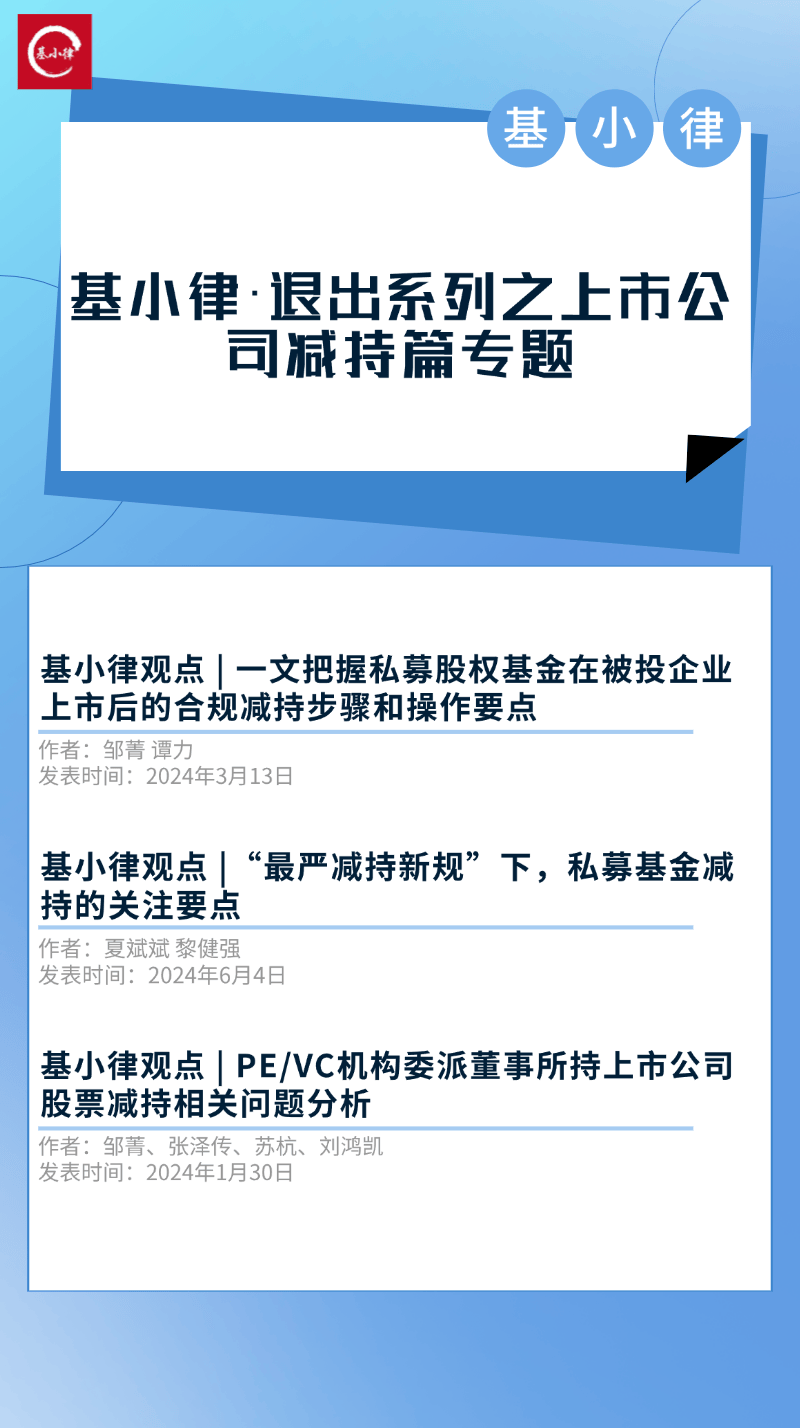
基小律·退出系列之上市公司减持篇专题
Sou Hu Cai Jing· 2025-09-19 00:06
Core Viewpoint - The exit of private equity funds through the listing of invested companies is a critical step for obtaining investment returns, with strict compliance requirements for share reduction post-listing [1][4] Group 1: Exit Methods - Private equity exit strategies are categorized into listed and unlisted exits, with listed exits being the preferred method for investors to achieve value appreciation [4] - Listed exits include both domestic and international listings, while unlisted exits encompass share buybacks, transfers, and liquidation [4] Group 2: Compliance Requirements - After a company goes public, private equity funds must adhere to various secondary market reduction rules, completing the exit only when shares are reduced post-lock-up period or under specified conditions [4] - The recent introduction of the "strictest reduction regulations" has significantly increased regulatory scrutiny and accountability for non-compliance in share reductions [5][6] Group 3: New Regulations - On May 24, 2024, the China Securities Regulatory Commission released new interim measures for shareholder share reductions and management rules for company directors, supervisors, and senior management, collectively referred to as the "reduction regulations" [6] - These new regulations are seen as a response to issues highlighted in previous rules from 2017 and 2022, emphasizing enhanced accountability for all parties involved [6] Group 4: Director Shareholding Rules - Private equity/venture capital firms often appoint directors in invested companies, and these directors must comply with specific regulations regarding share reductions during their tenure and after leaving the position [8]