私募股权投资

Search documents
2025年中国母基金全景报告
母基金研究中心· 2026-03-31 09:01
Core Viewpoint - The article discusses the development and current state of China's private equity mother fund industry, highlighting its rapid growth, structural changes, and the impact of government policies on its evolution [4][5][6]. Group 1: Overview of China's Mother Fund Industry - The private equity mother fund industry in China has rapidly developed due to its characteristics of diversified investment and risk reduction, but it entered a deep adjustment phase in 2019 due to internal policy impacts and external environmental shocks [4][5]. - As of December 31, 2025, there are 472 mother funds in China, an increase of 181 from the end of 2021, with a total management scale of 402.34 billion RMB, reflecting a decline of 11.92% compared to the end of 2024 [15][19]. - The total investment scale of mother funds in 2025 is 560.1 billion RMB, down 15.47% from 2024, with government-guided funds accounting for 440.8 billion RMB and market-oriented mother funds for 46.9 billion RMB [19]. Group 2: Analysis of Mother Fund Institutions - In 2025, 118 new mother funds were established, with 108 being government-guided funds and 10 market-oriented funds, totaling a scale of 800.657 billion RMB, which is a slight increase of 0.06% from 2024 [24][27]. - The average management scale of surveyed mother fund management institutions is 42.4 million RMB, with a planned management scale of 61.1 million RMB as of December 31, 2025 [45]. - The average internal rate of return (IRR) for market-oriented mother funds is 9.51%, while for government-guided funds, it is 7.26%, indicating a decline in performance metrics compared to 2024 [49]. Group 3: Current Development Trends - The mother fund industry is transitioning from a focus on direct investment to a more refined, professional, and standardized operation, becoming a stabilizing force in China's equity investment market [4][5]. - The introduction of new policies, such as the "Guiding Opinions on Promoting the High-Quality Development of Government Investment Funds," aims to enhance the operational framework for government investment funds and encourage a shift towards supporting technological innovation [63][64]. - The influx of "national team" capital, including state-owned venture capital and social security funds, is reshaping the funding structure of the mother fund industry, emphasizing long-term capital and strategic alignment with national priorities [69][70].


K型分化,如何破局?| 第20届中国投资年会·年度峰会即将启幕
投中网· 2026-03-23 03:53
Core Viewpoint - The article discusses the emergence of a "K-shaped recovery" in the investment industry, highlighting the contrasting experiences of different market participants amid overall growth in investment numbers and fundraising scales, particularly in sectors like AI and commercial aerospace [2][3]. PART.01: Witnessing 20 Years of Evolution - The K-shaped differentiation observed today is a natural result of the industry's evolution over the past 20 years, transitioning from a nascent private equity market dominated by foreign institutions to a robust sector with significant domestic participation and a variety of exit channels [4][5]. PART.02: Global Perspective: Three Variables Behind Differentiation - The formation of the K-shaped curve is influenced by three key variables: 1. **Demographics**: Fundamental changes in population structure are reshaping consumption, employment, and industry logic, moving away from previous "demographic dividends" [8]. 2. **Geopolitics**: The flow and rhythm of global capital have become more unpredictable, with competition and coordination coexisting, making it difficult for market participants to remain insulated [9]. 3. **Technology**: The rapid penetration of AI across various industries is not linear, leading to increased differentiation among market players [10]. PART.03: Investment Frontline: Redefining Methodology Amid Normalized Differentiation - As K-shaped differentiation becomes the norm, investment institutions are redefining their survival strategies, reassessing their methodologies to find certainty amid uncertainty and to position themselves within the differentiation [11][12]. PART.04: Industrial China: Sources of the Upward Curve - The upward branch of the K-shaped curve is largely driven by technological innovation, with sectors such as AI, robotics, high-end manufacturing, and innovative pharmaceuticals reshaping the industrial ecosystem and becoming the main battleground for capital [15]. PART.05: Investment Rankings 2025: Witnessing the Power of Investment in the K-shaped Era - The "Investment Rankings 2025" will be released during the summit, serving as a reflection of the past year's industry dynamics and a testament to the investment power in the K-shaped differentiation era, highlighting institutions and individuals that continue to uphold value and navigate through cycles [17][18].
宁德时代腾讯,出资博裕
投资界· 2026-03-20 08:30
Core Viewpoint - The article discusses the establishment of a new fund, 博裕新智新产, which has attracted a diverse group of investors, including major companies and state-owned enterprises, indicating a renewed interest in fundraising within the investment community [4][5]. Group 1: Fund Overview - 博裕新智新产 has increased its registered capital to 4.001 billion RMB and will focus on investing in growth and mature companies in technology, healthcare, consumer goods, and retail sectors both domestically and internationally [4]. - The fund has a lifespan of 12 years and has successfully gathered a notable lineup of Limited Partners (LPs) from various sectors, including state-owned enterprises and industry giants [4][5]. Group 2: Notable Investors - Key investors include 宁德时代 (Ningde Times) contributing 500 million RMB for a 12.497% stake, along with other significant contributions from companies like 腾讯 (Tencent) and 泡泡玛特 (Pop Mart) [5][7]. - The fund's investor list features a mix of industry capital and local state-owned platforms, showcasing a strong and diverse backing that is rare in the current market [5][6]. Group 3: Recent Investments - 博裕新智新产 has already made an investment in 宁德时代 (Ningde Times)智能科技有限公司 (Intelligent Technology Co., Ltd.), which focuses on key technologies for electric vehicle platforms [8][9]. - The fund's involvement in this investment highlights its strategy to engage with innovative companies in the technology sector, further solidifying its position in the investment landscape [9][10]. Group 4: Company Background - 博裕投资, founded in 2011, has established a diversified investment matrix that includes private equity, strategic investments in listed companies, and ventures in logistics and data centers, with a focus on technology innovation, consumer retail, and healthcare [10]. - Recent high-profile deals, such as acquiring a stake in Starbucks China and investments in other notable companies, demonstrate 博裕's active role in the investment community [10][11].



外资LP杀回来了
FOFWEEKLY· 2026-03-18 10:01
Core Viewpoint - The article emphasizes the renewed enthusiasm of foreign Limited Partners (LPs) in the Chinese investment market, highlighting a significant increase in their participation and investment activities in 2026 [2][3][15]. Group 1: Foreign LP Activity - There has been a notable increase in foreign LP investments, with several funds recently receiving capital injections, indicating a strong return of foreign capital to the Chinese market [5][6]. - On March 14, 2026, Hong Leong Star River Pte. Ltd. made a landmark investment of 500 million RMB into the Shanghai Sci-Tech Innovation Center Equity Investment Fund, marking a significant step for foreign investors in supporting tech development in Shanghai [7][8]. - The growth of foreign LPs is reflected in the data, with a 17% month-on-month increase in financial LP investment activity and a 14% increase in investment scale in February 2026 [9]. Group 2: Market Trends and Policy Support - The article notes that the Chinese venture capital market is experiencing a resurgence, driven by supportive policies and the emergence of new technologies, particularly in AI and embodied intelligence [10][11]. - The trend of foreign institutions actively entering the Chinese market is expected to continue, with a diverse range of funds, including family offices and sovereign wealth funds, increasingly participating [9][12]. - The ongoing optimization of QFLP policies and tax incentives is anticipated to further attract foreign capital, as highlighted by industry leaders during the recent Two Sessions [9][10]. Group 3: Changing Attitudes of Foreign Investors - Foreign investors are shifting from a cautious stance to a more proactive approach in the Chinese market, recognizing the long-term value and resilience of Chinese industries and technological innovations [11][15]. - The article mentions a growing trend of institutions restarting USD fundraising efforts, with many previously RMB-focused firms now expanding their overseas business by hiring for USD investment roles [12][15]. - The changing global economic landscape is prompting international capital to reassess its flow, with a clear shift towards China as a viable investment destination [13][15].

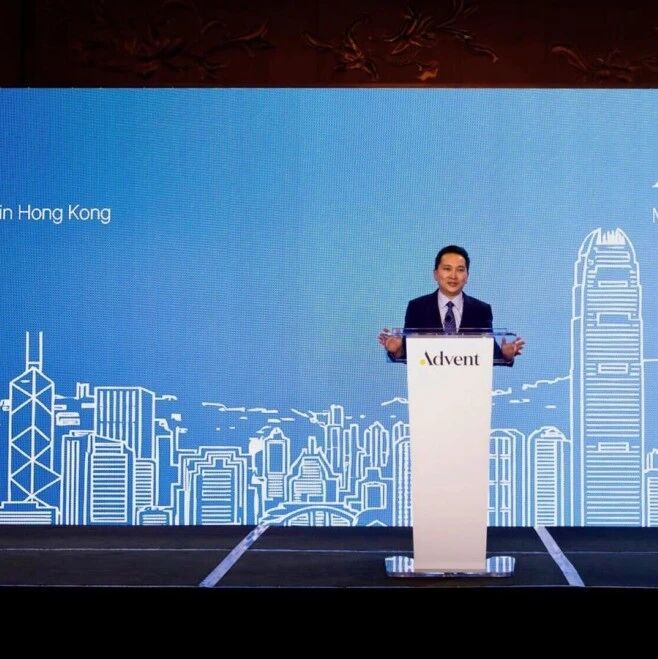
安宏资本加强在香港的布局,亚太地区投资总额已超78亿美元
IPO早知道· 2026-03-18 01:57
Core Viewpoint - The article highlights the strategic commitment of the private equity firm, Anhong Capital, to strengthen its business presence in Hong Kong as a regional hub to serve clients in the Asia-Pacific region, reflecting a long-term investment strategy in the area [3][4]. Group 1 - Anhong Capital has cumulatively invested over $1.8 billion in the Greater China region to date [2][3]. - The firm has a total investment exceeding $7.8 billion in the Asia-Pacific region, including flagship and follow-on funds [3]. - The Hong Kong office has officially become a licensed direct institution, indicating a significant milestone in the firm's regional operations [3][5]. Group 2 - The Asia-Pacific region remains a strategic focus for Anhong Capital, with offices in Hong Kong, Shanghai, Mumbai, Tokyo, and Sydney, employing nearly 40 investment professionals [4]. - The establishment of new offices in Tokyo by January 2026 and in Sydney by September 2024 further demonstrates the firm's commitment to the Asia-Pacific market [4]. - The firm aims to leverage local expertise in Hong Kong to provide high-level services to investors, enhancing its operational flexibility [5].
证监会吴清重磅部署创投退出渠道
母基金研究中心· 2026-03-14 05:37
Core Viewpoint - The article emphasizes the importance of private equity (PE) and venture capital (VC) in stimulating technological innovation and highlights recent supportive measures from the China Securities Regulatory Commission (CSRC) to enhance the investment environment for these funds [2][4][9]. Group 1: Policy Developments - The CSRC is advancing the implementation of policies such as the "1+6" and "merger six articles" to enhance the effectiveness of the Sci-Tech Innovation Board and the reform of the Growth Enterprise Market [2]. - The CSRC plans to deepen the reform of the Growth Enterprise Market by adopting beneficial experiences from the Sci-Tech Innovation Board, including pre-IPO reviews for qualified innovative companies and optimizing new stock issuance pricing [3]. Group 2: Support for Private Equity and Venture Capital - The CSRC has recognized the critical role of private equity and venture capital in fostering technological innovation and has signaled the need for a comprehensive regulatory framework to facilitate the fundraising, investment, management, and exit processes [2][4]. - The government work report emphasizes the importance of developing venture capital and angel investment, with a focus on nurturing "patient capital" to support the growth of startups into leading technology enterprises [9]. Group 3: Long-term Investment Strategies - The concept of "patient capital" is highlighted as essential for supporting long-term technological innovation, with a focus on providing stable and long-term financial backing that can withstand market cycles [6][7]. - The article notes that the investment themes have shifted towards hard technology, requiring a longer investment horizon and a more patient approach from venture capital firms [6]. Group 4: Industry Impact - Over 90% of companies listed on the Sci-Tech Innovation Board and more than half of those on the Growth Enterprise Market have received capital support from private equity and venture capital, indicating a positive cycle of early, small, and long-term investments in hard technology [8]. - The CSRC continues to deepen reforms to optimize the ecosystem for equity and venture capital investment, aiming to enhance the role of these funds in supporting technological innovation [7][10].

2026 40U40优秀青年投资人榜单评选正式开启
母基金研究中心· 2026-03-13 09:34
Core Viewpoint - The article emphasizes the significance of the May Fourth Spirit in inspiring Chinese youth to contribute to the nation's revival and modernization, highlighting the role of young private equity investors in this process [2]. Group 1: Awards and Recognition - The Mother Fund Research Center is launching the 2026 40U40 Young Investor Awards to recognize outstanding young investors under 40 years old [2]. - Categories for the awards include Best Mother Fund Young Investor, Most Promising Mother Fund Young Investor, Best Direct Investment Fund Young Investor, and Most Promising Direct Investment Fund Young Investor, along with the Top 20 Most Popular Mother Fund Institutions and Top 20 Most Popular Direct Investment Fund Institutions among young investors [3]. Group 2: Industry Trends - The investment industry is characterized by an aging talent structure, but the digital era has seen many young investors excel in specialized fields such as deep technology and hard technology, identifying valuable investment opportunities [2].

金桥资本做LP
FOFWEEKLY· 2026-03-11 10:12
Core Viewpoint - Shanghai Jinqiao Export Processing Zone Development Co., Ltd. announced a partnership with private equity funds for external investment, focusing on strong return projects and high-tech early-stage projects in strategic emerging industries [2] Group 1 - The company signed a partnership agreement to establish the Shanghai Pudong Intelligent Manufacturing Phase II Private Investment Fund, with a total investment commitment of RMB 19.4 million from Jinqiao Capital as a limited partner [2] - The fund aims to invest in growth and mature projects with strong industry competitiveness, as well as early-stage projects with high technical barriers that align with future development trends [2] - Investment focus includes but is not limited to hard technology projects in the integrated circuit and new communication industry chains, primarily targeting equity investments in unlisted companies [2]


70亿,深圳引导基金与建信投资等新设私募股权基金
FOFWEEKLY· 2026-03-06 09:12
Group 1 - The Shenzhen Jianyuan Zhengxing Private Equity Investment Fund Partnership (Limited Partnership) has been established with a capital contribution of 7 billion yuan, focusing on private equity investment, investment management, and asset management activities [1] - The fund is co-funded by Jianxin Financial Asset Investment Co., Ltd. and Shenzhen Guidance Fund Investment Co., Ltd. among others [1] Group 2 - The article mentions the launch of the "2026 Top 100 Industrial Investment" selection [3] - It highlights a reading recommendation on how a GP addresses "DPI anxiety" with a "win-win" solution [3] - The article also includes a review of the 2025 IPO exit landscape, focusing on which GPs have been profitable [3]

刚刚,证监会、发改委齐发声,VC/PE退出迎利好
母基金研究中心· 2026-03-06 08:58
Core Viewpoint - The recent statements from the China Securities Regulatory Commission (CSRC) and the National Development and Reform Commission (NDRC) highlight the importance of private equity (PE) and venture capital (VC) funds, signaling favorable conditions for improving the exit channels for these investments [2][10]. Group 1: Regulatory Support and Reforms - CSRC Chairman Wu Qing announced plans to enhance the capital market's foundational systems, focusing on developing diverse equity financing and expanding multiple exit channels for private equity and venture capital funds [1][10]. - The reform of the ChiNext board will incorporate successful experiences from the Sci-Tech Innovation Board, particularly for high-quality innovative enterprises with breakthroughs in key technologies [1][3]. - The NDRC plans to establish a national-level merger and acquisition fund to facilitate the exit channels for venture investments, aiming to mobilize over 1 trillion yuan in various funds [1][10]. Group 2: Importance of Patient Capital - The emphasis on "patient capital" is crucial, as it refers to capital that can provide long-term support and is tolerant of risks and failures, which is essential for the long cycles and uncertainties associated with technological innovation [5][7]. - The need for a more flexible and supportive financing environment is highlighted, as the current financial supply is characterized by short-term funding and low risk tolerance [5][6]. - The government is encouraging state-owned limited partners (LPs) to play a significant role in building patient and long-term capital, which is vital for supporting innovative enterprises [6][11]. Group 3: Investment Trends and Focus Areas - Recent trends in the VC/PE sector indicate a shift towards hard technology investments, with a longer growth cycle for tech companies, necessitating a more patient investment approach [6][8]. - The CSRC has noted that over 90% of companies listed on the Sci-Tech Innovation Board and more than half of those on the ChiNext have received capital support from private equity and venture capital funds, indicating a positive cycle of early, small, and long-term investments in hard technology [8][9]. - The government work report emphasizes the importance of venture capital in nurturing emerging industries and future industries, reinforcing the strategic role of private equity in the economy [10][11].