
私域交易

Search documents
勿上当!平台广告引流引发私域交易纠纷,江苏省消保委发声提醒
Yang Zi Wan Bao Wang· 2026-02-14 07:01
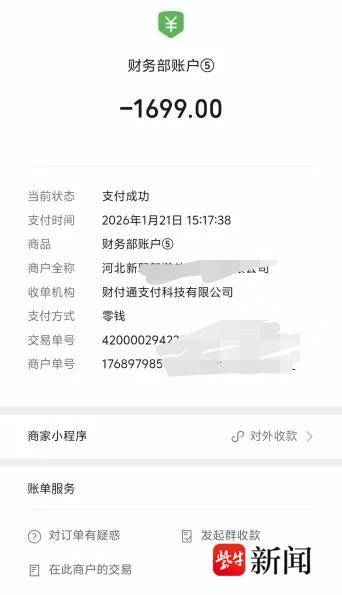
Core Viewpoint - Recent disputes arising from private domain transactions driven by short video platform advertisements have drawn attention, highlighting the risks associated with such transactions and the lack of consumer protection [1][4]. Group 1: Consumer Issues - A consumer named Tong was attracted by an advertisement for a training course promising easy certification and high pass rates, leading to a payment of 1699 yuan without verifying the seller's qualifications [1]. - After payment, the consumer questioned the seller's qualifications and requested a refund, which was denied, leaving the consumer unable to seek redress due to the transaction occurring outside the platform [1][4]. - The Jiangsu Consumer Protection Committee warned consumers to be cautious of misleading advertisements and to avoid private transactions that bypass official platforms [4]. Group 2: Merchant Conduct - Merchants used deceptive language such as "easy certification" and "high pass rates" to lure consumers into private transactions without providing necessary qualifications or contracts [4]. - The seller attempted to obstruct the consumer's rights by sending training materials without providing any actual training services, violating principles of fair trade and consumer rights [4]. - The committee emphasized the need for merchants to adhere to integrity in business practices, avoid false advertising, and comply with platform regulations [4][5]. Group 3: Platform Responsibilities - E-commerce platforms are urged to manage merchant accounts strictly to prevent bad actors from entering the market and to take action against those promoting private transactions [5]. - Platforms should provide clear warnings about the risks of private transactions and encourage users to complete payments through official channels [5]. - It is essential for platforms to handle consumer complaints effectively and assist in protecting consumer rights [5].

奂熹说税|私域交易也需要按季度报送涉税信息给税局吗
Jing Ji Guan Cha Bao· 2025-11-04 10:17
Core Viewpoint - The article discusses the requirement for online trading platforms in China to report tax-related information quarterly, clarifying which transactions are subject to this requirement and providing compliance suggestions for businesses engaged in private domain transactions [1][2][3][4] Group 1: Reporting Requirements - Online transactions that require reporting must involve three parties: the supplier, the customer, and the platform providing commercial services [2] - Platforms must report tax information for all merchants operating within them, regardless of whether they have the necessary licenses or registrations [2] - The reporting obligation encompasses all platforms that facilitate online transactions, ensuring comprehensive coverage of entities providing intermediary services [2] Group 2: Exempt Transactions - Transactions conducted through personal social tools like WeChat or QQ do not require reporting, as they lack the characteristics of a commercial platform [3] - Direct transactions between businesses and customers on self-operated platforms, such as proprietary e-commerce sites or apps, are also exempt from reporting [3] - Despite the exemption from reporting, businesses must still fulfill their tax obligations, as non-reporting does not eliminate the need for compliance [3] Group 3: Compliance Recommendations - Companies engaged in private domain transactions should analyze their business models to determine if they utilize platform services for online trading [4] - It is crucial for businesses to distinguish between public and private domain sales to avoid data confusion, especially when both types of transactions occur [4] - Maintaining documentation to prove transaction compliance is essential for demonstrating the legitimacy of transactions and adherence to tax regulations [4]