
科学合作

Search documents
科学无国界 上海搭建全球科学合作新桥梁
Ke Ji Ri Bao· 2025-10-27 08:04
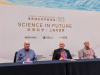
Core Viewpoint - The 2025 World Top Scientists Forum held in Shanghai highlights the importance of scientific collaboration and innovation, featuring significant awards and discussions among leading scientists from around the world [1][2][4]. Group 1: Event Overview - The forum took place from October 24 to 26, 2025, under the theme "Future Science: Shanghai and the World," attracting 25 top-tier award-winning scientists [1]. - The event is recognized as one of the highest-profile international scientific conferences in Asia, showcasing a diverse range of scientific inquiries and discussions [1][4]. Group 2: Awards and Recognitions - The World Top Scientists Association Award, comparable to the Nobel Prize, was presented during the forum, with the "Life Sciences or Medicine Award" going to Scott Emmer and Wes Sundquist for their groundbreaking work on cellular mechanisms [2][3]. - The "Intelligent Science or Mathematics Award" was awarded to Richard S. Hamilton for his pioneering contributions in geometric analysis and differential geometry [2]. Group 3: Scientific Contributions - Emmer's research on the ESCRT pathway has been pivotal in understanding how cells manage protein degradation, which has implications for combating diseases like HIV [2][3]. - The pharmaceutical industry has leveraged these foundational biological discoveries, leading to significant advancements in HIV treatment, exemplified by Gilead Sciences' development of a revolutionary drug [3]. Group 4: Collaborative Opportunities - The forum has fostered connections between international scientists and the Chinese scientific community, enhancing collaborative research opportunities [3][5]. - Notable scientists expressed pride in being part of the award-winning community and emphasized the importance of building relationships for future scientific endeavors [3][5]. Group 5: Forum Structure and Participation - The forum featured a comprehensive structure with one main forum, six sub-forums, and over ten related activities, focusing on various scientific disciplines and promoting in-depth discussions [4]. - Approximately 150 scientists from over ten countries participated, including four Nobel laureates and numerous distinguished young scientists, reflecting the forum's global reach and influence [5].
2025顶科论坛,三位获奖科学家藏着哪些科研“惊喜密码”?
Guo Ji Jin Rong Bao· 2025-10-26 03:39
Core Points - The 2025 World Top Scientists Forum, themed "Future Science: Shanghai and the World," opened in Shanghai with 25 Nobel laureates and other prestigious award winners in attendance [1] - The Top Scientists Association Award was presented to three scientists, highlighting the growing global influence of this international science award initiated in Shanghai [4] Group 1: Award Winners - Richard S. H. Sun received the "Intelligent Science or Mathematics Award" for his pioneering work in geometric analysis and differential geometry [4] - Scott Emmer and Wes Sandquist shared the "Life Science or Medicine Award" for their groundbreaking discoveries in receptor membrane protein transport and degradation mechanisms [4] Group 2: Insights from Award Winners - Richard S. H. Sun expressed that the honor of receiving the award is a responsibility that motivates him to continue his research in mathematics [4][6] - Wes Sandquist emphasized the interconnectedness of basic research and applied development, advocating for enhanced communication within research teams to facilitate breakthroughs [5] - Scott Emmer highlighted the collective effort of his research team, attributing the award to their shared commitment to solving biological challenges [6] Group 3: Scientific Collaboration - Emmer noted that his participation in the forum opened new avenues for collaboration between Chinese and American scientists [6] - Sandquist, visiting China for the first time, was impressed by the vibrant research ecosystem and the quality of the forum's agenda and speakers [6][7] - The forum served as a significant platform for scientists to engage and share insights, reinforcing the importance of community in scientific endeavors [7] Group 4: China's Research Landscape - Emmer acknowledged China's rapid advancements in neurodegenerative disease research, suggesting that future generations of Chinese researchers could lead in this field [8] - Sandquist pointed out that major pharmaceutical companies in Europe and the U.S. view China as a key market and research hub, indicating the ongoing progress of China's research ecosystem [9] - All three award winners recognized the Top Scientists Association Award as a vital link fostering closer collaboration with the Chinese scientific community [10]

专访|研究中国带回的月球样品是“至高荣誉”——访英国行星科学家马赫什·阿南德
Xin Hua She· 2025-05-13 04:01
Core Points - The article discusses the significance of lunar samples brought back by China's Chang'e 5 mission, highlighting the collaboration between British scientists and China in lunar research [1][2] - The samples, weighing approximately 1731 grams, were collected from the Moon's surface and are now available for international scientific research [1] - The British scientist Mahesh Anand expresses his honor in studying these samples, emphasizing their potential to lead to new scientific discoveries [1][2] Group 1 - The Chang'e 5 mission collected about 1731 grams of lunar samples, which were made available for international research in 2023 [1] - Seven institutions from six countries, including the UK, were granted access to these lunar samples for scientific study [1] - The samples consist of three different specimens, each weighing 20 milligrams, which can be magnified significantly for analysis [2] Group 2 - Anand's research aims to address questions regarding the Moon's origin and formation, as well as the history of elements like hydrogen, carbon, and nitrogen in the solar system [2] - The Chinese ambassador to the UK emphasized the importance of international collaboration in scientific progress and expressed hope for increased cooperation between China and the UK [2] - Anand believes that scientific collaboration is crucial in overcoming global conflicts and challenges, and it can unite people towards constructive goals [2]