
科学报国

Search documents
首次公开!这是70多年前于敏的工资条
Huan Qiu Wang Zi Xun· 2026-01-16 01:11
Core Viewpoint - The article commemorates the contributions of Yu Min, a key figure in China's nuclear weapons development, highlighting his dedication to serving the nation and his significant achievements in the field of physics and hydrogen bomb research [3][25]. Group 1: Early Life and Education - Yu Min was born in 1926 in Tianjin and was motivated by a desire to serve his country after witnessing its struggles [3]. - He excelled academically at Peking University, graduating first in his class in 1949 with a score of 88.46, and later served as a teaching assistant while earning a monthly salary equivalent to 400 jin of millet [5][6]. Group 2: Career Development - In 1951, Yu Min transitioned from academia to the Institute of Modern Physics at the Chinese Academy of Sciences, where he contributed to the development of nuclear physics theories [10]. - He was recruited to work on hydrogen bomb research in 1961, motivated by the tense geopolitical climate and a sense of national duty [12]. Group 3: Achievements in Hydrogen Bomb Research - Yu Min led a team of over 30 young researchers in a groundbreaking effort to develop China's hydrogen bomb, relying on basic resources and a strong nationalistic spirit [14][15]. - The team successfully completed the theoretical design of the hydrogen bomb during a critical period known as the "Hundred-Day Campaign" in 1965, overcoming significant challenges [15][18]. - China conducted its first hydrogen bomb test on June 17, 1967, achieving this milestone in just 2 years and 8 months, significantly faster than other nuclear powers [18][20]. Group 4: Personal Life and Legacy - Yu Min dedicated 28 years to his work in secrecy, which affected his personal life, including the health of his wife, who passed away in 2012 [20][21]. - He expressed regret over the time spent away from his family, emphasizing his commitment to national service over personal relationships [23]. - Yu Min passed away on January 16, 2019, at the age of 93, leaving behind a legacy of dedication to his country and contributions to science [23].

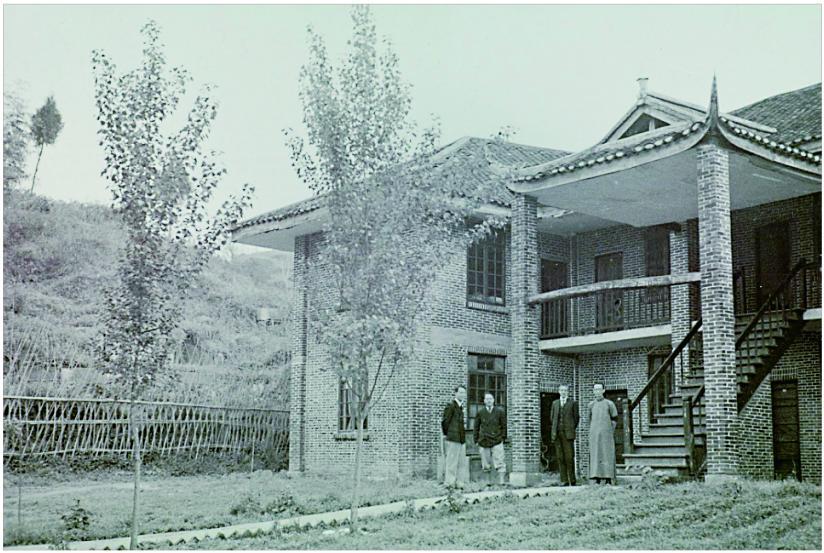
他们“冒”着日寇轰炸危险 “藏”在北碚养实验小白鼠
Xin Lang Cai Jing· 2025-12-22 18:17
Core Viewpoint - The article highlights the significant role of the China Scientific Society's Biological Research Institute in Chongqing during the wartime period from 1937 to 1940, focusing on the breeding and preservation of laboratory mice, which were crucial for various scientific research fields in China during a time of scarcity and conflict [2][14]. Group 1: Historical Context - The outbreak of the Second Sino-Japanese War in 1937 led to the relocation of many scientific institutions, including the Biological Research Institute, to preserve valuable scientific resources [4]. - The institute, under the leadership of prominent botanist Qian Chongshu, moved from Nanjing to Chongqing with the support of patriotic industrialist Lu Zuofu [5]. Group 2: Challenges in Breeding Laboratory Mice - The shortage of standardized laboratory mice became a critical barrier for physiological, pathological, and pharmacological experiments [6]. - Local mouse species in China were unsuitable for precise experiments due to their small size and genetic mixing, necessitating the import of purebred mice from institutions like the Wistar Institute in the U.S. [7][8]. Group 3: Breeding Efforts and Successes - The institute faced significant challenges in breeding the imported mice, including substandard living conditions and limited resources, yet managed to maintain a health rate of over 50% for the mouse population [9][10]. - From 1936 to 1939, the institute conducted 116 breeding sessions, resulting in 605 healthy offspring, demonstrating effective breeding practices despite wartime difficulties [11]. Group 4: Contribution to National Research - The Biological Research Institute became a vital supply center for laboratory mice, providing healthy specimens to various educational and research institutions across China during the war [13]. - The mice were carefully transported to support research in pathology, nutrition, and other fields, symbolizing collaboration and knowledge sharing among Chinese scientists during a tumultuous period [13]. Group 5: Legacy and Recognition - Recent archival releases by the Beibei District Museum shed light on this lesser-known yet crucial aspect of wartime scientific efforts, emphasizing the dedication of researchers who contributed to the foundation of modern biological and medical research in China [14].
从无交集,他们为何送别杨振宁
Ke Ji Ri Bao· 2025-10-28 01:48
Core Points - The article discusses the memorial service for Yang Zhenning, a Nobel Prize-winning physicist and a prominent figure in Chinese science, who passed away at the age of 103 [2][3][24] - The public response to his passing reflects a deep respect for his contributions to science and his patriotism, with many individuals traveling from various locations to pay their respects [6][36][38] Group 1 - Yang Zhenning's memorial service took place at Babaoshan Revolutionary Cemetery, attended by a large crowd dressed in mourning attire, symbolizing collective grief [3][4][6] - The service was marked by personal tributes, with attendees leaving flowers and notes expressing their admiration and gratitude for Yang's impact on their lives [10][14][19] - Many attendees, including students and professionals, shared how Yang's work and philosophy inspired them, highlighting his role as a mentor and guiding figure in their academic and personal journeys [14][18][25] Group 2 - The establishment of a memorial room at Tsinghua University’s Institute for Advanced Study allowed the public to express their condolences, with reports of around 3,000 visitors daily [6][36] - The article emphasizes the importance of honoring scientists like Yang Zhenning, who have made significant contributions to both science and national pride, fostering a culture of respect for scientific achievement [32][38] - Personal stories from attendees illustrate the profound emotional connection many felt towards Yang, showcasing how his legacy continues to inspire future generations [19][37]
