两弹一星

Search documents
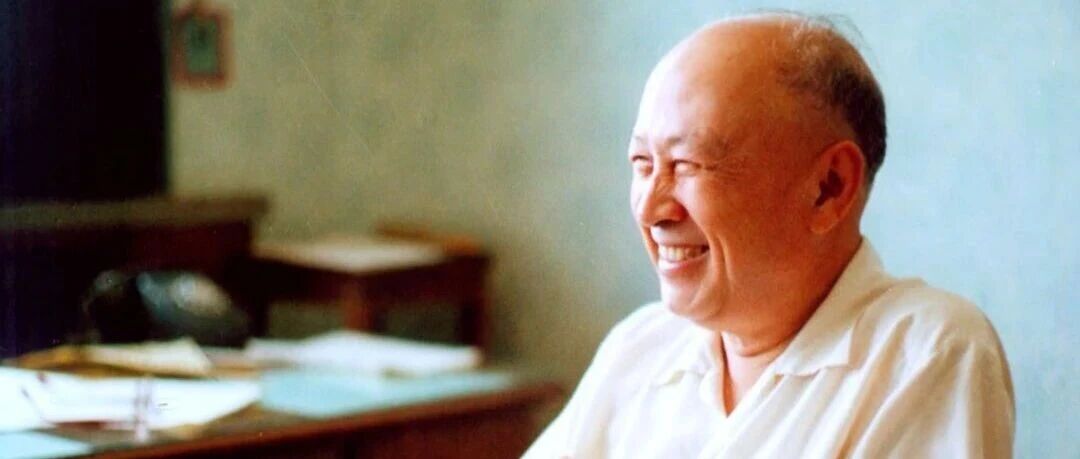
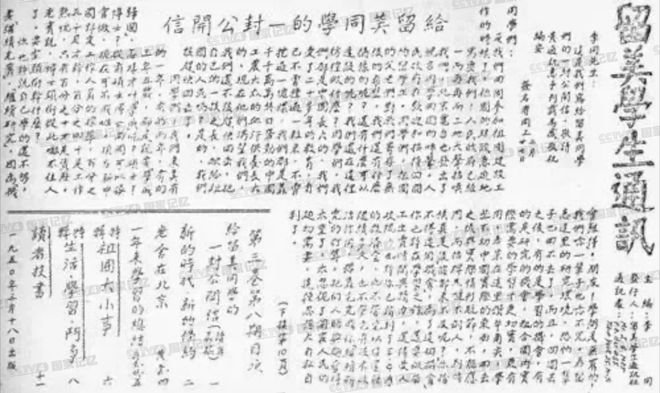
用一生研究核武器 他一封公开信召唤万千学子归国
Huan Qiu Wang Zi Xun· 2026-02-26 00:46
Group 1 - The core message of the article emphasizes the historical significance of the open letter written by Zhu Guangya, which called for Chinese students abroad to return and contribute to the nation's development after 1949 [1][6] - Zhu Guangya, at the age of 25, led the drafting of this letter, which resonated deeply among Chinese students studying in the United States [1][6] - Zhu later became the technical head of China's first atomic bomb development, earning the title of "the leader of leaders" in China's nuclear weapons research field [3][6] Group 2 - Zhu Guangya passed away in Beijing at the age of 87, and the article pays tribute to his contributions as a key figure in China's nuclear program [4] - The article highlights the lasting impact of Zhu's work and his commitment to the development of China's nuclear capabilities throughout his life [3][4]

仪器历史上的今天:中国科学院仪器馆成立
仪器信息网· 2026-01-23 09:02
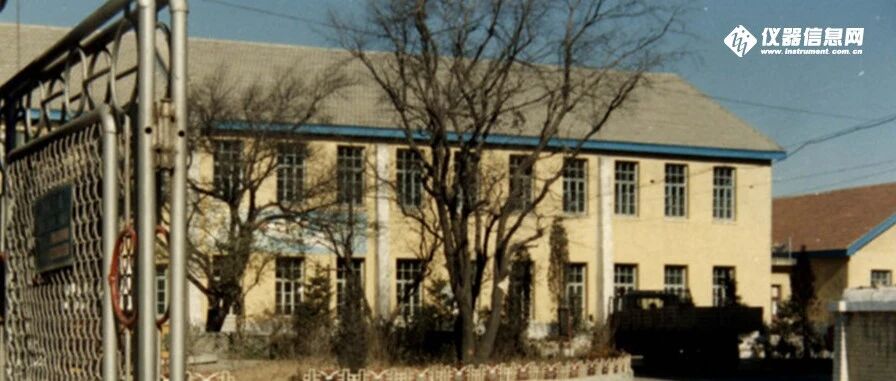
Core Viewpoint - The article highlights the historical significance and contributions of the Chinese Academy of Sciences Instrumentation Museum, which evolved into the Changchun Institute of Optics, Fine Mechanics and Physics, in the development of optical technology and national defense in China. Group 1: Historical Development - The Instrumentation Museum was established in 1953, marking the beginning of optical research in New China, with Wang Daheng as a key figure in its founding [2][3]. - The first furnace of optical glass was produced by the end of 1953, laying the foundation for the optical instrument manufacturing industry [4]. - In 1957, the museum was renamed the Institute of Optics and Fine Mechanics, and by 1958, it successfully developed a series of significant optical instruments known as the "Eight Major Items" [5]. Group 2: Contributions to National Defense - The institute played a crucial role in supporting the development of medium-range missiles in the early 1960s by undertaking the task of developing large optical measurement equipment [11]. - In 1964, the institute was responsible for the development of high-speed cameras used during China's first atomic bomb test, successfully obtaining critical optical measurement data [13]. - The institute has participated in several major national projects, including "Two Bombs, One Satellite" and manned spaceflight, contributing significantly to national defense and economic development [14]. Group 3: Current Status and Impact - As of the end of 2023, the Changchun Institute of Optics is one of the largest research institutes under the Chinese Academy of Sciences, employing over 2,500 staff and housing 21 research departments and multiple national key laboratories [19]. - The institute has incubated several high-tech enterprises, forming a distinctive optoelectronic industry cluster [19]. - It has been a cradle for many top scientists, including Wang Daheng and Jiang Zhuying, contributing to the advancement of optical science in China [16].
首次公开!这是70多年前于敏的工资条
Huan Qiu Wang Zi Xun· 2026-01-16 01:11
Core Viewpoint - The article commemorates the contributions of Yu Min, a key figure in China's nuclear weapons development, highlighting his dedication to serving the nation and his significant achievements in the field of physics and hydrogen bomb research [3][25]. Group 1: Early Life and Education - Yu Min was born in 1926 in Tianjin and was motivated by a desire to serve his country after witnessing its struggles [3]. - He excelled academically at Peking University, graduating first in his class in 1949 with a score of 88.46, and later served as a teaching assistant while earning a monthly salary equivalent to 400 jin of millet [5][6]. Group 2: Career Development - In 1951, Yu Min transitioned from academia to the Institute of Modern Physics at the Chinese Academy of Sciences, where he contributed to the development of nuclear physics theories [10]. - He was recruited to work on hydrogen bomb research in 1961, motivated by the tense geopolitical climate and a sense of national duty [12]. Group 3: Achievements in Hydrogen Bomb Research - Yu Min led a team of over 30 young researchers in a groundbreaking effort to develop China's hydrogen bomb, relying on basic resources and a strong nationalistic spirit [14][15]. - The team successfully completed the theoretical design of the hydrogen bomb during a critical period known as the "Hundred-Day Campaign" in 1965, overcoming significant challenges [15][18]. - China conducted its first hydrogen bomb test on June 17, 1967, achieving this milestone in just 2 years and 8 months, significantly faster than other nuclear powers [18][20]. Group 4: Personal Life and Legacy - Yu Min dedicated 28 years to his work in secrecy, which affected his personal life, including the health of his wife, who passed away in 2012 [20][21]. - He expressed regret over the time spent away from his family, emphasizing his commitment to national service over personal relationships [23]. - Yu Min passed away on January 16, 2019, at the age of 93, leaving behind a legacy of dedication to his country and contributions to science [23].
中共一大纪念馆展出“两弹一星”珍贵文物
Xin Lang Cai Jing· 2026-01-07 11:01
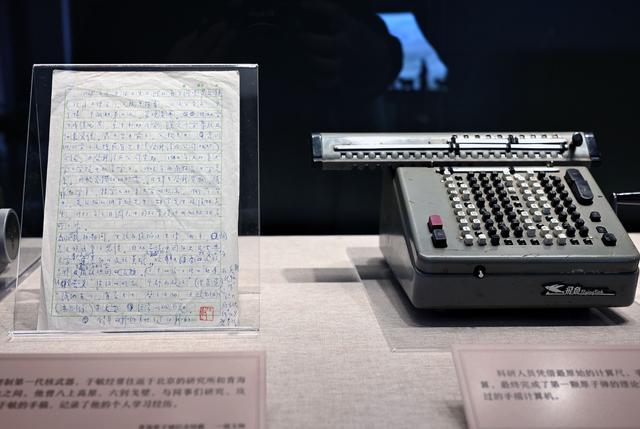
Core Viewpoint - The exhibition "Casting Dreams at Jinyintan: The Glorious Path of China's 'Two Bombs, One Satellite'" opened on January 7 at the Memorial Hall of the First National Congress of the Communist Party of China, showcasing the significant achievements of China's nuclear industry through valuable manuscripts, artifacts, and historical documents [1][3]. Group 1: Exhibition Overview - The exhibition is organized by the Propaganda Department of the Haibei Prefecture Committee of the Communist Party of China, the Memorial Hall of the First National Congress, and the Qinghai Atomic City Memorial Hall [1]. - It features 69 selected cultural relics, including personal manuscripts from Yu Min, scientific calculation manuscripts from Deng Jiaxian, and the program timer used during the first atomic bomb explosion, among other first and second-level national cultural relics [1][3]. Group 2: Thematic Structure - The exhibition is divided into four sections: "Mission Call," "Climbing New Heights," "Great Achievements," and "Building Dreams for Revival," which collectively review the arduous decision-making process and the remarkable achievements of China's "Two Bombs, One Satellite" project [3]. - The first floor of the exhibition hall vividly recreates the scene of General Li Jue leading over twenty advance team members to explore Jinyintan in August 1958, while the second floor displays models of China's first atomic bomb, hydrogen bomb, and the artificial satellite "Dongfanghong-1" [5]. Group 3: Significance of the Exhibition - The joint exhibition, spanning 2,300 kilometers from Shanghai to Jinyintan, represents a spiritual dialogue across time and serves as a relay of initial aspirations and missions [5].
时光相册丨永远的怀念!他是“两弹一星”元勋,也是烈士
Xin Hua She· 2025-12-05 01:21
Core Viewpoint - Guo Yonghuai is recognized as a foundational figure in Chinese mechanics and a pioneer in aerodynamics, posthumously awarded the "Two Bombs, One Satellite" merit medal for his contributions to nuclear weapons research [1] Group 1: Early Life and Education - In 1938, Guo Yonghuai achieved the highest score in the entrance exam for the mechanics program, alongside Qian Weichang and Lin Jiaqiao [4] - He studied at the University of Toronto in Canada in 1940 and later attended the California Institute of Technology, where he studied under the gas dynamics master, von Karman [6] Group 2: Academic and Professional Contributions - Guo Yonghuai graduated with a PhD in 1945 and began teaching at Cornell University, making significant contributions to supersonic flight [7] - He returned to China in 1956, where he led the Institute of Mechanics at the Chinese Academy of Sciences and co-founded the Mechanics Research Class at Tsinghua University [9] Group 3: Involvement in Nuclear Weapons Development - In 1960, Guo Yonghuai was appointed as the deputy director of the Ninth Research Institute of the Second Machinery Industry Ministry, overseeing nuclear weapon development [13] - His work contributed to the successful test explosion of China's first thermonuclear missile just 22 days after his sacrifice [13] Group 4: Legacy and Commemoration - An asteroid, numbered 212796, has been named "Guo Yonghuai Star" in his honor, ensuring his legacy continues to shine [16] - Memorials and tributes are held in his honor, reflecting on his contributions and inspiring future generations [18]
今天,缅怀钱学森!
中国能源报· 2025-10-31 01:24
Group 1 - Qian Xuesen, a foundational figure in China's aerospace industry, is remembered for his significant contributions to the "Two Bombs, One Satellite" project [1] - The article highlights 20 anecdotes from Qian's life, showcasing his early academic achievements and choices that shaped his career [1][2] - Qian's decision to switch from railway engineering to aerospace engineering was influenced by witnessing the devastation caused by Japanese bombings in Shanghai [8] Group 2 - Qian excelled academically, graduating first in his class from the Mechanical Engineering College [10] - His early life included a passion for music, as he participated in a brass band during university [12] - Qian's marriage to Jiang Ying, a renowned vocal educator, was marked by a direct proposal that emphasized his commitment to their future together [21][25] Group 3 - After the founding of New China, Qian expressed a strong desire to return to his homeland and contribute to its development [27] - He faced unjust detention in the U.S. but managed to send a plea for help back to China, emphasizing his longing to return [27] - Upon his return in 1955, Qian committed to helping China build its own aerospace capabilities, asserting that Chinese people could achieve what others could [31] Group 4 - Qian's dedication to education was evident as he provided financial support for students to acquire necessary tools for their studies [41] - He was known for setting high academic standards, exemplified by a challenging exam that required students to solve complex equations related to rocket launches [44] - Qian's lifelong love for reading and exploration of new ideas continued into his later years, where he engaged with topics like environmental protection and new energy vehicles [52][54] Group 5 - Qian's legacy in China's space program was solidified as he received updates from astronauts after successful missions, reflecting his ongoing influence [57] - The article concludes with a message of reassurance to Qian, affirming that modern China is progressing as he envisioned [62]