
科学谣言

Search documents
剥开“地球将失去引力7秒”谣言“画皮”
Xin Lang Cai Jing· 2026-02-04 00:57
Core Viewpoint - The rumor claiming that "the Earth will lose gravity for 7 seconds" has spread widely on social media, prompting authoritative scientific institutions to label it as false. The article explores why advanced scientific theories are often targets for such rumors and how to discern truth from falsehood. Group 1: Origin and Spread of the Rumor - The earliest traceable source of the rumor is a video from mid-December 2025, which mentioned an article predicting that on August 12, 2026, the Earth would lose gravity for 7 seconds, allegedly known by NASA but not disclosed to the public [3] - The rumor evolved to include claims of a budget of $89 billion for a project called "Anchor Plan" to test the Earth's ability to withstand weightlessness, along with predictions of catastrophic consequences including millions of casualties and economic collapse [3][4] Group 2: Scientific Explanation - Gravity is a force resulting from the mass of the Earth, and for the Earth to lose gravity, it would require a loss of mass across all its components, which is impossible [4] - The article clarifies that gravitational waves, predicted by general relativity, are too weak to affect Earth's gravity, and the predicted astronomical event on August 12, 2026, is a solar eclipse that will not impact Earth's gravitational field [4] Group 3: Characteristics of Rumors - The article identifies common traits of conspiracy theories and pseudoscience, such as using detailed yet unverifiable data, invoking popular scientific terms like "gravitational waves," and preemptively closing off avenues for verification [5] - Historical examples of end-of-the-world rumors, such as those surrounding Nostradamus, illustrate how fear and misinformation can spread widely, often for profit [7] Group 4: Psychological Factors in Believing Rumors - Cognitive biases, such as confirmation bias and the illusion of truth effect, contribute to the ease with which people accept and share rumors [12][13] - Emotional factors, particularly fear and anxiety during uncertain times, can drive individuals to seek simple explanations, making them more susceptible to sharing rumors [12][14] Group 5: Strategies for Identifying Rumors - The article suggests practical tips for recognizing rumors, such as being cautious of overly detailed data that lacks clarity on the main issue and questioning the credibility of claims against authoritative sources [15][16] - It emphasizes the importance of scientific methods and the role of scientists in challenging existing knowledge rather than maintaining the status quo [16]

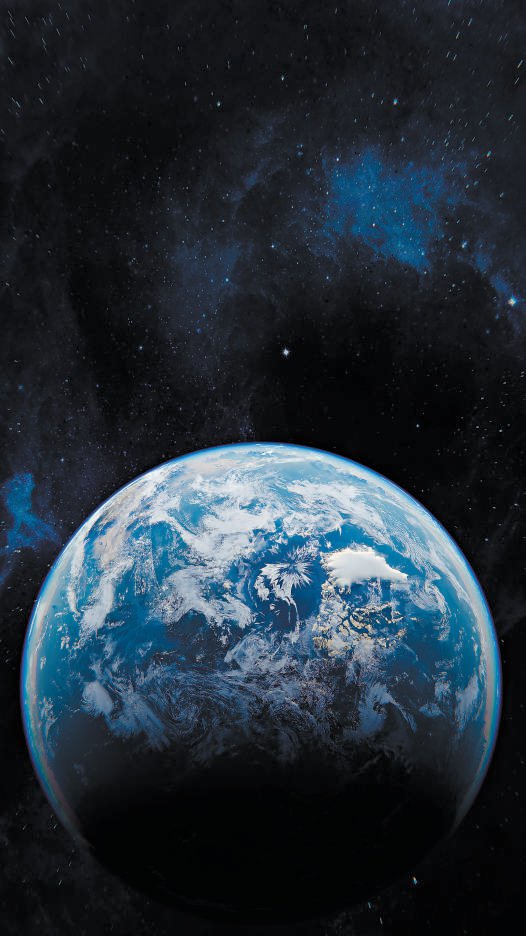
科学圆桌会|天体物理学博士谈“地球失重7秒”:中学物理就能戳破的谣言为啥还有人信?
Xin Hua She· 2026-01-30 08:57
Core Viewpoint - A recent rumor claiming that Earth will lose gravity for 7 seconds on August 12, 2026, leading to mass casualties and the moon drifting off its orbit, has gained significant traction on social media, despite being fundamentally flawed and easily debunked by basic physics principles [1][3]. Group 1: Scientific Explanation - The rumor contradicts Newton's law of universal gravitation, which states that all objects with mass exert gravitational force on each other, meaning gravity cannot simply disappear [1]. - If gravity were to vanish even for a second, humans, buildings, and oceans would be flung into space due to centrifugal force, and the atmosphere would dissipate, exposing the surface to lethal cosmic radiation [2]. Group 2: Misleading Tactics - The rumor attempts to gain credibility by linking the "disappearance of gravity" to a solar eclipse on the specified date, exploiting public unfamiliarity with astronomical phenomena [3]. - The claim includes fabricated references to NASA and other scientific institutions, which can be verified as false through official databases [3]. Group 3: Educational Insights - The spread of such misinformation highlights deficiencies in science education, where emphasis is placed on formulaic calculations rather than understanding the broader implications of scientific principles [4]. - Scientific literacy is accessible to anyone with basic education, enabling individuals to discern truth from falsehood using fundamental knowledge [5]. Group 4: Historical Context - Similar doomsday rumors have historically emerged, such as those surrounding planetary alignments and the 2012 Mayan prophecy, all of which have been debunked by scientific evidence [5].