
科学辟谣

Search documents
中学物理知识就能戳破这个谣言
Xin Lang Cai Jing· 2026-02-03 20:49
Core Viewpoint - A recent rumor claims that Earth will lose gravity for 7 seconds on August 12, 2026, leading to catastrophic consequences, including millions of deaths and the Moon drifting away from its orbit. This claim is fundamentally flawed and contradicts basic principles of physics [3][4][6]. Summary by Sections Gravity and Its Nature - Earth's gravity is a result of its mass, approximately 5.972×10^24 kilograms, and cannot be turned off or disappear suddenly. If gravity were to vanish, everything on Earth's surface would be propelled into space due to centrifugal force, and the atmosphere would dissipate, exposing the surface to harmful cosmic radiation [5][6]. The Role of Misinformation - The rumor attempts to link the supposed loss of gravity to a solar eclipse on the same date, exploiting public unfamiliarity with astronomical phenomena to lend credibility to the false claim. This tactic is described as a "grafting lie" [6]. Principles for Identifying Misinformation - To discern the truth, two core principles are recommended: "check the source" and "verify the logic." Authentic scientific conclusions come from reputable research institutions or official publications, not anonymous social media posts. The rumor's claims about NASA and underground bunkers were found to be fabricated upon investigation [7][8]. Importance of Scientific Literacy - The spread of such misinformation raises concerns about the current state of science education, which often emphasizes rote learning over understanding the broader implications of scientific principles. The fundamental value of Newton's law of universal gravitation extends beyond mere calculations; it reflects the universality and equality of cosmic laws [9]. Historical Context of Doomsday Rumors - Historically, similar doomsday rumors have emerged, such as those surrounding planetary alignments and the 2012 Mayan prophecy, all of which have been debunked by scientific facts. Maintaining rational thinking and consulting authoritative information is essential in navigating such misinformation [10].

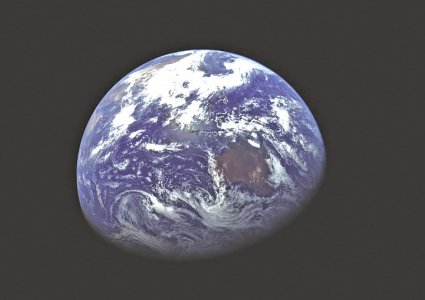
科学圆桌会|天体物理学博士谈“地球失重7秒”:中学物理就能戳破的谣言为啥还有人信?
Xin Hua She· 2026-01-30 08:57
Core Viewpoint - A recent rumor claiming that Earth will lose gravity for 7 seconds on August 12, 2026, leading to mass casualties and the moon drifting off its orbit, has gained significant traction on social media, despite being fundamentally flawed and easily debunked by basic physics principles [1][3]. Group 1: Scientific Explanation - The rumor contradicts Newton's law of universal gravitation, which states that all objects with mass exert gravitational force on each other, meaning gravity cannot simply disappear [1]. - If gravity were to vanish even for a second, humans, buildings, and oceans would be flung into space due to centrifugal force, and the atmosphere would dissipate, exposing the surface to lethal cosmic radiation [2]. Group 2: Misleading Tactics - The rumor attempts to gain credibility by linking the "disappearance of gravity" to a solar eclipse on the specified date, exploiting public unfamiliarity with astronomical phenomena [3]. - The claim includes fabricated references to NASA and other scientific institutions, which can be verified as false through official databases [3]. Group 3: Educational Insights - The spread of such misinformation highlights deficiencies in science education, where emphasis is placed on formulaic calculations rather than understanding the broader implications of scientific principles [4]. - Scientific literacy is accessible to anyone with basic education, enabling individuals to discern truth from falsehood using fundamental knowledge [5]. Group 4: Historical Context - Similar doomsday rumors have historically emerged, such as those surrounding planetary alignments and the 2012 Mayan prophecy, all of which have been debunked by scientific evidence [5].
伪科普有哪些常见套路
Ren Min Ri Bao· 2025-12-20 01:25
Core Viewpoint - The rise of pseudoscience online has made it increasingly difficult for individuals to discern credible scientific information from misleading claims, particularly in health and wellness topics [1] Group 1: Areas Affected by Pseudoscience - Pseudoscience predominantly affects health and wellness content, with approximately 35% of debunked claims related to health, 30% to food safety and nutrition, and 15% to beauty and skincare [2] - Emerging pseudoscience in cutting-edge technology includes misleading claims about "quantum" products and exaggerated assertions about AI's capabilities in disease prediction [2] Group 2: Common Tactics of Pseudoscience - Fear-based marketing is a prevalent tactic, using alarming terms like "cancer-causing" to attract attention and encourage sharing [3] - The use of complex jargon to confuse the audience, such as the term "quantum," is common, making pseudoscientific claims appear more credible [3] - Fabricating authoritative endorsements is another tactic, where false claims are made about research from reputable institutions to lend credibility to pseudoscientific assertions [3] Group 3: Challenges in Combating Pseudoscience - The low cost of spreading misinformation contrasts sharply with the resource-intensive process of debunking pseudoscience, which requires thorough investigation and scientific explanation [4] - Economic incentives drive the proliferation of pseudoscience, with many organizations creating content for profit through advertising and sales [4] - The advancement of AI technology has lowered the barriers for producing pseudoscientific content, making it easier to generate and disseminate misleading information rapidly [4] Group 4: Recommendations for Public Awareness - Individuals should verify the sources of information, as credible scientific content typically cites authoritative studies and detailed data [5] - Avoiding absolute claims is crucial, as legitimate scientific research often uses tentative language like "may" or "preliminary findings" [5] - Consulting authoritative platforms for verification, such as the science debunking platform created by the China Association for Science and Technology, can help clarify the truth behind common myths [6]
伪科普有哪些常见套路(唠“科”)
Ren Min Ri Bao· 2025-12-19 22:10
Core Viewpoint - The article discusses the prevalence of pseudoscience in online content, particularly in health and wellness, and highlights the challenges in distinguishing credible scientific information from misleading claims [2][3]. Group 1: Pseudoscience Overview - Pseudoscience is particularly rampant in health-related topics, with statistics indicating that approximately 35% of debunked claims pertain to health, 30% to food safety and nutrition, and 15% to beauty and skincare [3]. - Emerging pseudoscience in technology, such as claims about "quantum" products and exaggerated AI capabilities, is also noted, which can mislead the public and undermine respect for genuine science [3]. Group 2: Common Tactics of Pseudoscience - Fear-based marketing is a common tactic, using alarming terms like "cancer-causing" to attract attention and encourage sharing among users [4]. - The use of complex jargon to confuse the audience is prevalent, as seen in claims about "quantum" products that lack scientific basis [4]. - False authority is often invoked, with claims of research from reputable institutions that are later found to be unsubstantiated [4]. Group 3: Challenges in Combating Pseudoscience - The low cost of spreading misinformation contrasts sharply with the resource-intensive process of debunking false claims, which requires thorough investigation and scientific explanation [5]. - Economic incentives drive the production of pseudoscientific content, with a growing gray industry that leverages social media for profit [5]. - The advancement of AI technology has lowered the barriers for creating and disseminating pseudoscientific content, complicating efforts to identify and counteract it [5]. Group 4: Recommendations for Public Awareness - Individuals are encouraged to verify the sources of information, as credible scientific content typically cites authoritative studies and data [6]. - Skepticism towards absolute claims is advised, as legitimate scientific research often uses tentative language [6]. - Consulting authoritative platforms for verification of claims is recommended, such as the scientific debunking platforms established by national organizations [7].