科技赋能文物修复

Search documents
科技让古老文物重焕光彩(迈向“十五五”的文化图景)
Ren Min Ri Bao· 2025-11-12 22:19
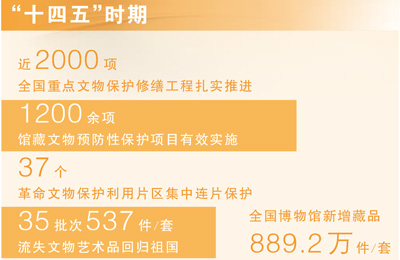
Core Insights - The article emphasizes the development and modernization of cultural heritage preservation, particularly focusing on the advancements in the restoration of artifacts from the Sanxingdui site, showcasing a blend of traditional craftsmanship and modern technology [2][3][4]. Group 1: Cultural Heritage Preservation - The Sanxingdui cultural heritage sector has entered a new phase of systematic development during the 14th Five-Year Plan, with over 17,000 artifacts unearthed, and more than 4,000 artifacts have been restored using a combination of traditional techniques and modern technology [2][3]. - The integration of non-destructive testing, AI technology for precise matching of fragments, and 3D printing has significantly improved restoration efficiency and accuracy, while also minimizing potential damage to artifacts [3][4]. Group 2: Technological Advancements - The establishment of fully enclosed archaeological workspaces for the excavation of the Sanxingdui site has provided a controlled environment that protects artifacts from external damage, ensuring better preservation from the moment of excavation [3]. - The restoration process now involves comprehensive scanning and the creation of 3D models, allowing for automated feature extraction and matching, which enhances both the speed and precision of the restoration work [3]. Group 3: Future Goals and Achievements - Looking ahead to the 15th Five-Year Plan, the goal is to establish Sanxingdui as a world cultural heritage site and a significant symbol of Chinese culture, with plans to complete the protection of over 10,000 newly unearthed artifacts and to develop restoration standards [4][5]. - The overall cultural heritage sector in China has made significant strides, with the completion of the fourth national cultural relics census and the discovery of over 130,000 new artifacts, indicating a clearer understanding of the country's cultural resources [5].