文物保护与修复

Search documents
故宫博物院文物修复师闵俊嵘在人民日报撰文
Xin Lang Cai Jing· 2026-01-02 04:04
Core Insights - The article highlights the efforts of the Palace Museum in preserving and promoting Chinese lacquer art and guqin music, particularly in preparation for the museum's 100th anniversary in 2025 [1][3]. Group 1: Preservation and Restoration Efforts - The Palace Museum has a collection of approximately 25,000 lacquer artifacts, with 17,706 items specifically in the lacquerware storage of the Object Department, excluding 88 guqins [1]. - The restoration of the Tang dynasty guqin "Jiuxiao Huanpei" involved extensive research to achieve preservation goals with minimal intervention, showcasing the instrument's historical integrity [1]. - The restoration of the Song dynasty guqin "Linglong Yu" utilized CT scanning and traditional materials to restore its completeness, while the replication of the Tang dynasty "Feiquan" guqin is nearing completion after a lengthy process [2]. Group 2: International Collaboration and Cultural Exchange - In March 2025, the Palace Museum participated in an international lacquer protection conference in the U.S., discussing the global status of lacquer artifact preservation and the education of professionals in the field [2]. - The museum aims to enhance the international dissemination of Chinese lacquer and guqin culture, recognizing the need for further efforts in this area [2][3]. - Future plans include focusing on the restoration of the Song dynasty guqin and exploring the integration of traditional restoration techniques with modern technology, alongside collaboration with universities for talent development in museum studies [2].
科技让古老文物重焕光彩(迈向“十五五”的文化图景)
Ren Min Ri Bao· 2025-11-12 22:19
Core Insights - The article emphasizes the development and modernization of cultural heritage preservation, particularly focusing on the advancements in the restoration of artifacts from the Sanxingdui site, showcasing a blend of traditional craftsmanship and modern technology [2][3][4]. Group 1: Cultural Heritage Preservation - The Sanxingdui cultural heritage sector has entered a new phase of systematic development during the 14th Five-Year Plan, with over 17,000 artifacts unearthed, and more than 4,000 artifacts have been restored using a combination of traditional techniques and modern technology [2][3]. - The integration of non-destructive testing, AI technology for precise matching of fragments, and 3D printing has significantly improved restoration efficiency and accuracy, while also minimizing potential damage to artifacts [3][4]. Group 2: Technological Advancements - The establishment of fully enclosed archaeological workspaces for the excavation of the Sanxingdui site has provided a controlled environment that protects artifacts from external damage, ensuring better preservation from the moment of excavation [3]. - The restoration process now involves comprehensive scanning and the creation of 3D models, allowing for automated feature extraction and matching, which enhances both the speed and precision of the restoration work [3]. Group 3: Future Goals and Achievements - Looking ahead to the 15th Five-Year Plan, the goal is to establish Sanxingdui as a world cultural heritage site and a significant symbol of Chinese culture, with plans to complete the protection of over 10,000 newly unearthed artifacts and to develop restoration standards [4][5]. - The overall cultural heritage sector in China has made significant strides, with the completion of the fourth national cultural relics census and the discovery of over 130,000 new artifacts, indicating a clearer understanding of the country's cultural resources [5].


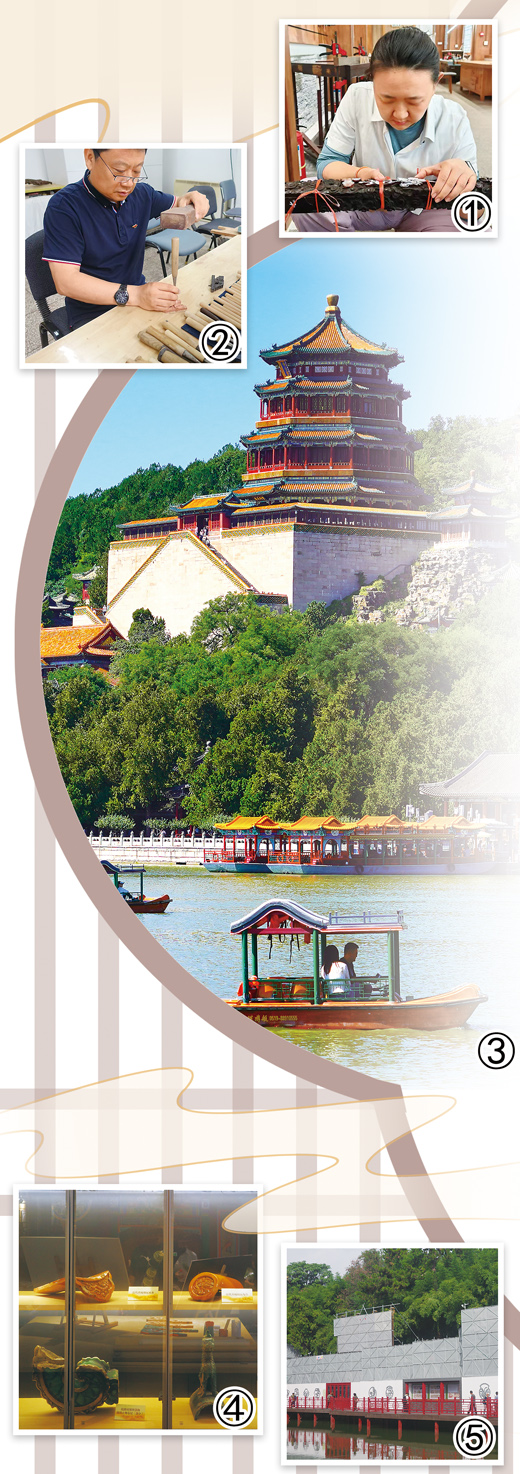
他们在颐和园修文物
Ren Min Ri Bao Hai Wai Ban· 2025-10-15 22:56
Core Viewpoint - The Summer Palace in Beijing is undergoing a significant restoration of its historic "Suzhou Street," adopting a "repair while open" approach to enhance public engagement and education about cultural heritage preservation [5][6][7]. Group 1: Restoration Approach - The restoration of Suzhou Street is the first large-scale protective renovation in the Beijing-Tianjin-Hebei region that allows public access during the process, aiming to provide an immersive experience of historical culture [7][8]. - The restoration adheres to principles of maintaining the original appearance, using original materials, techniques, and methods, while documenting the process for future reference [8][9]. - Visitors can observe the restoration through specially designed windows and displays, which serve as a live educational experience about traditional construction techniques [9][10]. Group 2: Historical Significance - Suzhou Street, inspired by the Jiangnan water town aesthetics, has high historical, artistic, and cultural value, having been a royal marketplace for celebrations [6][7]. - The street has a rich history, having been severely damaged during foreign invasions in the 19th century and later rebuilt in the 1980s, but has since faced natural deterioration [7][8]. Group 3: Furniture Restoration - The Summer Palace houses over a thousand pieces of Ming and Qing dynasty furniture, which are being meticulously restored by skilled craftsmen, ensuring the preservation of historical and cultural significance [11][12]. - The restoration of furniture has been ongoing for generations, with the current team led by a third-generation craftsman, completing over 1,000 restoration projects since 2016 [11][12]. - New technologies, such as 3D printing, are being integrated into the restoration process to enhance efficiency and minimize damage to original artifacts [12][13]. Group 4: Educational Initiatives - The restoration efforts include educational components, with displays and workshops aimed at teaching visitors about traditional crafts and the importance of cultural heritage [14][15]. - The Summer Palace is actively engaging with schools and the public to promote awareness and appreciation of traditional arts and crafts through hands-on experiences [15][16]. Group 5: Ongoing Challenges and Innovations - The Summer Palace faces ongoing challenges in maintaining its extensive collection of over 800 ancient buildings, with continuous efforts to improve restoration techniques and methodologies [16][17]. - The integration of modern technology, such as 3D laser scanning, is enhancing the quality of restoration work, ensuring that traditional aesthetics are preserved while improving structural integrity [17][18].
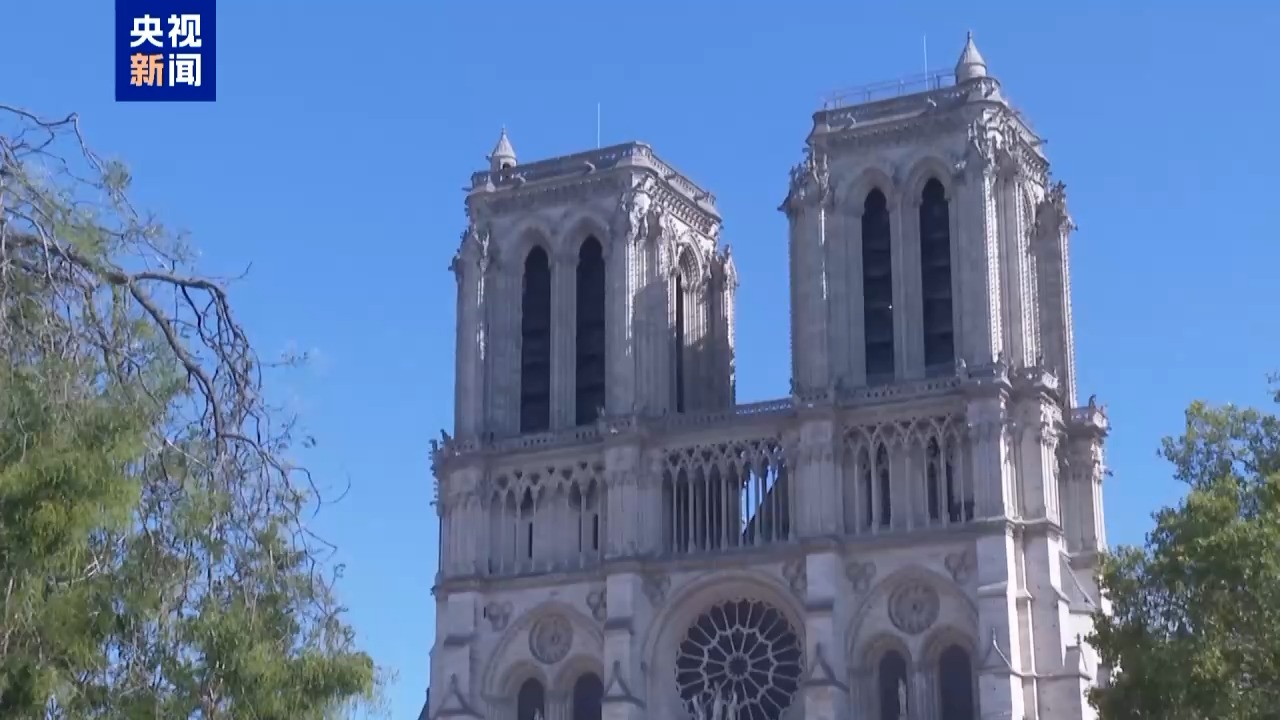
总台记者探访丨巴黎圣母院塔楼重开 缮后细节抢先看
Yang Shi Xin Wen· 2025-09-20 02:17
Core Points - The Notre-Dame Cathedral's towers have reopened to the public after six years of restoration following a devastating fire [1][8] - The restoration emphasizes a balance between modern safety features and historical preservation, showcasing craftsmanship and attention to detail [4][5][7] Restoration Details - The original stone staircases have been replaced with new wooden ones designed in a double-spiral pattern for safety and comfort [4] - The restoration adhered to the principle of "repairing old as old," with ancient wooden beams being marked and replaced where necessary [5] - The bell tower houses a 13-ton bell from the 17th century, which survived the fire, and its supporting wooden structure has been restored [6] - The roof, referred to as the "forest," was completely destroyed in the fire and has been reconstructed using over 1,200 oak trees, highlighting the complexity and artistry of the restoration [7] Cultural Significance - The reopening of the towers allows visitors to experience the historical and literary significance of the cathedral, as it intertwines history with contemporary restoration efforts [6][8] - The restoration serves as a valuable case study for global heritage conservation and restoration practices [8]