
稻作文化

Search documents
“溪上”傩面,巫风楚韵拂山野
Xin Lang Cai Jing· 2026-01-24 03:08
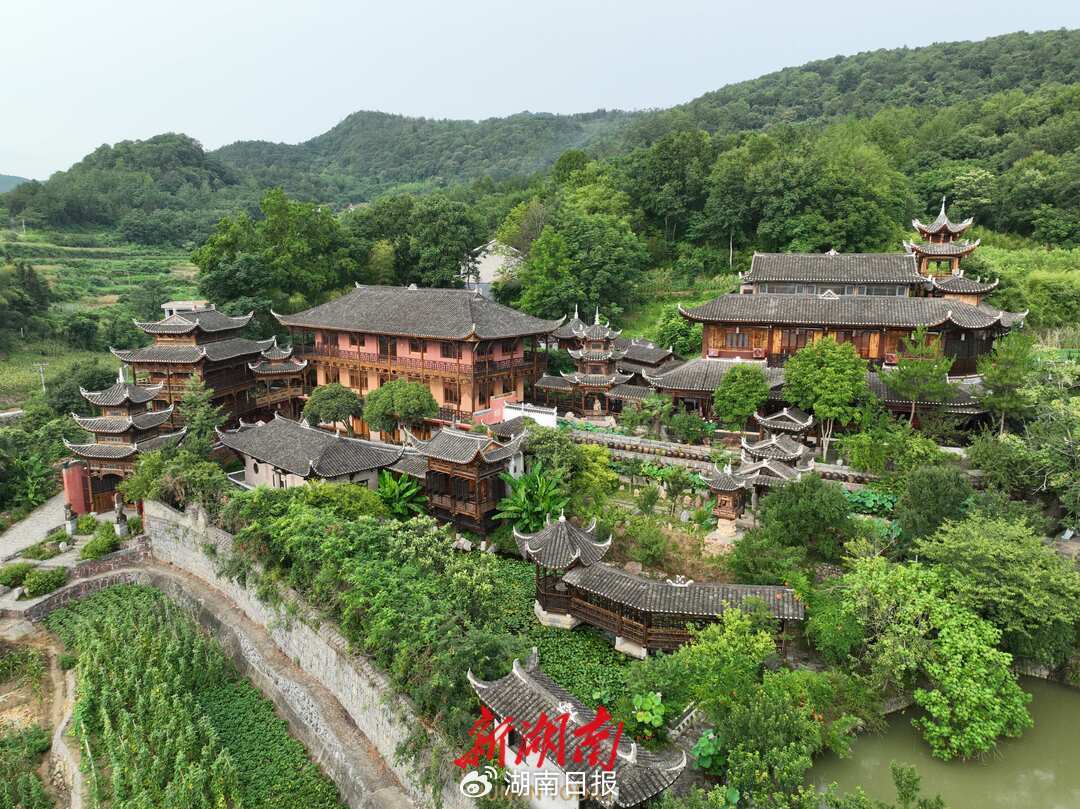
Core Perspective - The article highlights the establishment and cultural significance of the Xishang Mask Museum in Qian County, which showcases over 400 traditional masks and aims to promote local culture and education through community engagement and artistic exploration [6][10][12]. Group 1: Museum Overview - The Xishang Mask Museum was founded by three individuals who left their jobs in Beijing to return to their hometown and create a cultural hub in a rural setting [3][6]. - The museum was under construction from 2008 and officially opened in 2019, featuring unique architectural designs that reflect local traditions and landscapes [5][10]. - The museum's collection includes over 400 masks, which are significant for their cultural heritage and artistic diversity, attracting scholars and artists from across the country [8][10]. Group 2: Cultural and Educational Initiatives - The museum serves as a venue for educational projects, such as the "Dandelion Action" program, which integrates local cultural elements with modern artistic practices for children [11][12]. - Participants in the "Dandelion Action" program have shown a deep understanding of local culture, demonstrating the potential for cultural education to inspire creativity among youth [12][15]. - The museum has hosted various professional teams and events, enhancing its role as a cultural center and contributing to the revitalization of the local community [15]. Group 3: Challenges and Future Directions - Despite its successes, the museum faces challenges regarding sustainable operations, preservation of its collections, and effective communication of the cultural value of the masks [15]. - The founders are seeking input and collaboration from the community and experts to ensure the continued growth and impact of the museum [15].

江南史前考古的地标:访苏州草鞋山遗址|访古
Jing Ji Guan Cha Bao· 2025-09-13 01:02
Core Insights - The article highlights the significance of the Caoxieshan site in Suzhou, which is a crucial archaeological site representing the Neolithic culture in the Yangtze River Delta region [9][10][13] Summary by Sections Discovery and Historical Context - The Caoxieshan site was discovered in 1956 by Zhao Qingfang during a cultural relic survey organized by the Jiangsu Provincial Cultural Relics Management Committee [2] - The site covers an area of approximately 10,000 square meters and features a cultural layer thickness of about 15.5 meters, with significant archaeological findings [2][3] Archaeological Excavations - The site has undergone eight major excavations since its discovery, with the first excavation occurring from September 1972 to July 1973, revealing three overlapping cultural layers [3][4] - Subsequent excavations from 1992 to 1995 uncovered ancient rice paddy remains, providing direct evidence of rice cultivation origins [3][4] Cultural Layers and Findings - The site consists of ten cultural layers representing four cultural types, including the Majiabang culture, Songze culture, Liangzhu culture, and Wu-Yue culture from the Spring and Autumn period [5][10] - As of the end of 2021, 239 Neolithic tombs and 115 rice paddy remains have been discovered, along with over 1,800 artifacts [5][10] Significance of the Site - The Caoxieshan site is recognized for its complete cultural sequence, which is rare among ancient sites, and serves as a benchmark for studying prehistoric cultures in the Taihu region [10][11] - It is noted for the discovery of the earliest known artificial irrigation system in ancient rice paddies, marking it as a significant site for the study of rice agriculture origins [11][12] - The site also yielded the earliest known textile artifacts made from wild kudzu, showcasing advanced weaving techniques [12][13] Cultural Impact - The findings at Caoxieshan have profound implications for understanding the aesthetic values, craftsmanship, and cultural evolution in the Jiangnan region, reflecting the enduring charm of Chinese civilization [13]