
立体种植模式

Search documents
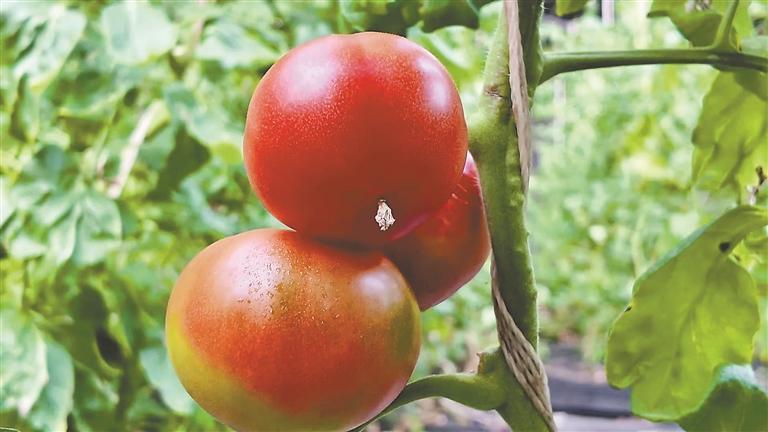
龙江森工集团 棚室藏鲜抢时差 果蔬丰盈富林区
Xin Lang Cai Jing· 2026-01-21 22:36
Core Viewpoint - The article highlights the innovative agricultural practices of Longjiang Forest Industry Group, focusing on off-season fruit and vegetable cultivation through modern greenhouse technology, which has significantly increased income for local workers during winter months [8][12][16]. Group 1: Off-Season Cultivation - Longjiang Forest Industry Group has established 2,804 greenhouses to create a year-round fruit and vegetable production system, transforming winter from a period of idleness to one of productivity [8][10]. - The group is utilizing advanced techniques such as intelligent temperature control and hydroponics to enhance the quality and yield of off-season crops like strawberry tomatoes and wild vegetables [10][12]. - The introduction of off-season crops has resulted in a doubling of income for local workers compared to traditional farming methods [8][10]. Group 2: Technological Integration - The integration of smart agricultural technologies, including automated irrigation and environmental control systems, has improved the efficiency and quality of crop production [11][12]. - The use of hydroponics allows for higher land utilization and better crop quality, breaking free from traditional soil-based constraints [11][12]. - The focus on technology has shifted the industry from relying on natural conditions to achieving high yields and quality through controlled environments [12]. Group 3: Market Strategy - Longjiang Forest Industry Group employs a dual-channel sales strategy, combining online and offline methods to enhance market reach and ensure fresh produce reaches consumers quickly [16][17]. - The company has established a sales network across major cities and utilizes e-commerce platforms to promote its products, ensuring a steady demand for its off-season fruits and vegetables [16][17]. - The successful sales of off-season crops have not only increased local income but also contributed to the overall economic development of the region [16][17].

传承“天把式” 精心护古树
Ren Min Ri Bao· 2025-06-23 22:23
Core Viewpoint - The ancient pear garden in Shichuan Town, Gansu Province, has been recognized as a global important agricultural cultural heritage by the FAO, showcasing unique agricultural practices and traditional techniques that have been preserved for centuries [1][2]. Group 1: Agricultural Practices - Farmers utilize a high-altitude working technique known as "Tianba Style," which involves the use of 10-meter high ladders for pruning and harvesting, ensuring safety and efficiency [1]. - A set of green pest control measures has been developed, aligning with natural processes, which contributes to the unique agricultural culture of the region [1]. Group 2: Historical and Ecological Significance - The ancient pear garden spans over 12,000 acres, with nearly 4,000 acres in the core area, housing over 9,400 ancient pear trees that are over 100 years old [1]. - The average age of the ancient trees is approximately 280 years, with over 2,600 trees aged 300 years or more, highlighting the historical significance of the garden [2]. Group 3: Conservation Efforts - A 700-square-meter nursery has been established in the core area to support the rejuvenation and replanting of endangered ancient pear trees through techniques like root suckering and grafting [2]. - The city of Lanzhou has implemented the "Shichuan Ancient Pear Tree Protection Regulations," which includes digital management of over 9,000 ancient pear trees, ensuring systematic protection and care [2][3].