
竞业限制条款效力

Search documents
最高法:劳动者未知悉、接触保密事项 竞业限制条款不生效
Zhong Zheng Wang· 2025-08-01 06:55
Core Viewpoint - The Supreme Court has issued an interpretation regarding labor dispute cases, effective from September 1, which impacts the enforceability of non-compete clauses in employment contracts [1] Group 1: Legal Interpretation - The interpretation states that if employees are unaware of or have not been exposed to the employer's trade secrets and related confidentiality matters, any non-compete clauses agreed upon will not be valid and will not bind the employees [1] - For employees who fall under the category of those subject to non-compete restrictions, the scope, region, and duration of the non-compete clauses must align with the trade secrets and confidentiality matters that the employees are aware of or have been exposed to; any excess will be deemed invalid [1]
员工未接触商业秘密,竞业限制条款无效,最高法发布司法解释
Nan Fang Du Shi Bao· 2025-08-01 06:03
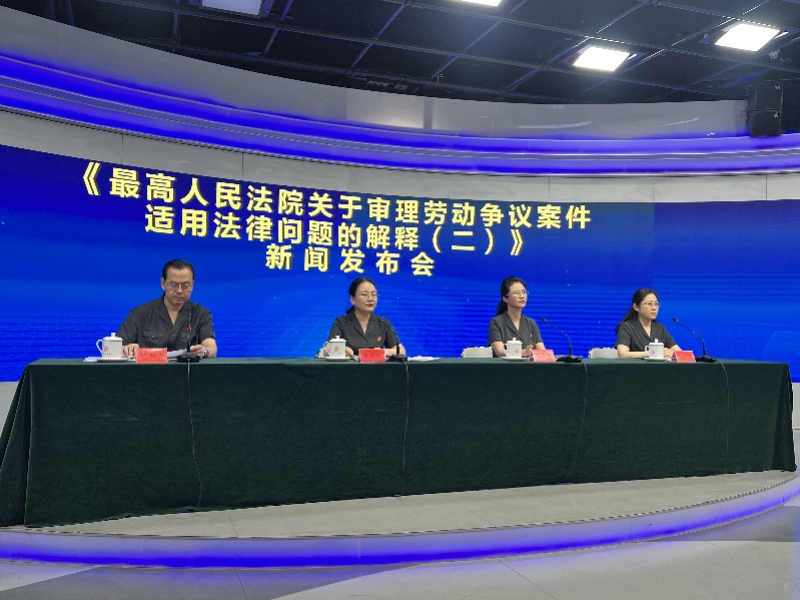
Core Viewpoint - The Supreme People's Court has released an interpretation regarding labor dispute cases, emphasizing that non-disclosure of trade secrets and intellectual property by employees renders non-compete clauses ineffective, promoting orderly talent mobility [1][4]. Group 1: Labor Contract Regulations - The interpretation clarifies that employers must fulfill their social responsibility to maintain stable employment relationships, addressing issues related to short-term labor contracts [3]. - It specifies conditions under which employers cannot refuse to sign indefinite labor contracts after two consecutive fixed-term contracts, ensuring labor stability [3]. - The interpretation defines what constitutes "consecutive fixed-term contracts," including scenarios like contract extensions and automatic renewals, to prevent employers from evading obligations [3]. Group 2: Non-Compete Clauses - The interpretation states that non-compete clauses are invalid if the employee is unaware of or has not been exposed to the employer's trade secrets or related confidentiality matters [4]. - It mandates that any non-compete terms must align with the trade secrets and intellectual property the employee has knowledge of, invalidating any excessive restrictions [4]. - This approach aims to facilitate the social mobility of labor resources, thereby promoting healthy market economic development [4].

最高法明确:“不缴社保”的约定无效
Ren Min Ri Bao· 2025-08-01 02:44
Core Viewpoint - The Supreme Court has issued an interpretation regarding labor dispute cases, emphasizing that non-compete clauses are invalid if the employee is unaware of the employer's trade secrets and related confidentiality matters [1] Group 1: Legal Interpretation - The interpretation states that non-compete clauses do not bind employees if they have not been informed of the employer's trade secrets and confidentiality matters [1] - Non-compete clauses must align with the trade secrets and confidentiality matters that the employee is aware of; any excess is deemed invalid [1] Group 2: Case Study - In a case involving an employee, Zhu, and a security company, the court ruled that the agreement to not pay social insurance was invalid, as it contravened legal obligations [2][3] - The court determined that the employer's failure to pay social insurance justified the employee's termination of the contract and entitled them to economic compensation [3] Group 3: Legal Significance - The ruling reinforces that participation in social insurance is a legal obligation for both employers and employees, and any agreements to waive this obligation are invalid [4] - This legal framework encourages employers to comply with social insurance laws, thereby mitigating employment risks and promoting long-term benefits for employees [4]